-
E-mail
416183088@qq.com
-
Phone
13461341555
-
Address
2nd Floor, Building 3, No. 1-1 Huayi Road, Yuhangxing Street, Yuhang District, Hangzhou City, Zhejiang Province
Product Categories
Hangzhou Dawei Science and Education Instrument Co., Ltd

Stainless steel distillation tower
NegotiableUpdate on 02/08
- Model
- Nature of the Manufacturer
- Producers
- Product Category
- Place of Origin
Overview
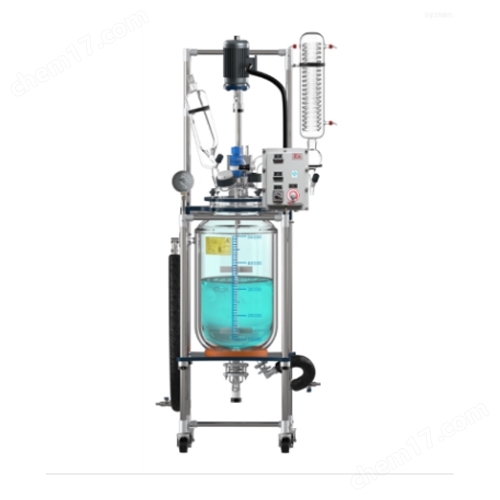
Stainless steel distillation tower is an efficient separation equipment based on gas-liquid mass transfer principle, widely used in chemical, pharmaceutical, food and scientific research fields, for separating liquid mixtures with large boiling point differences (such as ethanol water, benzene toluene system).
Product Details
Stainless steel distillation towerIt is an efficient separation device based on gas-liquid mass transfer principle, widely used in chemical, pharmaceutical, food and scientific research fields, for separating liquid mixtures with large boiling point differences (such as ethanol water, benzene toluene system). Its core functions include:
Efficient separation: Multiple gas-liquid equilibria are achieved through packing or tray structures, with a separation purity of over 99.5%.
Wide applicability: Temperature tolerance range of -20 ℃~300 ℃, pressure range from atmospheric pressure to -0.1mbar, compatible with vacuum distillation and pressurized distillation.
Modular design: supports quick replacement of packing types (such as stainless steel wire mesh corrugated packing, glass spring packing) to meet different system requirements.
Preparation Specification for Stainless Steel Distillation Tower Operation
1. Equipment inspection and debugging
Integrity check: Confirm that the tower body is free of cracks, the packing is not collapsed, the flange interface is well sealed, and the condenser fins are not blocked.
Instrument calibration: Verify the thermometer (accuracy ± 0.5 ℃), pressure gauge (range matching working pressure), and flow meter (error ≤ 2%).
Pipeline connectivity test: Replace the air in the system with nitrogen and detect the leakage rate (≤ 1 × 10 ⁻⁶ Pa · m ³/s).
2. Personal protection and safety preparation
Protective equipment: Wear acid and alkali resistant gloves (EN374 standard), goggles (EN166), and anti-static work clothes (GB12014).
Emergency supplies: Fire extinguishers (CO ₂ type), first aid kits (containing boric acid solution), and leak emergency kits (absorbent cotton, neutralizing agent) are available on site.
3. Material preparation
Solvent purity verification: Use gas chromatography to detect the purity of the raw material (≥ 99%), and the impurity content should be below the separation threshold.
Feed rate setting: Calculate the initial flow rate based on the tower diameter (e.g. 50mm tower diameter corresponds to a maximum feed flow rate of 0.5L/h) to avoid liquid flooding.
Standard Operating Procedure for Stainless Steel Distillation Tower
1. Startup phase
Preheating of heating system: Heat up at a rate of 5 ℃/min to the set temperature (78-82 ℃ is required for ethanol distillation), and observe the pressure changes in the tower kettle (normal fluctuation ≤ 0.02MPa).
Cooling water circulation: Start the circulating water system, control the flow rate at 0.5-1.5m ³/h, and ensure that the outlet temperature of the condenser is ≤ 40 ℃.
2. Steady state control
Reflux ratio adjustment: Set the R=(L/D) value (typical range 1:1~5:1) through the reflux ratio controller, and maintain the full reflux stage for more than 30 minutes to achieve balance inside the tower.
Sensitive plate monitoring: Real time monitoring of the temperature of the 5th to 8th layers of the tray (such as the temperature of the sensitive plate in the ethanol system should be stable at 79.5 ± 0.3 ℃).
3. Product collection
Distillate segmentation: The front distillate (such as methanol ethanol system) is collected separately, and the main product (purity ≥ 99%) enters the storage tank.
Residual liquid treatment: High boiling point residues in the tower kettle need to be subjected to vacuum distillation or incineration treatment, and direct discharge is strictly prohibited.