-
E-mail
416183088@qq.com
-
Phone
13461341555
-
Address
2nd Floor, Building 3, No. 1-1 Huayi Road, Yuhangxing Street, Yuhang District, Hangzhou City, Zhejiang Province
Product Categories
Hangzhou Dawei Science and Education Instrument Co., Ltd

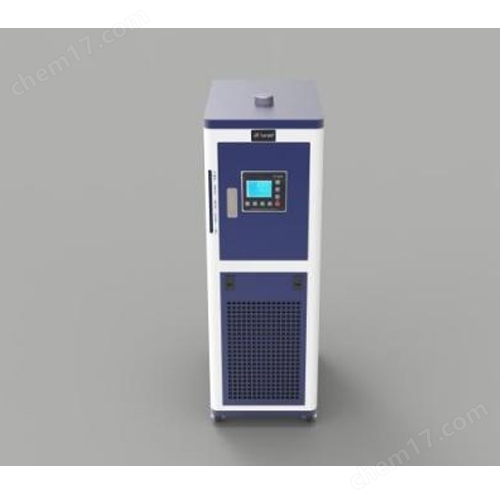
Explosion proof high and low temperature circulation integrated machine
NegotiableUpdate on 02/08
- Model
- Nature of the Manufacturer
- Producers
- Product Category
- Place of Origin
Overview
The explosion-proof high and low temperature cycle integrated machine adopts a fully enclosed rolling rotor compressor. The refrigerant is compressed to form high temperature and high pressure gas, which is cooled and liquefied by an air-cooled condenser. After being throttled and depressurized by an expansion valve, it enters a plate evaporator to absorb heat and evaporate, completing the cooling cycle. The matching oxygen free copper threaded tube enhances heat transfer efficiency, and the pressure protector and high/low pressure switch form a dual protection.
Product Details
Explosion proof high and low temperature circulation integrated machineWorking principle and system composition of
1. Refrigeration system
Adopting a fully enclosed rolling rotor compressor, the refrigerant is compressed to form high-temperature and high-pressure gas, which is cooled and liquefied by an air-cooled condenser. After being throttled and depressurized by an expansion valve, it enters a plate evaporator for heat absorption and evaporation, completing the cooling cycle. The matching oxygen free copper threaded tube enhances heat transfer efficiency, and the pressure protector and high/low pressure switch form a dual protection.
2. Heating system
Explosion proof electric heater complies with JB/T2379 standard, and the dedicated heating element for heat transfer oil achieves temperature rise through electric thermal conversion. High temperature modular design supports rapid heating from 40-300 ℃, combined with a pre cooling unit (air-cooled finned heat exchanger) to achieve rapid cooling from high temperature to room temperature, avoiding compressor high-temperature operation and extending equipment life.
3. Circulation and Control System
The circulating pump drives the heat transfer fluid (such as silicone oil, ethylene glycol aqueous solution, etc.) to circulate in a closed pipeline, and real-time feedback data is obtained through temperature sensors. The PID controller dynamically adjusts the cooling/heating power. The system is equipped with multiple safety functions such as overload protection, thermal protection device, and freezer overload protection, and supports RS-485/232 interface for remote monitoring.
Standardized process for the use of explosion-proof high and low temperature circulation integrated machine
1. Installation and commissioning
Environmental requirements: The equipment should be installed in a well ventilated location away from heat sources and without direct sunlight, with an ambient temperature of ≤ 35 ℃. Reserve heat dissipation space around (back/side ≥ 30cm, top ≥ 60cm), and the ground should be level and stable.
Medium filling: Select the thermal conductive medium according to the temperature range (such as silicone oil for -80 ℃ to 200 ℃, and ethylene glycol aqueous solution for -40 ℃ to 150 ℃). The liquid level should be controlled between the MIN-MAX scale of the expansion tank to avoid empty burning or overflow.
Electrical connection: Independent power supply line is used to ensure reliable grounding and equipped with leakage protection device. Check whether the power cord and circulation pipeline joints are aged, damaged, or loose.
2. Operation steps
Power on preparation: After connecting the power, press and hold the power button to complete the self-test. After confirming that there are no abnormal alarms, enter standby mode.
Temperature setting: Input the target temperature value (high temperature range of 40-200 ℃, low temperature range of -40-40 ℃) through the control panel. For precision experiments, heating/cooling functions need to be turned on simultaneously (activated when SV ≤ 40 ℃).
Cycle mode selection: Select the internal or external cycle mode according to the needs, start the circulation pump first, and then turn on the cooling/heating function.
Operation monitoring: Real time monitoring of temperature fluctuations (≤± 1 ℃), system pressure, and medium flow rate, observing parameter changes through a display screen. Close the exhaust valve during high temperature operation, and keep the exhaust valve open during low temperature conditions to balance pressure.
Exception handling: In case of overheating/overpressure alarm, immediately press the emergency stop button to cut off the power supply, and investigate issues such as pipeline blockage, refrigerant leakage, or sensor failure.
3. Shutdown and maintenance
Normal shutdown: First turn off the heating/cooling function, stop the circulating pump after the temperature returns to room temperature, and finally turn off the main power.
Media handling: After disconnecting the external device, drain the pipeline media and clean the residual liquid to avoid corrosion of the pipeline.
Long term disuse: After emptying the medium, dry the equipment, cover it with a dust cover, and store it in a dry environment with a humidity of ≤ 70%.
Maintenance and troubleshooting
1. Daily maintenance
Cleaning and maintenance: Clean the dust on the equipment casing and condenser surface daily, clean the heat dissipation filter screen with compressed air every week, and thoroughly clean the condenser fins and inlet valve filter screen every month.
Media management: Replace the thermal conductive medium every six months to avoid oxidation, moisture absorption, or pollution. Regularly check the color, turbidity, and suspended solids of the medium, and replace the aging medium in a timely manner.
Component inspection: Regularly check the sealing and bearing wear of the circulating pump, the operating current, vibration, and noise of the compressor, and the contact status of electrical components such as contactors and relays.
2. Regular maintenance
Annual overhaul: Professional technicians check the refrigerant pressure, supplement or replace the refrigerant, calibrate the temperature sensor (error ≤± 0.1 ℃), check the pipeline sealing and electrical connections.
Explosion proof performance testing: Explosion proof performance testing is conducted annually to ensure that components such as enclosures, explosion-proof motors, and explosion-proof electrical appliances meet explosion-proof standards.
3. Common fault handling
Abnormal temperature: Check the heater, refrigerant pressure, circulation pump flow rate, and sensor calibration.
Pressure exceeding limit: Clean the condenser fins for blockage and check for refrigerant leakage or insufficiency.
Circulating pump malfunction: Check for pipeline blockage, seal failure, or impeller damage, and exhaust the system or replace the sealing ring.
Safety specifications and emergency response for explosion-proof high and low temperature circulation integrated machine
1. Operational safety
Operators should wear corrosion-resistant gloves, goggles, and insulation/antifreeze equipment to avoid contact with temperature surfaces.
Overloading operation is prohibited, frequent starting and stopping of equipment is avoided, and non professionals are prohibited from dismantling equipment or adjusting electrical circuits.
Do not open the cover of the replenishment tank during equipment operation to avoid medium leakage or burns.
2. Emergency response
Overtemperature/overpressure alarm: Immediately press the emergency stop button to cut off the power, investigate the cause of the fault, and resume operation.
Leakage accident: Stop the equipment operation, close the medium valve, collect the leaked medium in a dedicated container, and contact professional personnel for handling.
Power outage handling: Turn off all switches and disconnect the power supply to prevent the equipment from automatically starting and causing danger when there is a power outage.