-
E-mail
416183088@qq.com
-
Phone
13461341555
-
Address
2nd Floor, Building 3, No. 1-1 Huayi Road, Yuhangxing Street, Yuhang District, Hangzhou City, Zhejiang Province
Product Categories
Hangzhou Dawei Science and Education Instrument Co., Ltd
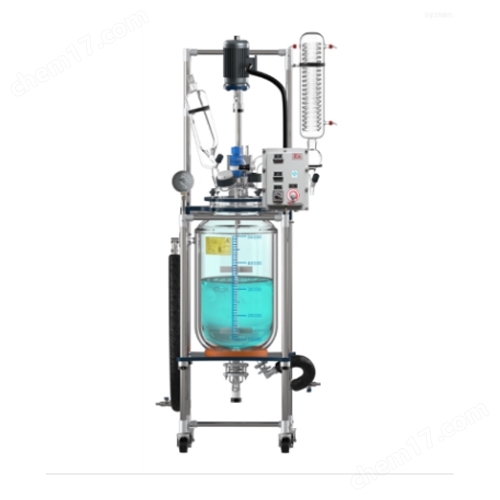
Explosion proof double-layer glass reactor
NegotiableUpdate on 02/08
- Model
- Nature of the Manufacturer
- Producers
- Product Category
- Place of Origin
Overview
Preparation of explosion-proof double-layer glass reactor foundation: concrete foundation thickness ≥ 200mm, surface flatness ≤ 2mm/m. Pre embedded anchor bolts are installed in conjunction with shock-absorbing pads. Equipment positioning: Use a forklift or crane to move the equipment to the foundation and adjust the levelness to ≤ 0.5mm/m. Connect cooling water, compressed air, and power lines.
Product Details
Explosion proof double-layer glass reactorInstallation, debugging, and operation specifications
Installation process
Basic preparation: The thickness of the concrete foundation should be ≥ 200mm, and the surface flatness should be ≤ 2mm/m. Pre embedded anchor bolts are installed in conjunction with shock-absorbing pads.
Equipment positioning: Use a forklift or crane to move the equipment to the foundation and adjust the levelness to ≤ 0.5mm/m. Connect cooling water, compressed air, and power lines.
Pipeline connection: Sanitary grade clamps are used for connection, and the pipeline runs downhill at a 45 ° angle to avoid the accumulation of condensed water. Install accessories such as Y-shaped filters, flow meters, pressure gauges, etc.
Electrical wiring: Connect motors, sensors, and control boxes according to explosion-proof wiring specifications. Grounding resistance ≤ 4 Ω, equipped with leakage protection device.
Debugging steps
No load test run: jog test the motor direction to check if the mixing system runs smoothly and without abnormal vibration. Test whether the temperature control system and explosion-proof device are functioning properly.
Load testing: Gradually add simulated materials, monitor parameters such as temperature, pressure, and stirring torque, and verify whether the equipment performance meets design requirements.
Performance verification: Conduct ultimate vacuum degree test, maximum working pressure test, and temperature control accuracy test to ensure that all indicators of the equipment meet the standards.
Operating standards
Pre start inspection: Confirm that the kettle body is clean, well sealed, the valve status is correct, and the power supply voltage is stable.
Operation monitoring: Real time monitoring of temperature, pressure, stirring speed and other parameters, and immediate shutdown for inspection if any abnormalities are found.
Shutdown procedure: First stop heating/cooling, stop stirring when the temperature drops to a safe range, close the valve, and cut off the power.
Emergency response: In case of leakage, abnormal vibration, overheating and overpressure, immediately activate the emergency pressure relief device, evacuate personnel, and troubleshoot.
Explosion proof double-layer glass reactorMaintenance and troubleshooting
Daily maintenance
Cleaning and maintenance: Clean the kettle body, stirring blades, and pipelines after each use to avoid material residue corroding the equipment.
Sealing inspection: Regularly check the wear of sealing gaskets and mechanical seals, and replace aging components in a timely manner.
Lubrication management: Add lubricating grease to the stirring bearings every 500 hours, and check the lubrication condition of the motor bearings every 1000 hours.
Calibration verification: Regularly calibrate temperature sensors, pressure sensors, and flow meters to ensure measurement accuracy.
Regular maintenance
Annual overhaul: Disassemble equipment, inspect the wear of the kettle body, jacket, and mixing system, replace vulnerable parts such as seals and bearings.
Explosion proof device testing: Conduct annual explosion-proof performance testing on explosion-proof motors, control boxes, and safety valves to ensure compliance with safety standards.
Performance testing: Conduct performance tests on extreme vacuum degree, maximum working pressure, temperature control accuracy, etc., and issue a testing report.
Common fault handling
Leakage issue: Check the sealing gasket, mechanical seal, pipeline connection, tighten bolts or replace seals.
Abnormal temperature: Check the temperature control system, heating/cooling components, sensors, troubleshoot or replace parts.
Excessive vibration: Check if the mixing blades are balanced, if the bearings are damaged, adjust or replace the components.
Explosion proof device malfunction: Check the explosion-proof motor, control box, and safety valve, troubleshoot or contact professional personnel for repair.
Safety regulations and environmental requirements
Safety operating procedures
Personnel training: Operators need to undergo professional training, be familiar with equipment structure, performance, operating procedures, emergency response measures, and hold certificates before taking up their posts.
Protective equipment: Wear protective goggles, gloves, and anti-static work clothes during operation to avoid direct contact with high temperature and corrosive materials.
Fire and explosion prevention: It is prohibited to use open flames, mobile phones, and other electronic devices near the equipment to avoid generating static sparks.
Ventilation requirements: The equipment installation area should be equipped with a ventilation system to ensure that the concentration of combustible gases is below the lower explosive limit.
Environmental protection measures
Waste disposal: Reaction waste should be classified and collected according to environmental protection requirements, and entrusted to professional institutions for disposal to avoid environmental pollution.
Energy saving design: adopting a closed-loop cooling system, with a water saving rate of ≥ 80%; Equipped with energy-saving motors to reduce energy consumption.
Noise control: Equipment noise ≤ 65dB (in accordance with GB12348 standard), install soundproof covers or take other noise reduction measures.


