- Phone
-
Address
Zhong'an Shengye Building, Chaoyang District, Beijing
Product Categories
Zebrafish (Beijing) Technology Co., Ltd

Nanopore third-generation sequencer GridION
NegotiableUpdate on 05/07
- Model
- Nature of the Manufacturer
- Producers
- Product Category
- Place of Origin
Overview
The GridION third-generation nanopore sequencer is an affordable and compact desktop system that provides on-demand sequencing and integrated real-time data processing capabilities. The GridION Mk1 is capable of running five flow units simultaneously or individually, with a total yield of up to 150 Gb, providing busy laboratories and service providers with cost-effective access to the advantages of long read, long real-time nanopore sequencing. Integrated high-performance data processing reduces the need for complex IT infrastructure.
Product Details
1、 Product Overview
Oxford Nanopore Technology ® ofNanopore third-generation sequencer GridION™ Mk1It is a compact desktop sequencing system. It allows up to five sequencing experiments to be conducted simultaneously or individually. You can choose how much of these resources to use at once. GridION Mk1 also allows you to provide nanopore sequencing as a service.
The GridION Mk1 has five sequencing ports that can be connected to MinION/GridION flow units or Flongle adapters with flow units, and is equipped with high-performance integrated computers and tone accelerators. This device can call real-time data generated by five stream units/FLongle. The current chemistry and software support generating up to 150 Gbase of data during the operation of GridION Mk1.
The infrastructure required to build GridION Mk1 is minimal, and there is no need to upgrade the facilities. The new device only requires a power supply and a network connection through an Ethernet port.Peripherals such as keyboards and mice provide three USB 3.0 interfaces. The monitor must be connected through the Display Port. The device is powered by the mains through the C13 line and can be turned on through the power button on the front panel.

2、 Core Technology
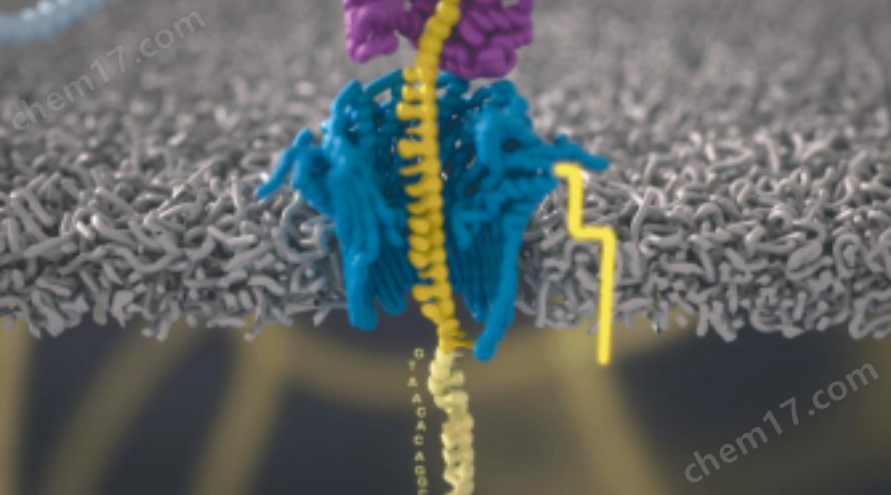
Oxford Nanopore sequencing is based on nanopore single-molecule detection technology. During sequencing, nucleic acid molecules (DNA/RNA) are driven by motor enzymes to pass through the nanopore in a single stranded form, one base at a time. When a base passes through, it changes the current intensity inside the nanopore, and there are differences in the current signals corresponding to different bases (A, T, C, G) and modified bases. The device captures these current changes in real time and uses MinKnow ™ Convert the software into base sequences to achieve direct sequencing of single molecules. This technology does not require PCR amplification, can retain base modification information, and has unlimited read length, enabling real-time data analysis and combining portability and efficiency.
3、 Equipment performance advantages
1. Flexibility:Nanopore third-generation sequencer GridION™ Mk1It can run up to 5 independent MinION Flow Cells simultaneously, supporting parallel sequencing of samples or multi-channel stacking of single samples, flexibly adapting to the needs of multi sample processing or improving data depth, greatly improving experimental efficiency.
2. Real time data acquisitionCan generate sequencing data in real-time without waiting for the complete sequencing process to end, helping to quickly obtain actionable analytical insights, especially suitable for scenarios with high time requirements such as emergency testing.
3. Integrated computing capabilityBuilt in * computing module, allowing for real-time data analysis without relying on complex external IT infrastructure, reducing device deployment barriers, and simplifying experimental operation processes.
4. Compact and compact designThe equipment occupies a small area and adopts a desktop layout, saving laboratory space and adapting to various laboratory environments, without the need to separately plan large areas for placing equipment.
5. Unrestricted reading lengthIt can sequence nucleic acid molecules of any length from short to long fragments, without being limited by fragment length, and can efficiently analyze complex structural variations in the genome, breaking through the limitations of traditional short read long sequencing.
4、 Applicable applications
-
1. Bacterial metagenomics5 independent Flow Cells can process samples in parallel, combined with ultra long read lengths, accurately analyze microbial community structure and functional genes, and 48GB/channel data meets the requirements for complex microbial diversity research.
2. Bacterial isolatesSingle channel high data output ensures high genome coverage of isolated strains, enables rapid assembly and annotation, and assists in the analysis of key information such as drug resistance genes and virulence factors.
3. Bacterial whole genomeNo need for PCR amplification to reduce sequencing preference, ultra long read length efficiently solves the problem of genome duplication, providing high-quality data for bacterial evolutionary tracing and molecular typing.
4. Virus ampliconsReal time data output can quickly identify virus mutations, and multi-channel parallel detection can simultaneously detect multiple virus amplicons, improving the efficiency of virus mutation monitoring and epidemiological investigation.
5. Full length 16S rRNACovering the full length sequence of 16S rRNA, avoiding the problem of short read long classification ambiguity, multi-channel support for parallel processing of a large number of samples, and achieving precise identification of bacterial strains at the horizontal level.
6. Whole exome groupHigh data volume meets the demand for deep sequencing of exon regions, precise detection of complex variations such as insertions and deletions with ultra long read lengths, providing key data for genetic disease and tumor related research.
7. Complete transcriptome (cDNA)Full length cDNA sequences can be obtained without splicing, allowing for clear differentiation of variable splicing subtypes and improving the efficiency of low abundance transcript detection through multi-channel parallel processing.
8. Smaller transcriptome (direct RNA)Direct RNA sequencing preserves base modification information, obtains complete transcript sequences with ultra long read lengths, adapts to small transcriptome studies in viruses and lower organisms, and rapidly analyzes transcriptional dynamics.
5、 Adaptation reagents and software
Flow Cell CompatibilitySupport all Flow Cells in the MinION series (such as R9.4.1, R10.4), including DNA specific, RNA specific, and modification detection specific models;

Software Ecosystem: Standard MinKnow ™ (Data collection), Guppy (base recognition), Minimap2 (sequence alignment), compatible with third-party analysis tools such as Nanoplot and Flye.
Zebrafish (Beijing) Technology Co., Ltd. provides you with information on instrument parameters, prices, selection, technical principles, etc. For more information, please feel free to contact us.
Similar Product Recommend


