-
E-mail
416183088@qq.com
-
Phone
13461341555
-
Address
2nd Floor, Building 3, No. 1-1 Huayi Road, Yuhangxing Street, Yuhang District, Hangzhou City, Zhejiang Province
Product Categories
Hangzhou Dawei Science and Education Instrument Co., Ltd

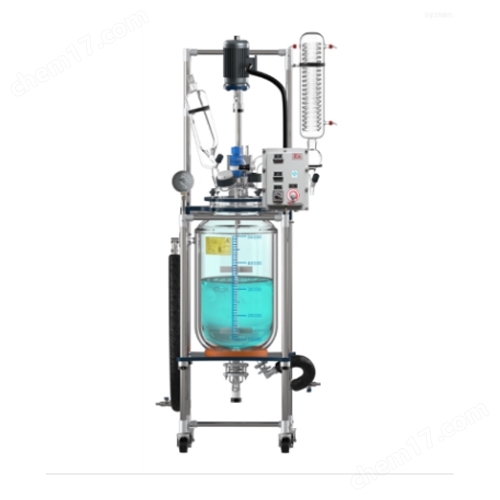
Low temperature constant temperature magnetic stirring reaction bath
NegotiableUpdate on 02/08
- Model
- Nature of the Manufacturer
- Producers
- Product Category
- Place of Origin
Overview
The low-temperature constant temperature magnetic stirring reaction bath is a latest experimental equipment that can replace dry ice and liquid nitrogen for low-temperature reactions, and can be used as a low-temperature constant temperature water bath for viscosity measurement. The bottom is equipped with strong magnetic stirring, a two-stage stirring and internal circulation system, uniform temperature field, and no leakage.
Product Details
Low temperature constant temperature magnetic stirring reaction bathIt is a latest experimental equipment that can replace dry ice and liquid nitrogen for low-temperature reactions and can be used as a low-temperature constant temperature water bath for viscosity measurement. The bottom is equipped with strong magnetic stirring, a two-stage stirring and internal circulation system, uniform temperature field, and no leakage. By integrating the sensor with the liquid flow of the circulation pump, the temperature control accuracy and uniformity of the temperature field are greatly improved, making the temperature inside the tank more uniform. It can be used separately as a low-temperature and constant temperature circulation pump and providing a constant temperature cold source; Temperature programming and program control functions, suitable for both single point constant temperature control and continuous temperature control; The key components of the refrigeration system, such as compressors, expansion valves, and solenoid valves, are imported to ensure safe and efficient operation of the system and reduce noise; The system is equipped with air-cooled and water-cooled condensers, which can be suitable for different application scenarios while improving refrigeration efficiency. High precision constant temperature experimental field sources are required for fields such as biopharmaceuticals, chemical engineering, and food engineering; Widely used in experiments and identification work in hospitals, scientific research, biology, and other fields.
Product Features
1. The built-in magnetic stirrer can provide stirring for the reaction vessel and also stir the solution in the working tank to reach the desired temperatureUniform.
2. 4.3-inch large screen LCD display, beautiful and easy to observe.
3. The temperature control adopts the Kalman filter algorithm for precise temperature control.
4. The compressor is equipped with overheat, overvoltage, and overcurrent protection devices, automatic temperature overload alarm and protection, and system leakage protection.
Low temperature constant temperature magnetic stirring reaction bathTechnical Specifications
| Specification Model | DFY-4005 | DFY-4010 | DFY-4020 | DFY-4030 | ||
| Refrigeration performance | Cooling method | Closed compressor refrigeration | ||||
| cooling method | air cooling | |||||
| refrigerant | R404a | |||||
| Liquid storage capacity (L) | 5 | 10 | 20 | 30 | ||
| Empty load low temperature (℃) | -40 | |||||
| Maximum cooling capacity (W) | 800 (single level) | 1500 (single level) | 2100 (single level) | 2900 (single level) | ||
| Temperature control performance | Heating power (W) | 600 | 1200 | 1500 | 2000 | |
| Temperature regulation range (℃) | -40~100 | |||||
| Temperature control accuracy (℃) | ±0.1 | |||||
| Mixing | Input power (W) | Electromagnetic stirring 35W | ||||
| speed regulation method | stepless speed regulation | |||||
| Speed rpm | 0~800 | |||||
| Work slot | inner material | 304 stainless steel | ||||
| Inner container size (mm) | φ250×160(H) | φ300×180(H) | φ350×210(H) | φ400×240(H) | ||
| capacity | 5L | 10L | 20L | 30L | ||
| Work slot opening | Φ200 | Φ250 | Φ280 | Φ300 | ||
| Maximum capacity for placing reaction bottles | 50-2000ml | 500-3000ml | 1000-5000ml | 1000-10000ml | ||
| working conditions | Power supply (V/Hz) | 220/50 | 220/50 | 220/50 | 380/50 | |
| Whole machine power (W) | 1000 | 1200 | 2500 | 3500 | ||
| environment | Temperature (℃) | 25 | ||||
| humidity | (60-80)% ventilation | |||||
| organism | shell | Galvanized sheet electrostatic spraying | ||||
| Total weight | 35 | 48 | 60 | 80 | ||
| Overall dimensions | Length (mm) | 450 | 500 | 600 | 650 | |
| Width (mm) | 390 | 430 | 500 | 550 | ||
| Height (mm) | 700 | 750 | 880 | 950 | ||
Low temperature constant temperature magnetic stirring reaction bathConnection and Media Preparation
Use insulated hoses to connect the inlet/outlet of the equipment to the corresponding interface of the experimental device, ensuring a sealed and leak free environment.
Open the insulation cover and add water, ethanol, or specialized coolant (such as anhydrous ethanol below -5 ℃). The liquid level should cover the evaporator and not exceed the MAX mark (to avoid overflow or affecting heat exchange).
The distance between the bottom of the sample container (such as a flask) and the liquid storage tank should be ≤ 25mm to ensure thermal conductivity efficiency; The magnetic stirrer needs to be placed at the bottom of the liquid storage tank or in the flask in advance.
Startup and parameter settings
Before connecting the power supply, make sure the safety switch is turned off and the socket is independently grounded (grounding resistance ≤ 4 Ω) to avoid overload or shared sockets.
Turn on the leakage protection switch and power switch, and set the target temperature (it is recommended to slightly lower the target value first, and adjust it after the system stabilizes).
Turn on the cooling switch and wait for the temperature to stabilize before turning on the circulation switch to provide coolant to the outside; When mixing, press the mixing switch and adjust the speed knob clockwise to the desired speed (to avoid splashing or bubbles caused by excessive speed).
Operation monitoring and adjustment
Real time monitoring of temperature display screen to ensure that the deviation between the actual temperature and the set value is ≤ ± 0.1 ℃ (PID control accuracy); If there is abnormal fluctuation, immediately stop the machine to troubleshoot sensor or controller faults.
Adjust the stirring speed according to experimental requirements to ensure that the reactants are fully mixed and there is no violent shaking; When adding/removing samples, act gently and gently to avoid drastic temperature fluctuations.
Regularly check the sealing of components such as pipelines, valves, and condensers to prevent refrigerant leakage or medium overflow.
Ending and Cleaning
Turn off the circulation, mixing, and cooling switches, turn off the power and safety switches in sequence, and unplug the plug; When not in use for a long time, empty the medium, rinse the tank with clean water and dry it.
Clean the equipment casing (with neutral cleaner and soft cloth) and internal residues (with mild detergent or organic solvent) to avoid corrosion or contamination.
Safety specifications for low-temperature constant temperature magnetic stirring reaction bath
Personal protection: Wear insulated gloves, goggles, and laboratory coats during operation to prevent frostbite, chemical burns, or splash injuries; Contact with low-temperature media (such as ethanol) requires antifreeze gloves (made of nitrile rubber material).
Electrical safety: Do not operate with wet hands and avoid use in flammable and explosive environments; Stop using the power cord immediately if it is damaged or poorly grounded, and contact a professional electrician for repair.
Medium management: Select the medium according to the experimental temperature (such as cascade refrigeration or liquid nitrogen assistance below -80 ℃), replace it regularly (ethanol based every 3 months, water-based every month), and avoid deterioration and corrosion of equipment or affecting temperature control accuracy.
Emergency response: In case of leakage, press the emergency stop button and use insulated tools to remove the faulty circuit; Soak in 40-42 ℃ warm water for 15-30 minutes during frostbite; When the medium leaks, cover it with absorbent cotton/sand and ventilate it; During a fire, use dry powder fire extinguishers and do not use water.
3、 Maintenance and upkeep
Daily maintenance: Clean the casing weekly, check the liquid level, medium quality, and agitator/circulation pump status monthly; Clean the circulation pipeline with a 5% citric acid solution every quarter to remove scale and impurities.
Regular calibration: Calibrate the temperature sensor every 3-6 months (compared to standard thermometers or equipment automatic calibration) to ensure temperature control accuracy; Check the dust accumulation in the condenser and clean the cooling coil with a soft bristled brush (for air-cooled systems, check the fan direction).
Professional maintenance: When the cooling capacity decreases or the high-pressure switch frequently alarms, contact technical personnel to clean the condenser or replenish refrigerant; When corrosion leakage or mechanical failure is discovered (such as stuck agitator or worn bearings), immediately stop the machine and replace damaged components (such as inner tanks and pipelines).
Long term idle: Drain the medium, clean and dry it, cover it with a dust cover, and place it in a dry and ventilated place; Start up and run once a month to check if all functions are working properly.