-
E-mail
416183088@qq.com
-
Phone
13461341555
-
Address
2nd Floor, Building 3, No. 1-1 Huayi Road, Yuhangxing Street, Yuhang District, Hangzhou City, Zhejiang Province
Product Categories
Hangzhou Dawei Science and Education Instrument Co., Ltd

Glass distillation tower device
NegotiableUpdate on 02/08
- Model
- Nature of the Manufacturer
- Producers
- Product Category
- Place of Origin
Overview
The glass distillation tower device achieves separation based on the difference in boiling points of each component in the liquid mixture. By heating, low boiling point components are preferentially vaporized, and the rising vapor contacts the reflux liquid multiple times inside the tower, resulting in partial condensation and mass transfer, forming the "theoretical tray" effect. The tower body made of high borosilicate glass material allows real-time observation of gas-liquid flow state, and the packing (such as Raschig ring, θ ring) or tray (sieve plate, bubble cover plate) promotes mass transfer efficiency by increasing the surface area.
Product Details
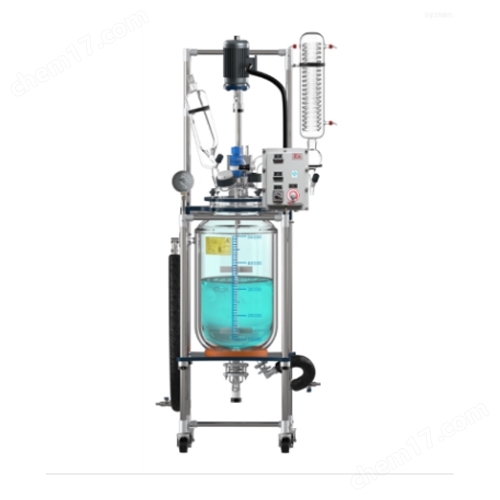
Glass distillation tower deviceSeparation is achieved based on the difference in boiling points of each component in a liquid mixture. By heating, low boiling point components are preferentially vaporized, and the rising vapor contacts the reflux liquid multiple times inside the tower, resulting in partial condensation and mass transfer, forming the "theoretical tray" effect. The tower body made of high borosilicate glass material allows real-time observation of gas-liquid flow state, and the packing (such as Raschig ring, θ ring) or tray (sieve plate, bubble cover plate) promotes mass transfer efficiency by increasing the surface area. The condenser converts the vapor into liquid, partially refluxes to the tower to maintain component balance, and the remaining fraction is collected by the fractionation head. Vacuum distillation can lower the boiling point through a vacuum system and is suitable for thermosensitive substances; The pressurization operation is used to increase the boiling point and adapt to special separation requirements.
Glass distillation tower deviceThe structural composition and key components of
Tower system: Vertical columnar high borosilicate glass tower body, usually 30cm-2m in height, with segmented filling or tray arrangement inside. The tower kettle is equipped with an electric heating jacket, oil bath or magnetic stirring heating device, with a temperature control range of 0-300 ℃, and supports normal/reduced pressure operation (0-0.098MPa).
Condensation system: Serpentine or straight condenser tubes are connected to the cooling water circulation to ensure sufficient condensation of steam. The fractionation head can accurately control the reflux ratio (adjustable from 1:99 to 99:1), achieving segmented collection of fractions.
Control unit: digital temperature controller, vacuum gauge, reflux ratio controller constitute an automated monitoring system. The temperature sensor provides real-time feedback on the temperature of the tower kettle, tower top, and each section, while the vacuum pump and pressure sensor ensure the airtightness of the system.
Auxiliary components: frosted interface sealing grease, O-ring, lifting platform, dust film, etc. to ensure stable operation of the equipment. The type of packing should be selected according to the separation requirements. For example, glass spring packing is suitable for high-efficiency mass transfer, while θ ring packing optimizes fluid dynamics properties.
Glass distillation tower deviceStandardized operating procedures
Preparation stage
Check the glass tower body, condenser tube, valves and other components for cracks and scratches, apply special sealing grease to the frosted interface, and ensure that the pipeline connections are tight and leak free.
Select the type and amount of filler according to the properties of the material (evenly fill to 2/3 of the tower height), install thermometer sleeves, feed pipes, and discharge pipes.
Turn on the cooling water circulation system and confirm that the water flow is stable; The vacuum system needs to be adjusted slowly to avoid sudden pressure changes.
Operation phase
Feeding: The amount of material should be controlled at 1/3-2/3 of the tower kettle volume to avoid boiling overflow or insufficient efficiency.
Heating: the temperature rises at the rate of 5-10 ℃/min, and the total reflux operation is adopted at the initial stage. After the temperature distribution is stable, the reflux ratio is adjusted. Thermally sensitive substances should be heated using an oil bath or magnetic stirring to prevent local overheating.
Monitoring: Real time observation of tower top temperature, tower kettle liquid level, and gas-liquid flow status, and dynamic adjustment of separation effect through reflux ratio controller. The decompression operation requires gradually establishing the vacuum degree and regularly checking the sealing.
Collection: Collect fractions in sections according to temperature gradients, with low boiling point components collected first and high boiling point components extracted sequentially as the temperature increases.
Ending and Cleaning
Turn off the heating system and wait for the temperature to drop below 80 ℃ before turning off the cooling water and vacuum pump. Cooling is required before disassembling glass components to avoid thermal stress cracking.
Use solvents such as ethanol and distilled water to clean residual materials and avoid scratching the glass surface with a hard bristled brush. The packing material needs to be replaced or cleaned regularly to prevent clumping from affecting mass transfer efficiency.
When storing the equipment for a long time, wipe it dry and place it in a dry and ventilated place. Wrap the interface with dust-proof film to avoid dust pollution.
Maintenance and upkeep standards
Daily maintenance: Check the sealing of the frosted interface after each use and regularly apply special sealing grease; Avoid using corrosive solvents during cleaning to prevent seal aging.
Regular maintenance: Check the frame connectors and screw fastening every month; Calibrate the temperature control system and vacuum gauge quarterly; Check the condition of the packing every six months and replace broken or clumped packing.
Troubleshooting: In case of heating failure, check the thermocouple wiring, fuses, and power lines; When the needle of the reflux ratio controller does not move, it is necessary to adjust the time setting or check the coil position; When the separation efficiency is low, the reflux ratio can be increased or the packing density can be optimized.
Safety precautions
Heat source management: Avoid local overheating during heating, and the electric heating sleeve should evenly contact the bottom of the tower kettle; The temperature of the oil bath should not exceed the flash point to prevent fires.
Pressure control: During the pressure reduction operation, the vacuum valve should be slowly adjusted to avoid a sudden drop in pressure causing glass breakage; Immediately open the vent valve when the system pressure is abnormal.
Material safety: Flammable and explosive materials should be handled in a fume hood and equipped with fire extinguishing equipment; Corrosive materials require the use of corrosion-resistant glass and sealing components.
Emergency response: In case of sudden power outage, immediately turn off the heating and open the vent valve to prevent backflow; When the glass breaks, quickly stop the operation and isolate the dangerous area.