-
E-mail
1582852978@qq.com
-
Phone
13643267101
-
Address
Cangzhou West Industrial Zone
Product Categories
- Concrete temperature measurement line
- Box type electric furnace (horse furnace)
- Concrete forced single horizontal shaft mixer
- Waterproof membrane perforation resistance tester
- Soxhlet extractor
- Waterproof membrane impermeability meter
- Waterproof membrane thickness gauge
- Rubber Double Head Grinding Machine
- Fiber Image Analyzer
Cangzhou Lianying Instrument Co., Ltd
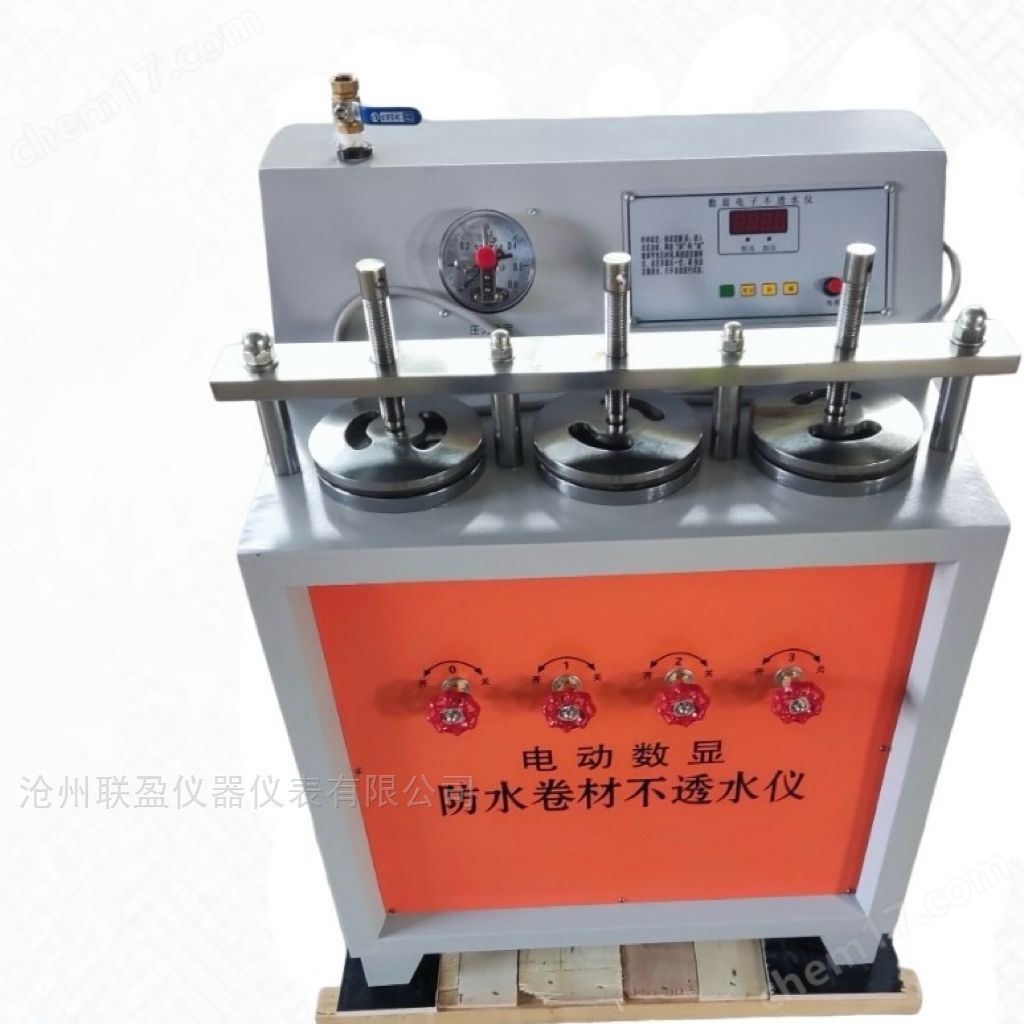
Waterproof membrane impermeability meter
NegotiableUpdate on 02/09
- Model
- Nature of the Manufacturer
- Producers
- Product Category
- Place of Origin
Overview
The DTS-5 waterproof membrane impermeability tester is a specialized experimental equipment used to test the impermeability performance of waterproof membranes under specified pressure conditions. This device is designed and manufactured in accordance with GB/T 328.10-2007 "Test Method for Impermeability of Building Waterproofing Membrane" and relevant industry standards. It is mainly used to determine whether there is leakage of waterproofing membrane under certain water pressure and specified time, in order to evaluate its waterproof performance and quality stability.
Product Details
1Waterproof membrane lap joint impermeability meterProduct Overview
DTS-5 typeWaterproof membrane impermeability meterIt is a specialized experimental equipment used to test the impermeability of waterproofing membranes under specified pressure conditions. This device is designed and manufactured in accordance with GB/T 328.10-2007 "Test Method for Impermeability of Building Waterproofing Membrane" and relevant industry standards. It is mainly used to determine whether there is leakage of waterproofing membrane under certain water pressure and specified time, in order to evaluate its waterproof performance and quality stability.
This equipment is widely used in building material testing institutions, quality supervision departments, waterproof material production enterprises, and research institutes. It can be used for quality inspection of various waterproof materials such as polyvinyl chloride (PVC), polyethylene polypropylene (PEP), ethylene propylene diene monomer (EPDM), polymer self-adhesive waterproof rolls, modified asphalt rolls, etc.
The DTS-5 model has a reasonable structure and is easy to operate. It is equipped with a precise pressure control system and time recording device, and can work stably for a long time under standard testing conditions. The equipment has excellent sealing performance and accurate and reliable test results, making it an important testing instrument for the production and inspection of waterproofing membranes.
⸻
IIWaterproof membrane lap joint impermeability meterProduct Specifications
•Model: DTS-5
•Test pressure range: 0.1 MPa to 0.5 MPa (adjustable)
•Pressure accuracy: ± 0.01 MPa
•Specimen specification: Φ 150 mm (diameter)
•Sample clamping method: upper and lower flange bolt clamping, sealing ring sealing
•Pressure medium: Clear water
•Pressure method: manual or electric pressure pump
•Pressure display mode: precision pressure gauge or digital pressure sensor display
•Test time: adjustable, generally standard is 120 minutes
•Dimensions: Approximately 500 × 400 × 1200 mm
•Weight: Approximately 60 kg
•Working environment temperature: 5 ℃~35 ℃
•Power supply: AC 220V, 50Hz (if equipped with electric pressurization)
•Applicable standards: GB/T 328.10-2007, GB 18242, JC/T 1075, etc
⸻
IIIWaterproof material impermeability testerInstructions for Use
1.Sample preparation
•Cut the waterproof membrane into circular test pieces with a diameter greater than 150 mm, ensuring a smooth and wrinkle free surface.
•Check if the surface of the sample is clean and dry. If there is dust or oil on the surface, it should be cleaned thoroughly.
2.Install the sample
•Open the sample fixture and place the sample on the lower flange sealing ring.
•Ensure that the sample covers the entire test port and that the testing surface faces the water pressure side.
•Install the upper flange and tighten it evenly with bolts to ensure good sealing.
3.Add water and exhaust
•Fill the test chamber with clean water through the water inlet while releasing air to avoid affecting pressure stability.
4.Pressure test
•Set the test pressure according to standard requirements (such as 0.3 MPa);
•Start the pressure pump and slowly increase the pressure to the set value to avoid pressure shock;
•Start timing (usually 120 minutes) and maintain stable pressure during this period.
5.Experiment completed
•After reaching the specified time, slowly release the pressure to prevent damage to the sample due to sudden changes in force;
•Disassemble the sample, observe for any signs of leakage, and record the results.
⸻
4Waterproof material impermeability testerUsage method (simplified process)
1.Cut and prepare the sample;
2.Correctly clamp the sample in the testing chamber;
3.Inject water into the test chamber and exhaust air;
4.Slowly increase the pressure to the set value;
5.Maintain pressure and observe for leaks according to the prescribed time;
6.Record the results and disassemble the sample.
⸻
5Overlapping seam impermeability meterPrecautions
1.safe operation
•During the pressurization process, it is not allowed to stand directly in front of the sample to prevent splashing when the sample fails;
•Operators should wear goggles and waterproof gloves.
2.pressure control
•The pressurization should be carried out slowly, and instantaneous pressurization is strictly prohibited to prevent impact damage to the sample or equipment;
•During the experiment, the pressure should be kept constant, and any fluctuations should be adjusted promptly.
3.sealing inspection
•Before the experiment, the condition of the sealing ring should be checked. If there is aging or damage, it should be replaced in a timely manner;
•The bolts should be tightened evenly to ensure consistent stress around the specimen.
4.Water requirements
•The test water should be clean water to avoid impurities blocking the pipeline or damaging the sealing surface.
5.Environmental Requirements
•The room temperature should comply with the standard regulations to avoid the influence of high or low temperature on the performance of the sample;
•The equipment should be placed on a stable and dry workbench.
6.maintenance
•After each experiment, drain the internal moisture of the equipment and dry the surface;
•Regularly check the pressure gauge, booster pump, and piping system to ensure normal operation;
•When the equipment is not in use for a long time, it should be stored in a dry and dust-proof environment.
⸻
VIOverlapping seam impermeability metersummary
DTS-5 typeWaterproof membrane impermeability meterIt is a high-precision, stable, and waterproof performance testing equipment that meets national standards. It is not only suitable for laboratory quality testing of various waterproofing membranes, but also serves as a quality control measure in the production process of enterprises. The device is easy to operate and the detection results are reliable. As long as the operating procedures and standards are strictly followed, accurate waterproof performance evaluation data can be obtained, providing reliable basis for engineering construction and material production.