- Phone
-
Address
Room 3002, 3003, 3011, Dongshan Square, No. 69 Xianlie Middle Road, Yuexiu District, Guangzhou City
Product Categories
Fujifilm and Light (Guangzhou) Trading Co., Ltd
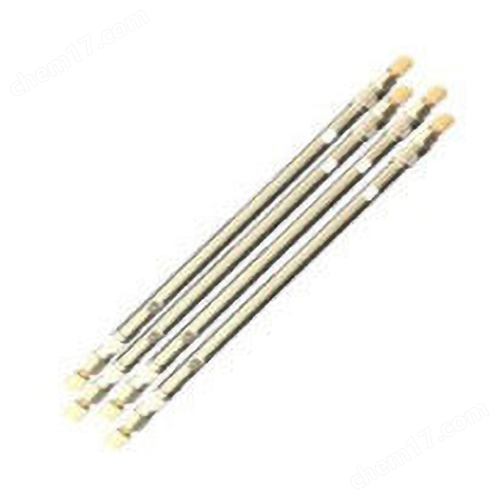
Wakopak® Wakosil® -II series (C18)
NegotiableUpdate on 05/06
- Model
- Nature of the Manufacturer
- Producers
- Product Category
- Place of Origin
Overview
Wakopak Wakosil -The II series (C18) is an ODS (C18) HPLC column filled with high-purity silica gel packing, supporting analytical validation.
Product Details
C18 chromatographic column supporting analysis and validation
Wakopak®Wakosil®-II series (C18)
|
Wakopak®Wakosil®-The II series is an ODS (C18) HPLC column filled with high-purity silica gel packing. Wakopak®Wakosil®-II HG, RS, AR series HPLC columns not only have Wakopak®Wakosil®-The characteristics of the II series include high theoretical tray count and durability. Meanwhile, this series of products comes withAnalysis and verification supportThe 'Wakopak'®Certificate of Analysis, which records the specifications and measured values of the physical properties of the silicone substrate itself and various filler properties after chemical modification, ensuring the chromatographic columnThe performance has good reproducibility within the specification range. |
|
◆Wakopak®Wakosil®-II seriesofOverview
Wakopak®Wakosil®-Characteristics of Series II
l Use high-purity silica gel with low metal content.
l Launch a series of products (AR, HG, RS) for different analytical purposes.
l Introduce various specifications of chromatography columns and separation and purification chromatography columns (Prep series) to meet different needs.
Wakopak®Wakosil®-Comparison of Series II
Wakosil®-Ⅱ HG |
Wakosil®-Ⅱ RS |
Wakosil®-Ⅱ AR |
Wakosil®-Ⅱ5C18-100 |
|
characteristic |
Number of high theoretical tower plates |
In aqueous eluent High separation performance |
Stereoscopic selectivity and good durability |
High carbon content |
purpose |
Wakosil®-II series preferred |
Wide range polar compounds analysis |
Peptide and structural isomer analysis, analysis using acidic/alkaline eluent |
Analysis of Low Polarity Compounds |
chemical modification |
C18、C8 |
C18、C8 |
C18 |
C18 |
particle size |
3 µm、5 μm |
3 µm、5 μm |
3 µm、5 μm |
5 μm |
modify |
Monomer modification |
Monomer modification |
Polymer modification |
Monomer modification |
Analysis and verification support |
〇 |
〇 |
〇 |
|
|
Specification for Separation and Purification (Prep Series) |
〇 |
〇 |
〇 |
|
Secondary filling service |
〇 |
〇 |
〇 |
〇 |
Wakosi-Ⅱ®The chromatographic column with a higher theoretical number of plates in HG............... FUJIFILM Wako chromatographic column products.
Wakosi-Ⅱ®RS has a large specific surface area and high retention capacity. conductWell sealed end treatment, even for aqueous eluents, has high separation and retention capacity, suitable for the separation of highly polar compounds.
Wakosi-Ⅱ®AR adopts polymer based chemical modification, with excellent stereoselectivity. In addition, it has good durability and can use mobile phases with a wide pH range.
About End Sealing
The reaction between the silanol groups of silica gel and the silanization agent is affected by steric hindrance, resulting in some silanol groups remaining that have not been silanized. These residual silanol groups can cause peak tailing of alkaline compounds, affecting the separation efficiency. The step of further silanization to remove residual silanol groups is called end capping. The sealing mainly uses silane compounds such as trimethylchlorosilane (TMS).

Regarding monomer modification and polymer modification
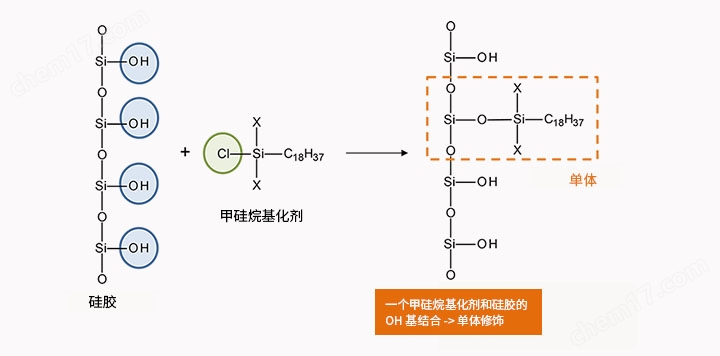
Monomer modification is the combination of nail silanizing agents and silanol groups on silica gel in a one-to-one ratio.
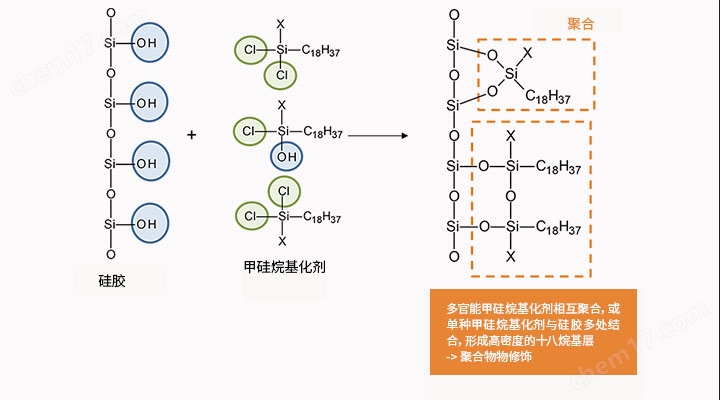
Polymer modification refers to the polymerization of multifunctional silylating agents or the combination of a single silylating agent with multiple sites on the silica gel during the ODS conversion of silica gel, forming a high-density octadecane based structure.
Monomer modification
<Polymer Modification>
Similar Product Recommend


