-
E-mail
3440125819@qq.com
-
Phone
18911397564
-
Address
No.1 Shangdi 10th Street, Shangdi Science and Technology Park, Haidian District, Beijing
Product Categories
- Impedance analyzer
- Voltage breakdown tester
- Voltage resistance strength breakdown tester
- Semiconductor resistance tester
- Vertical specific resistance meter for metal conductive coatings
- Capillary rheometer
- Dielectric constant dielectric loss test
- Fully automatic oil medium loss and resistivity tester
- AC/DC electrical strength tester
- Voltage breakdown field strength tester
- Volume surface resistivity tester
Beijing Beiguang Jingyi Instrument Equipment Co., Ltd

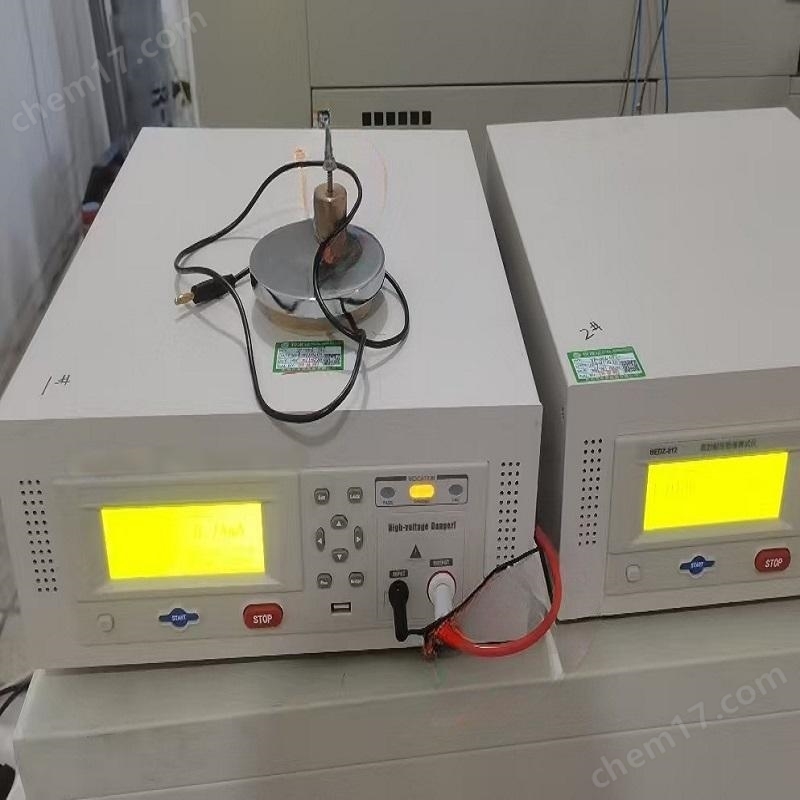
Thin film 50 point voltage breakdown tester
NegotiableUpdate on 12/30
- Model
- Nature of the Manufacturer
- Producers
- Product Category
- Place of Origin
Overview
Detailed exploration of the environmental requirements for the 50 point breakdown voltage test (i.e. breakdown voltage test) of thin films using a thin film 50 point voltage breakdown tester. Environmental conditions are crucial factors that affect the results of electrical strength testing, and their importance is no less than the requirements for electrodes. If the environmental control is improper, even if the equipment and electrodes meet the standards, the obtained data may still be invalid or unreliable.
Product Details
Thin film 50 point voltage breakdown tester
Thin film electrode method 50 point voltage breakdown tester
1、 Testing standards and equipment requirements
Testing standards
Thin film dielectric strength testing should follow standards such as GB/T 1408.1-2016 "Test Methods for Electrical Strength of Insulation Materials" or ASTM D149. The testing voltage range is usually 0-50kV, and the boosting rate can be adjusted (such as 500V/s, 1000V/s, etc.).
Key equipment
Dielectric breakdown strength tester: High precision voltage sensor (error ≤ 2%), current detection module (adjustable leakage current 1-30mA), and computer control system are required.
Electrode configuration: The standard electrode size is either 25mm × 25mm or 75mm × 25mm, depending on the thickness of the sample.
2、 Testing methods and steps
Sample preparation
The thickness of the film should be uniform. It is recommended to measure the thickness deviation according to GB/T 6672 standard to ensure that the testing area is defect free.
The number of samples is usually not less than 5, and the environmental conditions should be controlled at a temperature of 15-25 ℃ and a humidity of 30% -60%.
Testing process
Boosting method: Continuous and uniform boosting (until breakdown) or step-by-step boosting (withstand voltage test) can be selected.
Data recording: Record the breakdown voltage value and calculate the dielectric strength (breakdown voltage/sample thickness, unit kV/mm).
3、 Result analysis and application
Performance indicators
The dielectric strength of typical films such as BOPET can reach 1500V/mil (approximately 59kV/mm).
Flame retardant materials (such as FR60, FR700) need to additionally meet UL 94V-0 flame retardant rating and environmental standards.
Application scenarios
High dielectric strength films are suitable for electronic insulation (such as PCB substrates), aerospace (such as TPU intermediate films) and other fields.
If specific testing parameters or equipment operation details are required, further information on film types or application scenarios can be provided for detailed analysis.
Thin film 50 point voltage breakdown tester
The following is the film50The core environmental requirements for point withstand voltage testing are mainly based on international standards (such asIEC602431,ASTMD149)And general practice.
Overview of Core Environmental Requirements
1.Temperature and humidity: must be controlled within the standard range to prevent moisture or changes in physical properties of the material.
2.Immersion medium: Specific insulating oil is required to prevent surface flashover and dissipate heat.
3.Atmospheric pressure: It is usually required to be conducted at standard atmospheric pressure unless specifically studied.
4.Electromagnetic interference and vibration: should be avoided as much as possible to prevent instrument misoperation.
5.Cleanliness: The environment needs to be clean to prevent dust and impurities from affecting it.

1、 Temperature and humidity
This is the most basic and important environmental parameter.
Standard conditions: The vast majority of standards stipulate that before conducting testing, the sample and testing environment should be(23±2)°CAnd(50±5)%Relative humidity(RH)Reaching a state of equilibrium (usually required)24Hours or longer).
Humidity: Humidity has a significant impact on breakdown voltage. Moisture will adsorb onto the surface of the film and even penetrate into non porous areasDense material interior reduces its surface resistance and bulk resistance. Under high electric fields, this can easily cause surface flashover (discharge along the sample surface) rather than intrinsic breakdown (through breakdown within the sample body), resulting in abnormally low test values.50In point testing, humidity fluctuations can cause significant data dispersion.
Temperature: Temperature can affect the crystallinity, molecular chain activity, and conductivity of materials, thereby affecting their breakdown performance. Excessive temperature may cause material softening and thinning under electrode pressure, resulting in a decrease in breakdown voltage.
Requirement: The test should be conducted in a constant temperature and humidity laboratory or a dedicated environmental chamber. Before testing, the sample must be processed under standard temperature and humidity conditions for a sufficient period of time (conditioning), and the testing process should also be conducted in this environment.
2、 Immersion medium
In order to prevent surface flashover and provide a uniform heat dissipation environment, thin film breakdown testing is almost always conducted in insulating oil.
Medium type: Use specialized transformer oil or silicone oil. Its breakdown strength itself must be much higher than that of the tested film (usually required)>50kV/2.5mmOr higher).
Function:
1.Suppressing flashover: The insulation performance of oil medium is much better than that of air, which can effectively prevent discharge along the interface between the film surface and air before the test voltage reaches the intrinsic breakdown strength of the film.
2.Heat dissipation and cooling: The breakdown process generates heat, and oil can help dissipate heat, avoiding the accumulation of heat that can cause material thermal breakdown, thus more accurately reflecting its electrical breakdown strength.
3.Eliminating bubbles: Oil can fill the tiny gaps between the sample and the electrode, eliminating air bubbles (which have a low dielectric constant and are prone to partial discharge).
Requirement: The oil tank should be kept clean, and the oil should be replaced or filtered regularly to prevent carbonization, aging, or moisture contamination caused by multiple punctures. The electrode and sample mustImmerse in oil with sufficient safety distance above the liquid level.
3、 Atmospheric pressure
Standard conditions: Usually in(86~106)kPaUnder standard atmospheric pressure.
Reason: Air pressure can affect the insulation strength of gases (such as Pashen's law). Under low air pressure (such as in high-altitude areas), the air is more easily ionized, which increases the risk of surface flashover or air breakdown. Even if the sample is in oil, there may still be risks above or around it. For routine testing, laboratories generally meet this condition. If tested under non-standard air pressure, it should be noted in the report.
4、 Electromagnetic interference and vibration
Electromagnetic interference: The breakdown tester itself generates high voltage, but it may also be affected by external high-power equipment interference, leading to misjudgment or recording errors in the control circuit. The instrument should have good shielding and grounding.
Vibration: The experimental platform should be stable to prevent external vibrations from being transmitted to the electrode system. Minor vibrations may cause changes in the contact point between the electrode and the sample, introducing testing errors.
5、 Safe environment
High voltage testing carries risks, and the testing area should have clear warning signs, safety interlock devices (such as oil tank cover switch linkage power-off), and grounding rods.
Operators need to undergo training and strictly comply with safety regulations.
Summary Table of Environmental Requirements
|environmental factors|specific requirements|Reason and explanation|
|temperature|23±2°C|Avoid changes in material properties and ensure testing consistency.|
|humidity|50±5%RH|crucial. Prevent surface moisture from causing flashover, and avoid low and scattered data.|
|Immersion medium|Clean high insulation strength oil (such as transformer oil)|Must be used. Inhibit surface flashover, provide uniform heat dissipation, and eliminate bubbles.|
|atmospheric pressure86 to 106 kPa.The standard laboratory environment usually meets the requirements. Non standard should be indicated.|
|Electromagnetic and Vibration|No strong interference, no significant vibration|Ensure stable operation and measurement accuracy of the instrument.|
|Sample processing|Processing in a testing environment>24h|Ensure sufficient balance between the sample and the testing environment, especially humidity balance.|
Operational Recommendations
1.Preprocessing is key: placing the film sample in23°C/50%RHAt least in a standard environment24Hour by hour, to ensure its performance is fully stable.
2.Oil medium management: Regularly check the breakdown strength of insulating oil. If the strength of the oil decreases, it should be replaced or filtered in a timely manner. After each test, check for carbon particles generated by breakdown in the oil and filter them to remove them.
3.Real time monitoring: It is best to equip the laboratory with a temperature and humidity meter, and indicate the actual temperature and humidity values at that time in the test records, so that traceability analysis can be carried out in case of abnormal data.
4.Following standards: Ultimately, it must be based on the detailed provisions of the specific product standards you are implementing (such as standards for capacitor films, insulation films, etc.), which may have more precise or special requirements for the environment.
In summary, in order to obtain accurate and reliable50The point withstand voltage test data must strictly control the sample, electrode, and environment as a whole system, with constant temperature, humidity, and clean oil medium being the core of environmental control.
Capacitor film50The point dielectric strength (breakdown voltage) tester has extremely strict requirements for the environment. Because environmental factors can significantly affect the dielectric properties of thin films, if not controlled properly, test results will lose accuracy, repeatability, and comparability.
Capacitor film50Point dielectric strength (breakdown voltage) tester
The following are detailed environmental requirements, mainly based on international standards (such asIEC60243-1TheASTMD149)And industry best practices.
1、 Core General Requirements
The testing environmentThe goal is to ensure that the test results truly reflect the dielectric strength of the capacitor film itself, rather than being affected by external environmental conditions.
2、 Specific environmental requirements
1.ambient temperature
Requirement: Constant and controllable. The standard laboratory temperature is usually specified as23±2°C.
Molecular motion: An increase in temperature will intensify the thermal motion of thin film molecules, leading to an increase in carrier mobility and a decrease in material resistivity, which may result in a lower breakdown voltage value.
Heat dissipation: There is a thermal breakdown mechanism during the breakdown process. Excessive ambient temperature can hinder the heat dissipation of the sample during testing and increase the probability of thermal breakdown.
Repeatability: Maintaining a constant temperature is a prerequisite for ensuring that test results can be compared repeatedly between batches and on different dates.
2.relative humidity
Requirement: Strict control. The usual standard is defined as50%±5%or50%±10%.
Reason: (This is a factor that greatly affects thin film testing)
Moisture adsorption: polymer film (such asBOPPThePET)It will adsorb trace amounts of moisture from the air. The higher the humidity, the greater the adsorption capacity. Moisture significantly increases the conductivity of the film and may alter its dielectric constant, leading to a severe decrease in breakdown voltage.
Surface flashover: Even when tested in oil, if the environmental humidity is too high during the process of removing the sample from the oil tank and clamping, a small water film may form on the surface of the sample, affecting the surface resistance and indirectly affecting the results.
Equipment safety: High humidity environments may cause condensation in high-voltage parts, resulting in equipment short circuits or safety hazards.
3.Test medium (oil bath environment)
This is a thin film50The core environmental requirement for point testing is that it directly wraps around the sample and electrode.
Medium type: Standardized electrical insulation oil, such as transformer oil or silicone oil, must be used. It is strictly prohibited to use non-standard or contaminated oil.
Insulation and cooling: prevent surface flashover and evenly dissipate heat.
Uniform electric field: The dielectric constant of oil is higher than that of air, which can improve the distribution of electric field.
Cleanliness: The oil must be kept highly clean, free of impurities, moisture, and bubbles. Small impurities or bubbles can cause partial discharge under high pressure, erode thin films, and result in abnormally low breakdown voltage values.
Oil temperature: The oil temperature also needs to be controlled, usually consistent with the ambient temperature (e.g23°C). During the testing process, the oil temperature will slowly rise, but significant fluctuations should be avoided.
regular replacement/Filtering: Depending on the frequency of use, it is necessary to regularly filter or replace the insulating oil to ensure its insulation performance.
4.atmospheric pressure
Requirement: Usually at standard atmospheric pressure(86kPa~106kPa)Go ahead. For routine testing, as long as the laboratory is not on a plateau orIn areas with high air pressure, this factor has a relatively small impact.
Reason: Air pressure can affect the breakdown field strength of gases (Pashen's law). If the test is conducted in air, the air pressure has a huge impact. But when carried out in oil, the impact is shielded. However, maintaining standard air pressure is part of good laboratory practice.
5.Electromagnetic interference and vibration
Electromagnetic interference:
Requirement: Keep away from strong electromagnetic interference sources such as high-power motors, frequency converters, and wireless transmission equipment.
Reason: The high-voltage test signal is weak, and electromagnetic interference may affect the stability of the voltage acquisition system, resulting in inaccurate readings or misoperations.
Vibration and dust:
Requirement: The test bench should be stable and avoid significant vibration. The environment should be kept clean and free of large amounts of dust.
Reason: Vibration may affect the stable contact of electrodes. Dust falling into the oil or adhering to the sample will become impurities.
6.power quality
Requirement: A stable AC power supply with a voltage fluctuation range of ± rated voltage10%Within. It is best to equip with a regulated power supply.
Reason: Power supply fluctuations can affect the output stability of high-voltage boosters and the accuracy of control systems.
3、 Summary: Composition of an Ideal Testing Environment
To ensure the safety of your capacitor film50The point dielectric strength test data is reliable, and your laboratory environment should meet the following conditions as much as possible:
|Environmental factors|Ideal requirements|main reason|
|Temperature|23±2°C|Avoid thermal motion affecting the electrical properties of materials and ensure test repeatability|
|relative humidity| 50%±5%|Prevent the deterioration of electrical performance caused by moisture absorption of thin films and ensure equipment safety|
|Test medium (oil)|Standard insulating oil|Prevent flashover, uniform electric field, and prevent impurities from causing premature breakdown|
|laboratory environment|No strong electromagnetic interference, no vibration|Ensure the accuracy and stability of the measurement system, and avoid external pollution|
|power supply|Stable, it is recommended to use a voltage regulator|Ensure the accuracy of boost rate and voltage readings|
Simply put, a professional capacitor film breakdown voltage testing laboratory should be a shielded room with constant temperature and humidity, clean and tidy, and a clean electromagnetic environment. Any negligence in environmental control can render expensive equipment and precise electrode systems meaningless, as what you measure is no longer the properties of the material itself, but the data contaminated by environmental noise.
Before conducting formal testing, especially when comparing different batches of products or conducting quality certification, it is necessary to spend time ensuring that the sample and test oil are fully stable under standard temperature and humidity conditions (usually requiring24The key step in obtaining accurate data is to achieve thermal equilibrium and wet equilibrium for at least an hour.