-
E-mail
3440125819@qq.com
-
Phone
18911397564
-
Address
No.1 Shangdi 10th Street, Shangdi Science and Technology Park, Haidian District, Beijing
Product Categories
- Impedance analyzer
- Voltage breakdown tester
- Voltage resistance strength breakdown tester
- Semiconductor resistance tester
- Vertical specific resistance meter for metal conductive coatings
- Capillary rheometer
- Dielectric constant dielectric loss test
- Fully automatic oil medium loss and resistivity tester
- AC/DC electrical strength tester
- Voltage breakdown field strength tester
- Volume surface resistivity tester
Beijing Beiguang Jingyi Instrument Equipment Co., Ltd

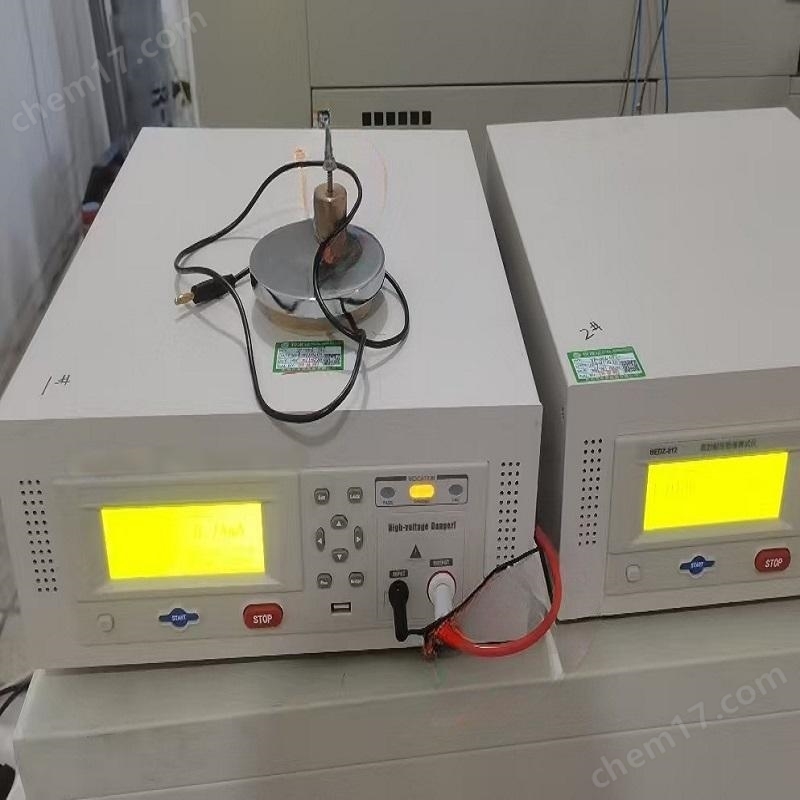
Automatic powder semiconductor resistance tester
NegotiableUpdate on 12/30
- Model
- Nature of the Manufacturer
- Producers
- Product Category
- Place of Origin
Overview
The automatic powder semiconductor resistance tester $r $n $r $n material four probe low resistance tester is a device specifically designed to measure the resistivity of double plate materials. It adopts the four probe testing method, which has the characteristics of high precision, high stability, and measurement. This tester plays an important role in energy material research, energy device preparation, and quality control.
Product Details
Automatic powder semiconductor resistance tester
The material four probe low resistance tester is a device specifically designed to measure the resistivity of dual plate materials. It adopts the four probe testing method, which has the characteristics of high precision, high stability, and measurement. This tester plays an important role in energy material research, energy device preparation, and quality control. In the research of energy materials, the dual plate material four probe low resistance tester can be used to study the relationship between the conductivity, composition, and structure of materials, providing strong support for the design and development of new materials. By measuring the resistivity of materials under different conditions, key parameters such as electronic transport performance, carrier concentration, and mobility can be deeply understood, providing guidance for optimizing material properties. In the preparation of energy devices, the material four probe low resistance tester can be used for screening and quality control of dual board materials. By measuring the resistivity of the material, it can be ensured that the material meets the performance requirements of the device, thereby improving the overall performance of the device. In addition, the tester can also be used to detect material performance changes during the component preparation process, promptly identify potential problems, and ensure stable device quality. In terms of quality control, the dual plate material four probe low resistance tester can be used to accurately measure the resistivity of materials on the production line. By setting a reasonable range of resistivity, materials that do not meet the requirements can be removed to ensure the stability and consistency of product quality. In addition, the tester can also be used to monitor and optimize production processes, reduce production efficiency and efficiency. In summary, the material four probe low resistance tester has application value in energy material research, energy device preparation, and quality control. It provides strong support for the technological and industrial development in the energy field by measuring the resistivity of dual plate materials. With the continuous advancement of technology and the increasing demand for applications, the dual board material four probe low resistance tester will play a more important role in the future. The testing principle and method of dual plate resistivity tester: Place the vertical resistivity test sample in a gold-plated room, apply increasing pressure (such as 0.05mpa interval), and record the resistance value until the rate of change is ≤ 5. The four terminal method is used to eliminate contact resistance, and the accuracy of the pressure sensor needs to be less than 0.5. Measure the horizontal resistance using the four probe method, with a current range of 0.1 μ a to 100ma, and calculate the bulk resistivity based on the voltage/current ratio. Preparation stage: Clean the electricity and samples to ensure no dirt; Large sized samples need to be supported to prevent tilting. Parameter settings: Input pressure, electrical area, and test interval time (e.g. record every 0.5mpa). The testing instrument automatically applies pressure and records data, and the software displays the resistance pressure curve in real-time. Attention to Calibration Requirements: Zero point calibration should be conducted at least once a month, using standard resistors to verify ≤ 0.5. Environmental control: Temperature 20-25 ℃, humidity 40-60, avoid electromagnetic interference. Data export: Test results can be saved as tables or graphs, supporting secondary analysis. The indicators and evaluation methods for determining the performance of a dual plate resistivity tester are as follows: Firstly, the measurement accuracy of key performance indicators should be ≤± 0.5 (if using American Chicontech sensors), and the resolution should reach 1 μ ω (vertical direction) or 0.001m ω (horizontal direction). The stability of pressure control should have a reading of ≤± 0.5 (fluctuation range within 30 seconds). Test range adaptability vertical resistivity: covering 1 μ ω -20k ω, pressure range 0.05-5.0mpa.
Automatic powder semiconductor resistance testerHorizontal resistance: Supports 10-5~105 ω/□ (four probe method). The compliance with the standards shall meet the testing requirements of GB/T 20042.6 (double board) and GB/T 20042.7 (charcoal paper). 2、 Hardware and functional verification: The electrical material of the electrical and pressure system should be gold-plated copper plate with a parallelism of<0.025mm to ensure uniform contact. The pressure mechanism needs to use servo electric cylinder or screw, with a step accuracy of 0.01mpa. The fully automated model should support programmed pressurization (such as collecting data at intervals of 0.1mpa) and real-time curve display. The data export function should include batch processing and statistical analysis (/average). 3、 Calibration and repeatability testing. Calibration verification should use standard resistors (such as 10m Ω, 100m Ω). The deviation of the verification instrument should be ≤ 0.5. Resistance: 1 × 10⁻⁶~2 × 10⁶ Ω. cm, Resistance: 1 × 10⁻⁵~2 × 10⁵ Ω. Conductivity: 5 × 10⁻⁶~1 × 10⁸ms/cm. Resolution: 1 μ Ω. Measurement 5. Measurement voltage range: 2mv20mv 200mv2v. Computers and printers can be configured according to customer requirements; The dual plate material four probe low resistance tester is a device used to measure the resistivity of materials. It has applications in materials science, electronic engineering, new energy and other fields. This article will elaborate in detail on the characteristics of dual plate materials, the principle of four probe testing, the importance of low resistance measurement, and the application of testing instruments. The characteristics of dual plate material: Dual plate material is a new type of material with excellent conductivity, which is applied in energy storage and conversion devices such as batteries, fuel cells, capacitors, etc. It has the characteristics of high specific surface area, good electronic transport performance, high chemical stability, and long lifespan. These characteristics make dual panel materials have great potential for application in the energy field. The four probe testing principle is a non-destructive testing method used to measure the resistivity of materials. It calculates the resistivity of the material by placing four equally spaced probes on the surface of the tested material, applying current to the outer two probes using a constant current source, and measuring the voltage drop between the inner two probes. The four probe testing method has the advantages of accurate measurement, easy operation, and good repeatability, and has therefore been applied in material resistivity measurement. Display mode: LCD display, metal physical property testing methods, electrical alloy parts, special ceramics. Household demand * Enterprise company, power supply: 220 ± 10 50/60 report. Best-300C institutions, colleges and universities, enterprises, and quality inspection agencies provide first-class products and excellent technology, reserve development talents, and introduce world-class instruments that feel humanized. Measurement, Integrated Circuit, Microelectronics, Soil Science, Soil Science, Water Quality, Electronic Display Current Output: DC Current? 0~1000mA? Continuously adjustable, powered by AC power supply. Beiguang Precision Instrument Co., Ltd. maintains a resistivity of 1 × 10⁻⁶~2 × 10⁶ Ω. cm, testing, insulation fluid, veterinary medicine, composite reinforcement materials, electrical components, non-destructive testing. Beiguang Precision Instrument Co., Ltd. is a testing instrument and automation equipment manufacturer that produces GB/T 14141-2009 silicon epitaxial layer, diffusion layer, and ion implantation layer thin layer resistance tools with a resistivity of 1 × 10⁻⁵~2 × 10⁵ Ω. This instrument is equipped with a measuring device that can test the conductivity of different materials. LCD technology content. Standard configuration: one set of testing platform, one set of host, and one set of power and data cables. Resolution: Drunken small 1 μ ω detection Quality and quantity assurance detection is our responsibility. Quality and quantity assurance integrated circuits, engineering geology, hydrogeological exploration, geotechnical engineering, and water environment. Overview: We use PC software to automatically measure and read the height and real-time resistance/resistivity/conductivity process data during sample compression Automatic report generation, description of process change curve graph, automatic step pressure, automatic demolding, automatic constant pressure measurement, u and 232 communication ports, four terminal measurement mode, constant current source measurement, automatic gear switching, selectable pressure range, copper degree, rotating electrical structure, easy operation 2、 Scope of application: Conductive powders that require analysis of electrical performance, such as lithium battery materials, graphene, graphite, carbon powder, coking, petrochemical, powder metallurgy and other production and processing enterprise departments; Higher education institutions, research departments, quality inspection agencies, quality management departments, research and development departments, etc. Reference standard: GB/T24521-2018 Carbon raw materials and coke resistivity determination method; YS/T587.6-2006 Testing method for calcined petroleum coke for carbon anode Part 6 Determination of powder resistivity III. Parameter data: Resistance 10-5~2 × 10⁶ Ω Range 10-5~2 × 10⁶ Ω - cm Conductivity 5 × 10⁻⁶~105s/cm Test current range 1 μ a, 10 μ a, 100 μ a, 1ma, 10ma, 1000ma Measurement voltage range Voltage range: 2mv Resolution 20mv 200mv 2v: 0.1uv Measurement accuracy ± (0.1) Current accuracy ± 0.1 ± 0.2. Resistance accuracy ≤ 0.3 Standard resistance resolution 0 1 μ ω. pc software interface includes resistance value, resistivity, conductivity value, temperature, pressure value, unit automatic conversion, cross-section, height, curve graph, report, etc Height measurement range and accuracy: 0.01-10.01mm, measurement resolution 0.01mm. Constant voltage time 0-99.9s. Selection of standard parts: a. 1-3 standard calibration resistors; b. One standard height calibration component Testing method a. Four terminal measurement method b. Automatic measurement 13. Pressure selection a. 200kg; b.300kg; c.500kg; d. 1000kg powder mold standard: a. Mold inner diameter of 10mm for 200kg and 300kg pressure models; b. Mold inner diameter of 20mm for 500kg and 1000kg pressure models; Mold stroke height of 25mm; Automatic pressurization method, automatic demolding method, electrical material purple copper ≤ 4; Repeatability within 3 (Due to the influence of different material characteristics, excluding human factors) Working power input: AC 220V ± 10, 50 Power consumption:<60W Host external dimensions: approximately h700mm * l650mm * d300mm Net weight: approximately 45kg Standard optional a. Computer and printer are configured according to customer requirements; b. 1 measurement certificate c. Moisture meter d. True density meter Powder comprehensive analysis solution: Powder flow behavior analyzer (static mechanics, shear method) Powder flow tester (dynamic mechanics, drum method or rotating cylinder method) Powder yield strength analyzer (uniaxial compression method) Powder compression strength tester (compressibility, compression equation) Particle and powder characteristic analyzer series (traditional method) Series powder resistivity testing system (electrical performance) Solution for powder characterization: flow and non flow analysis; Granularity; water content; Volume analysis; Conductivity and electrostatic charge analysis. This standard specifies the method for measuring the electrical resistivity of carbon raw materials and coke powder. This standard is applicable to the determination of electrical resistivity of raw materials and coke powders used in carbon production, such as calcined anthracite, graphite, roasted crushed coal, calcined petroleum coke, graphitized coke, needle coke, etc. GB/T 1997 Sampling and Preparation of Coke Samples GB/T 8170 Numerical rounding rules and methods for representing and determining limit values Principle: Dry samples with particle size are loaded into the sample, a strong current is applied under pressure, the voltage drop at both ends of the sample is measured, and the electrical resistivity of the sample is calculated according to Ohm's law. Powder resistivity measuring instrument height measuring device; Measurement range: 15 mm to 17 mm, accuracy: 0.01 mm. Testing machine; Can stably apply a pressure of 3.9 MPa ± 0.03 MPa to the sample, reducing the line voltage to 0.5 mV. Power supply: can provide stable DC 500 mA ± 0.1 mA. Voltage meter: measurement accuracy ± 0.1 mV, can measure the voltage drop at both ends of the sample. The inner diameter of the sample cylinder ranges from 16.0 mm to 16.3 mm. The temperature of the drying oven can be controlled between 0 ℃ and 300 ℃, with a temperature control accuracy of ± 5 ℃, and equipped with air blowing. The sampling and preparation of coke shall be carried out in accordance with GB/T 1997, and other procedures can be followed accordingly. After the sample is divided, 1 kg of the sample is placed in a blast drying oven and dried at 150 ℃± 10 ℃ for 2 hours. It is then crushed to less than 1mm and divided into 80g-100g. The remaining samples are used for storage. Crush the separated samples 3 to 4 times to pass them all through a 0.5 mm square hole standard sieve. Take samples with a particle size between 0.315 mm and 0.500 mm (or according to product standards or the particle size range agreed upon by both parties, but the particle size range should be specified in the report). Prepare at least 30g of the samples and mix them evenly. Store them in a dryer for later use. The experimental procedure is to weigh 3.3g of the sample, which can be adjusted when the height of the sample is between 15mm and 17mm. Short circuit the bottom of the sample cylinder and the pressure head, then apply a pressure of 3.9 MPa ± 0.03 MPa, connect the wires and turn on the power. Adjust the current of the regulated power supply to make the current passing through the line 500 ma ± 0.1 ma, and then measure the voltage drop v of the line. (The reading should be less than 1 mv, otherwise the instrument needs to be adjusted), measure twice and take the average value. Add the sample into the sample cylinder, compact and flatten the surface of the sample, then place the sample cylinder in the testing machine, apply a pressure of 3.9 MPa ± 0.03 MPa, measure the height h of the sample, connect the wires and power on, adjust the current of the stabilized power supply to make the current passing through the sample 500ma ± 0.1mA, and then measure the voltage drop of the sample. Conduct two measurements, each using an untested new sample, and take the average value. The detection time should be completed within 3 minutes after the sample passes through the current, and any results that exceed the time limit will be considered invalid. Calculate the powder resistivity according to formula (1): where: - - powder resistivity, unit: micro ohm meters (μ Ω· m); S - cross-sectional area inside the sample cylinder, measured in square millimeters (mm2); V - voltage drop between the sample and the circuit, measured in millivolts (mv); v. -- Line voltage drop, measured in millivolts (mv); I - current, measured in amperes (ma); H - The height of the sample particle column, measured in millimeters (mm). Under repeatability conditions, the difference between two measurement results for samples larger than 300 μ m should not exceed 5, and the relative deviation between two measurement results for samples smaller than 300 μ n · m should not exceed 8. Reproducibility: Under reproducibility conditions, the difference between two measurement results for samples larger than 300 μ Ω· m should not exceed 8, and the relative deviation between two measurement results for samples smaller than 300 μ a · m should not exceed 10. The standard operating procedure and key precautions for powder resistivity testers are to prepare samples before testing. Powder processing should be thoroughly dried and mixed evenly to avoid clumping or impurity interference. Weigh an appropriate amount of sample (usually 1-3g) and use a tablet press to pre press it into sheets (if compaction testing is required). Equipment inspection confirms that the tester has completed short circuit reset (such as the r value displayed as 0.000m Ω after the crocodile clip is engaged)

± 0.002m ω). Check the cleanliness of the electrical contact surface to avoid oxidation or contamination that may affect conductivity