-
E-mail
bjhtwc@163.com
-
Phone
18618396246
-
Address
No. 86 Wanxing Road, Changyang, Fangshan District, Beijing
Product Categories
Beijing Aerospace Weichuang Equipment Technology Co., Ltd


Thermogravimetric analysis (TGA)
NegotiableUpdate on 01/12
- Model
- Nature of the Manufacturer
- Producers
- Product Category
- Place of Origin
Overview
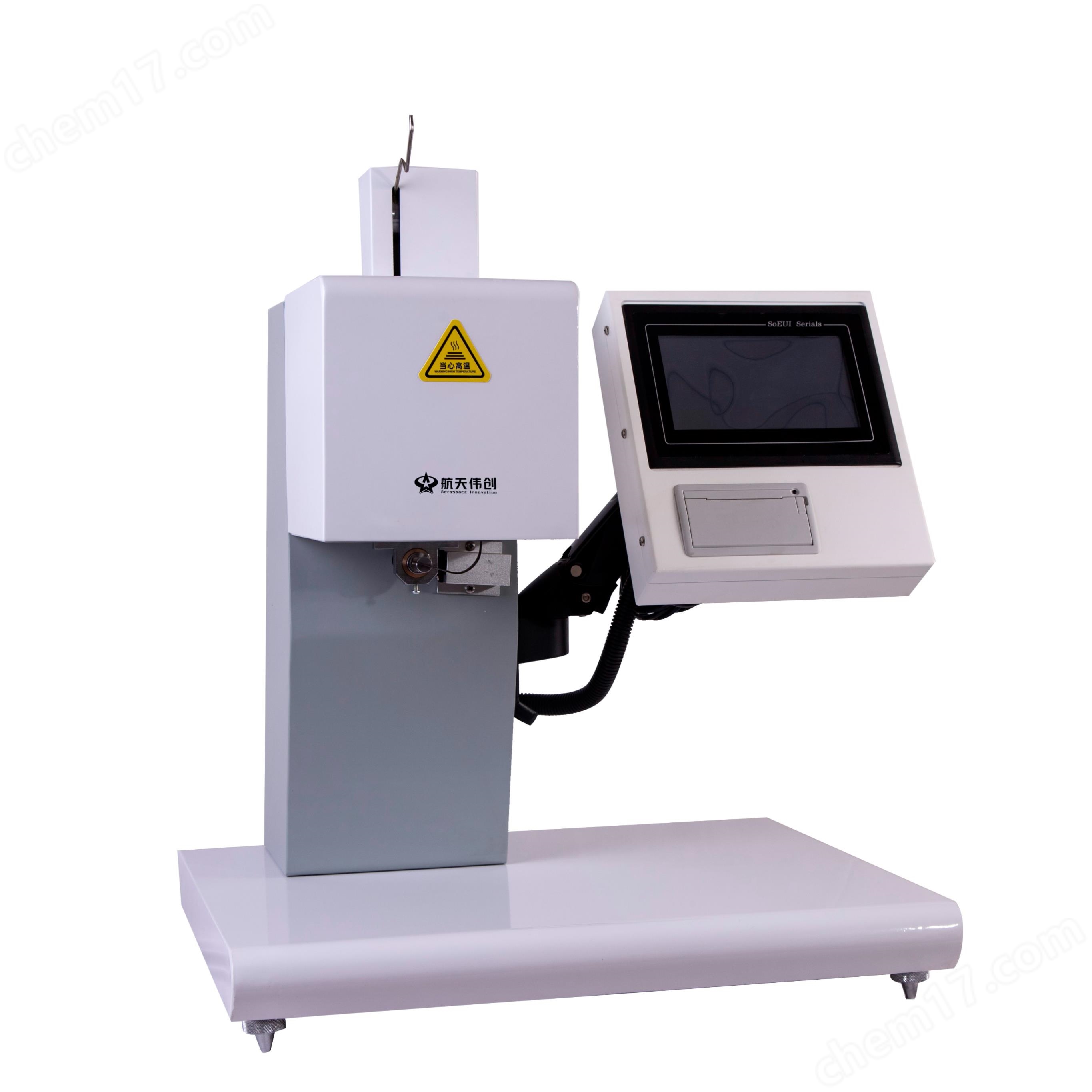
The LD-TGA series thermogravimetric analyzer TGA is an analytical instrument that uses thermogravimetric analysis (TG, TGA) to observe the changes in sample quality with temperature or time during heating, constant temperature, or cooling processes. It is used to study the thermal stability and composition of materials.
Product Details
LD-TGA seriesThermogravimetric analysis (TGA)Suitable for studying the thermal stability, decomposition process, adsorption and desorption, oxidation and reduction, quantitative analysis of components, effects of additives and fillers, moisture and volatiles, reaction kinetics of materials, widely used in research and development, process optimization, and quality monitoring in various fields such as plastics, rubber, coatings, pharmaceuticals, catalysts, inorganic materials, metal materials, and composite materials.
LD-TGA seriesThermogravimetric analysis (TGA)The main technical parameters are as follows:
1Temperature range: TGA101 room temperature~1200℃(TGA103Temperature: Room temperature~1550℃)
2Temperature resolution:0.01℃
3Temperature fluctuations:±0.01℃
4Heating rate:0.1~100℃/min
5Temperature control method:PIDControl, heating, constant temperature, cooling
6Program control: The program sets multiple temperature and constant temperature stages, and can simultaneously set five stages
7Measurement range of balance:0.01mg~3g ,Scalable to50g
8Balance accuracy:0.01mg
9Constant temperature time: Any setting
10Resolution:0.1Mg
11Display mode:7 Inch Chinese character large screen LCD display
12Atmosphere device: Built in gas flow meter, including two-way gas switching and flow rate control(Atmosphere: Inert, oxidizing, reducing, static, dynamic)
13Software: Intelligent software can automatically recordTGCurve data processingTG/DTGThe quality and percentage coordinates can be switched freely; The software comes with automatic adjustment function, which automatically extends and scales according to the graph display
14The gas path can be set to automatically switch between multiple sections without the need for manual adjustment.
15Data interface: standardUSBInterface, dedicated software (software is periodically upgraded for free)
16Power supply:AC220V 50Hz
17Curve scanning: heating scan, cooling scan
18Can simultaneously open five test charts for comparative analysis
19Cooling time:≤15min(1000℃~Room temperature); Optional air-cooled cooling device for rapid cooling and improved testing efficiency
20Crucible type: ceramic crucible, aluminum crucible
21Crucible size:5×5mm;7.5×7.5mm
22Standard material: one copy
Thermogravimetric analysis experiment of minerals
Experimental Principle
The change in material mass during heating is the basis of the weight loss method. Most minerals (such as clay, limestone, dolomite, etc.) or oxides synthesized by wet chemical methods (ZrO)2、Al2O3、TiO2When heated, the precursor body releases gas (such as CO)2、 HO, etc.), resulting in reduced quality. Measure the percentage of mass loss of a substance at different temperatures during the heating process using a thermal balance. Plot the weight loss curve with temperature and weight loss percentage as the horizontal and vertical axes, and determine the weight loss temperature of the mineral based on the slope of the curve. Clay minerals mainly undergo dehydration (free water and structured water) during heating, so their weight loss curve is often referred to as the dehydration curve.
Research has shown that different minerals have different weight loss curves. By comparing the weight loss curve of an unknown mineral with a set of standard curves for pure minerals, the composition of the unknown mineral can be identified.
However, it must be pointed out that in many cases, clay or mineral rocks often contain more than one mineral, and the weight loss temperature range of some minerals is often not significantly different or basically the same, which makes it difficult to identify mineral composition solely based on weight loss curves. Therefore, determining mineral composition also needs to be combined with other research methods (such as X-ray analysis, electron microscopy analysis, etc.) to obtain reliable results.
Instruments and reagents


Thermogravimetric analysis device
1- Power supply; 2- Transformer; 3-Balance; 4- Electric furnace; 5-: 6-Thermocouple; 7-- Potentiometer
Experimental Procedure
(1) Hang the crucible with platinum wire on the chain of the balance plate.
(2) Adjust the balance level and ensure that the chain, crucible, etc. do not come into contact with the balance base hole, table hole, electric furnace chamber, etc.
(3) After balancing the balance with sand particles, accurately weigh about 1g of clay sample and place it in a crucible, recording the mass of the sample.
(4) Cover the electric furnace with a clay cover plate, adjust the single-phase autotransformer to zero, and supply power with the teacher's consent.
(5) Adjust the transformer to slowly heat up (about 10 ℃/min), while checking the positive and negative terminals of the thermocouple and connecting it to the potentiometer.
(6) Place a 10mg weight on the left balance plate, gradually raise the temperature until the balance is re balanced, record the instantaneous temperature, then add another 10mg weight and record the instantaneous temperature when the balance is re balanced; Repeat the above operation until the furnace temperature reaches 800 ℃, then stop the experiment (the weight added to the left balance plate each time the furnace temperature reaches 400 ℃ can be increased as appropriate).
data processing
according tothe following tablePlot the thermogravimetric curve with mass fraction (weight loss percentage) as the vertical axis and temperature as the horizontal axis for the experimental recordsLine and discuss the experimental results as necessary.

Result Analysis
Thermogravimetric analysis is a method of measuring samples under programmed temperature control conditionsThe relationship between quality change and temperature (or time)To study the analysis techniques of material thermal stability, decomposition process, and composition.The properties and reaction processes of substances can be determined through the results of thermogravimetric analysis experiments
1. Determine the thermal stability of a substance
(1)Initial decomposition temperature (Td):
The temperature at which the sample quality begins to significantly decrease reflects the thermal stability of the substance.asThe lower the initial decomposition temperature of PVC, the poorer its heat resistance; Ceramics or metal oxides have a high initial decomposition temperature and strong thermal stability.
(2)Weightlessness platform and residual amount:
①If there is a clear weight loss plateau in the curve, it indicates that the sample undergoes stepwise decomposition within a specific temperature range (such as crystal water removal, functional group cleavage, etc.).asDetermination of filler content (such as calcium carbonate) in plastics: The higher the residual amount, the greater the proportion of filler.
②The residual mass (usually the residue at high temperatures) can be used to determine the inorganic component content (such as fillers, ash) or final decomposition products (such as metal oxides) of the sample.asDrug thermal stability assessment: The residual amount can reflect whether the decomposition is complete or whether stable products are generated.
2. Analyze the thermal decomposition process and reaction mechanism
(1)Weight loss rate and number of stages
①The thermogravimetric curveslopeCorresponding to the rate of weight loss, the larger the slope, the more intense the decomposition reaction.
②single-stageWeight loss: may be the decomposition of a single component (such as the thermal decomposition of sodium bicarbonate into CO)₂andNa₂CO₃).
③Multistage weight loss: indicates that the sample contains multiple components with different thermal stability, or undergoes complex reactions (such as polymer devolatilization first,Chain breakage againFinally carbonized.
(2)Characteristic temperature point
①Peak temperature(Tp)The temperature at which the rate of weight loss is at its fastest, which can be used to compare the decomposition activity of similar substances (such as...)noHomomorphic drugsTpDifferences).
②Complete decomposition temperatureThe temperature at which the sample quality remains basically unchanged reflects the endpoint of the decomposition reaction.
(3)Application scenarios:
①Research on the decomposition behavior of flame retardant materials: determining the onset temperature and effectiveness of flame retardants through weight loss curvesSmoke suppressioneffect.
②Analyzing the thermal oxidative aging process of polymer materials: distinguishing between stages of oxidative decomposition and pure thermal decomposition.
3. Quantitative analysis of component composition
Based on the weight loss rate at each stage, combined with chemical reaction equations or the thermal behavior of known components, the content of each component in the sample can be quantitatively calculated.asCrystalline water content in hydrates: if the sample is CuSO₄・5H₂O, The first stage of weight loss corresponds to the removal of crystal water (theoretical weight loss rate is 36%), and the purity can be verified by measuring the weight loss rate.For exampleThe proportion of each monomer in the copolymer, such as polyvinyl chloride vinyl acetate copolymer (PVC-VA), can be calculated by the weight loss rate of HCl removal (first stage) and acetic acid removal (second stage) to determine the VA content.
Attention: It is necessary to combine standard substances or theoretical calculations to exclude side reactions(Like oxidationThe interference of moisture absorption on quality.
4. Determine the type and products of thermal reactions
TGA alone is difficult to directly determine the decomposition products, and it needs to be combined withFourier Transform Infrared Spectroscopy (FTIR)Mass spectrometry (MS)orGas chromatography (GC)Waiting for joint useTechnology, analyzing volatile components to determine reaction types.for exampleOrganic thermal decomposition: if detectedCO₂、H₂O, Possible oxidative decomposition; If HCl is detected, it may be a dehalogenation reaction of chlorinated polymers (such as PVC).
If the residual mass is greater than the theoretical value, oxidation reactions may occur (such as the oxidation of metal elements to oxides, resulting in an increase in mass).If the weight loss rate exceeds the theoretical value, it may be accompanied by the escape or sublimation of volatile matter (such as samples containing solvents).
5. Evaluate the processing adaptability of materials
For polymer materials, attention should be paid to their melting temperature (Tm)andDifference in initial decomposition temperature (Td):If Td>>Tm, the material is suitable for hot processing (such as injection molding, extrusion); If Td is close to or lower than Tm, stabilizers (such as antioxidants, heat stabilizers) need to be added to improve processing performance.
Determine the upper limit of plastic processing temperature through TGA to avoid material degradation; In the food additive industry, TGA can be used to judge the tolerance of essence and pigment in high-temperature baking.
6. Analysis of Typical Thermogravimetric Curve
(1) Calcium carbonate(CaCO₃)The characteristics of the thermal curve areDuring the single weight loss stage at 800-900 ℃, the weight loss rate is about 44% (corresponding to CO)₂Release), residual CaO (56%).Can analyze purity verification:The measured weight loss rate is close to the theoretical value, indicating high purity of the sample.
(2)Polyethylene (PE):The characteristics of the thermal curve areDuring the single rapid weight loss stage at 400-500 ℃, the residual amount is close to zero (fully pyrolyzed into low molecular weight hydrocarbons).can be seenThe initial decomposition temperature is about 400 ℃, which is suitable for general heating processing, but should be avoidedHigh temperature oxidation.
(3)Sodium hydroxide (NaOH):The characteristics of the thermal curve areFirstly, lose weight at 100-150 ℃ (remove adsorbed water), then melt at 318 ℃ (no mass change), and do not decompose at high temperatures.It can be seen thatWater content determination: The first stage weight loss rate corresponds to the water content,can be used forGuide the drying process.
Similar Product Recommend