-
E-mail
bjhtwc@163.com
-
Phone
18618396246
-
Address
No. 86 Wanxing Road, Changyang, Fangshan District, Beijing
Product Categories
Beijing Aerospace Weichuang Equipment Technology Co., Ltd


LDJC Voltage Breakdown Tester Electrical Insulation Strength Tester
NegotiableUpdate on 01/12
- Model
- Nature of the Manufacturer
- Producers
- Product Category
- Place of Origin
Overview
The LDJC voltage breakdown tester and electrical insulation strength tester are suitable for testing the breakdown voltage and withstand voltage of plastic, rubber, organic, and inorganic insulation materials.
Product Details
Introduction
polyamide6(PA6)It is a widely used engineering plastic, and reinforcement modification isPA6Important modification methods that have been enhanced and modifiedPA6In the field of electronics and electrical engineeringTIn the industry, it can be used to manufacture devices such as insulated sockets, support frames, and casings. For power frequency insulation materials, dielectric strength is an important performance indicator. The definition of dielectric strength is the ratio of breakdown voltage to insulation thickness, which is the maximum field strength that the material can withstand for a long time. Due to the repeated occurrence of amide groups in the main chain being polar groups that can form hydrogen bonds with water molecules, it has a higher water absorption rate compared to hydrophobic polymers such as polyolefins. Its products often undergo changes in electrical properties due to water absorption, which is crucial for accurate measurementPA6The dielectric strength of similar materials causes significant interference.
Dielectric strength testing instrument
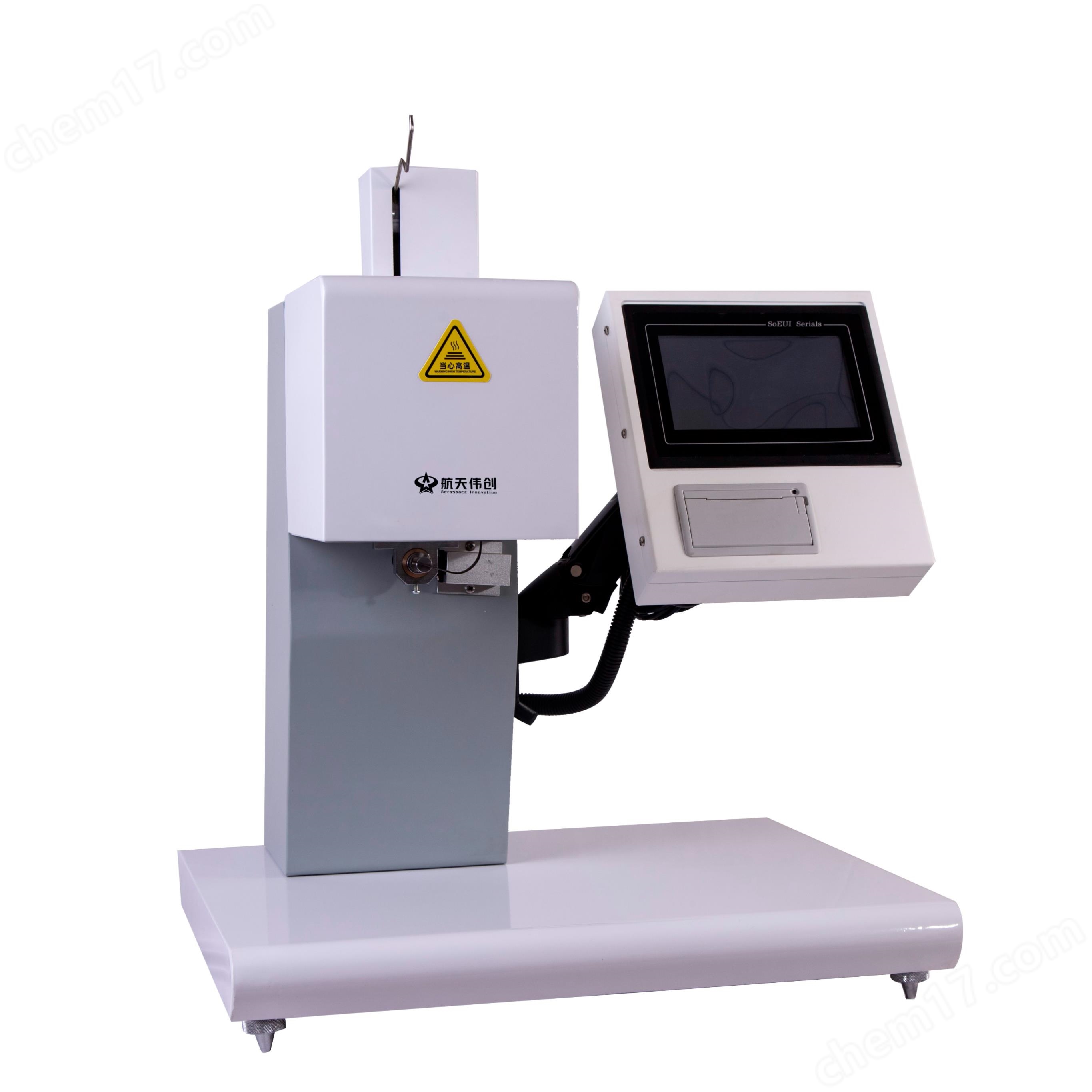
LDJC-100kVComputer controlled voltage breakdown testerLDJC Voltage Breakdown Tester Electrical Insulation Strength Tester
Water absorption ratePA6The influence mechanism of dielectric strength
The definition of dielectric strength is the ratio of breakdown voltage to the thickness of the insulator. When the sample thickness is uniform, the change in dielectric breakdown of the insulating material reflects the change in its dielectric strength. Dielectric breakdown is similar to mechanical failure, always related to local imperfections or some weak points of the material. Polymer dielectric breakdown can be roughly divided into three main forms based on its formation mechanism: intrinsic breakdown, thermal breakdown, and breakdown caused by discharge.
whenPA6When the water absorption rate is low, the breakdown position of the sample is at the edge of the electrode, and carbides are generated at the testing position, and a foul odor will be produced during breakdown; whenPA6When the relative water absorption rate is higher, the breakdown position of the sample is in the middle of the electrode, and the breakdown area is smooth and free of carbides.
The edge of the electrode used in this experiment has a radius of3.2mmAlthough vacuum silicone grease has been applied to the arc before testing, there will definitely be a gap between the edges of the two electrodes during testing, and the dielectric strength of the gas in the gap is higherPA6The dielectric strength of the sample is much lower. When the moisture content of the sample is low, under the action of a high-voltage alternating electric field, the gas between the electrode edges first undergoes ionization discharge. Electrons and ions accelerated by an electric field during discharge can directly damage the surface of the sample, causing thermal degradation of the polymer due to the heat generated by the discharge. Ozone and nitrogen oxides generated by the discharge will oxidize and age the sample, and repeated discharge will deepen the corrosion suffered by the sample, ultimately leading to material breakdown. When the moisture content is low,PA6The dielectric breakdown mechanism is mainly caused by discharge.
When the water absorption rate of the sample exceeds a certain value, at low frequencies, the water in the sample mainly increases the conductivity current in the form of ion conductivity, causing dielectric loss, and the dielectric loss of the system increases with the increase of water content. Additionally, whenPA6As the water absorption rate increases, the degree of molecular degradation also increases; At the same time, the crystallinity decreases. Causing an increase in local defects in the material. Under the action of a high-voltage electric field, the heat generated by dielectric loss cannot be dissipated in time, and the accumulation of heat causes the temperature of the sample to rise. As the temperature increases, the conductivity of the sample increases exponentially, and the conductivity loss generates more heat, which further increases the temperature. This vicious cycle results in the breakdown of the sample. When the water absorption rate of the sample is high,PA6The dielectric breakdown mechanism is mainly thermal breakdown. Due to the strongest field strength in the middle of the electrode, the closest contact with the sample, and the smallest heat dissipation, thermal breakdown often occurs in the middle of the electrode.
The increase in water absorption rate can causePA6The increase in dielectric loss and local defects leads to a shift in the dielectric breakdown mechanism from discharge breakdown to thermal breakdown, which requires low energy. This is because an increase in water absorption can causePA6The reason for the decrease in dielectric strength of similar materials.
LDJC Voltage Breakdown Tester Electrical Insulation Strength Tester
Similar Product Recommend