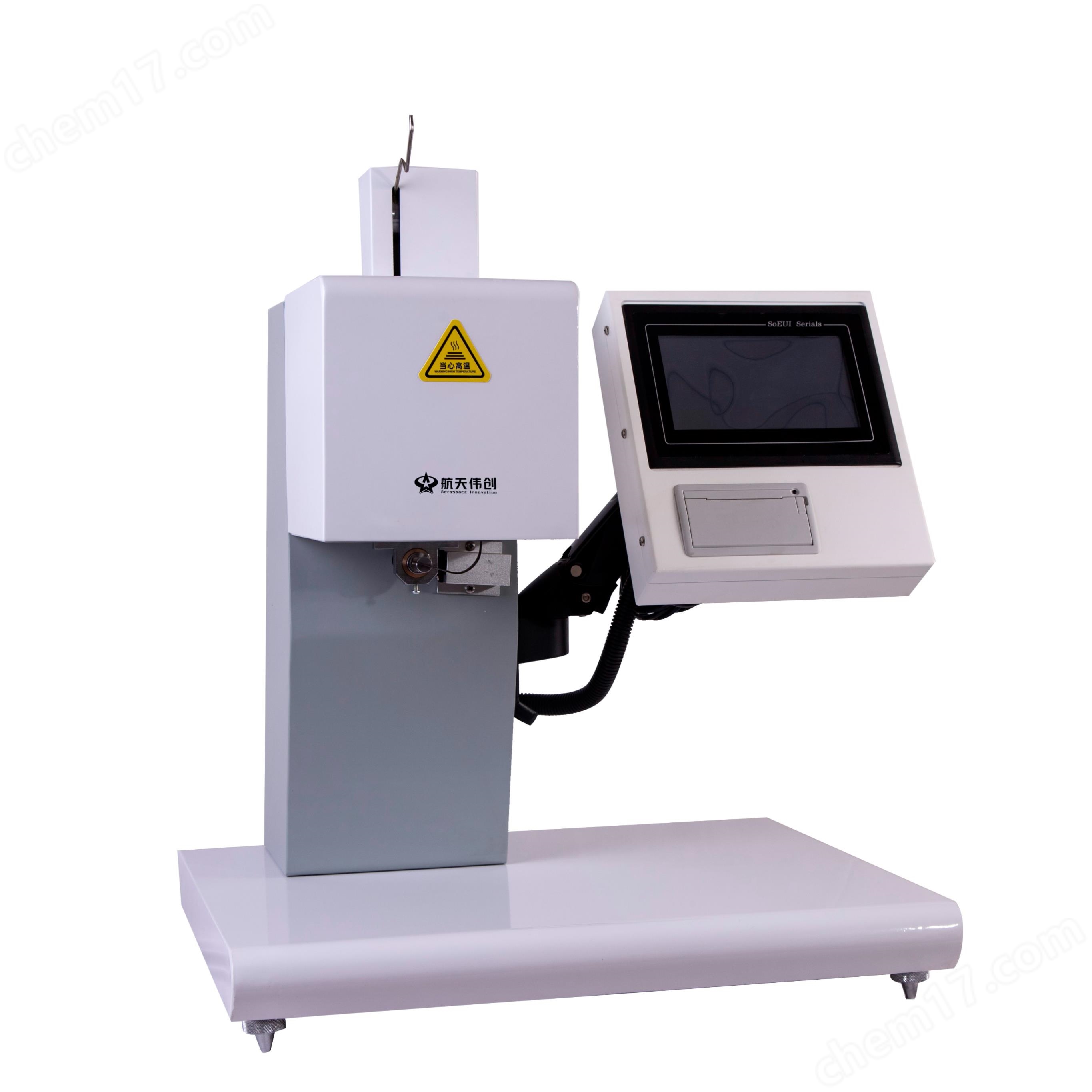
The LDJD-B dielectric constant tester is suitable for testing the dielectric constant, dielectric loss, and other parameters of insulation materials.
In the core process of dielectric constant testing - resonance point search, there is a hidden set of "energy balance techniques": when the energy exchange between inductance and capacitance reaches dynamic balance, the Q value (quality factor) measured by the instrument reaches its peak, and the capacitance value at this time truly reflects the dielectric properties of the material. Understanding the physical essence of this process can enable LDJD-BDielectric constant tester and relative permittivity testerThe testing efficiency has been upgraded from "blind adjustment" to "precise control".
The Q value characterizes the degree of energy loss in a resonant circuit, Q=1/(tanδ+tanδ_L+tanδ_C), Among them, tan δ is material loss, tan δ _L is inductance loss, and tan δ _C is capacitance loss. When the circuit resonates, the magnetic field energy of the inductor and the electric field energy of the capacitor undergo periodic conversion, and ideally, the loss is zero (Q →∞). However, in reality, material and component losses can lead to a decrease in Q value. Taking the LDJD instrument as an example, when the Q value reaches 1000, the instrument can distinguish a difference in tan δ of 0.0001, while when the Q value is below 100, the testing error will exceed 5%.
When manually adjusting the main capacitor, the principle of "coarse first, fine later" should be followed:
Coarse tuning: Quickly rotate the capacitor knob, observe the trend of Q value changes, and find the approximate range of Q value increase;
Fine tuning: Slow down the adjustment speed, and when the Q value approaches the peak, adjust the amplitude by no more than 1pF each time (corresponding to a knob rotation angle ≤ 1 °), and wait for 1-2 seconds to stabilize the Q value - actual testing shows that rapid adjustment may cause Q value fluctuations of ± 5%, while the reading error can be controlled within ± 1% after stabilization;
Verification: After finding the peak, adjust the capacitor in reverse to confirm that the Q value decreases symmetrically, avoiding mistaking the secondary peak for the true resonance point.
LDJD-BDielectric constant tester and relative permittivity testerThe automatic scanning function of is essentially controlled by a microcontroller to adjust the capacitance of a stepper motor, while real-time sampling of Q values. Its core algorithm includes:
Gradient search: First, quickly scan with a step size of 10pF to locate the peak interval;
Golden Ratio Search: Fine scan within the peak range with a step size of 0.1pF to ensure the discovery of true peaks within ± 0.5pF;
Temperature compensation: As the mechanical accuracy of the capacitor knob is affected by temperature (± 0.5pF at 25 ℃, ± 1pF at 40 ℃), the algorithm will automatically adjust the adjustment amount based on the data from the built-in temperature sensor.
Whether manually or automatically, the essence of resonance point search is to capture the moment of "energy balance" in the complex electrical signals, just like searching for a calm harbor in the waves. Only by understanding the laws of energy conversion can test results pass through the fog of error and reach the true shore.