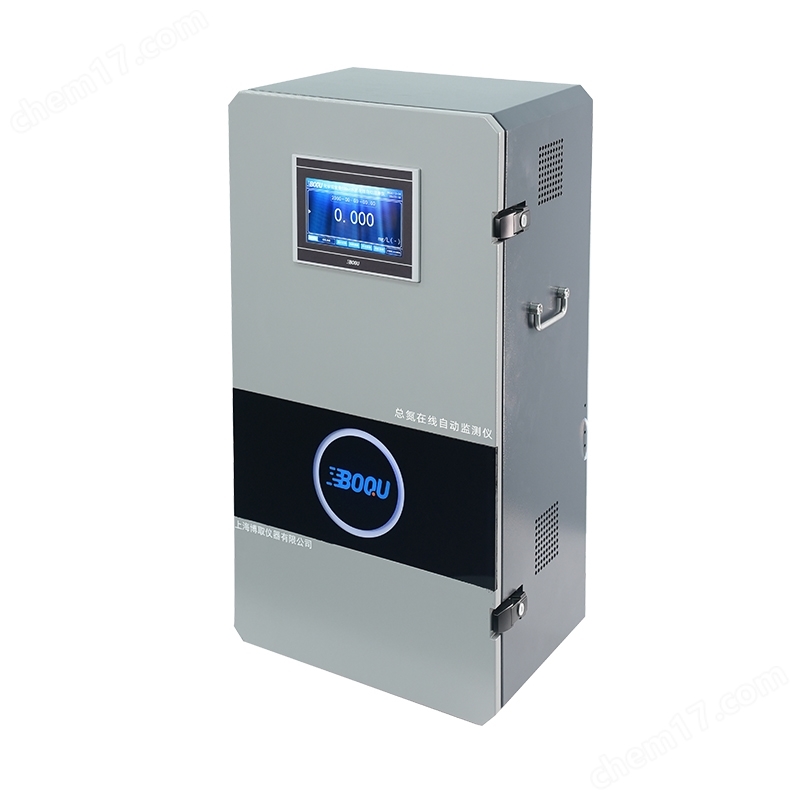
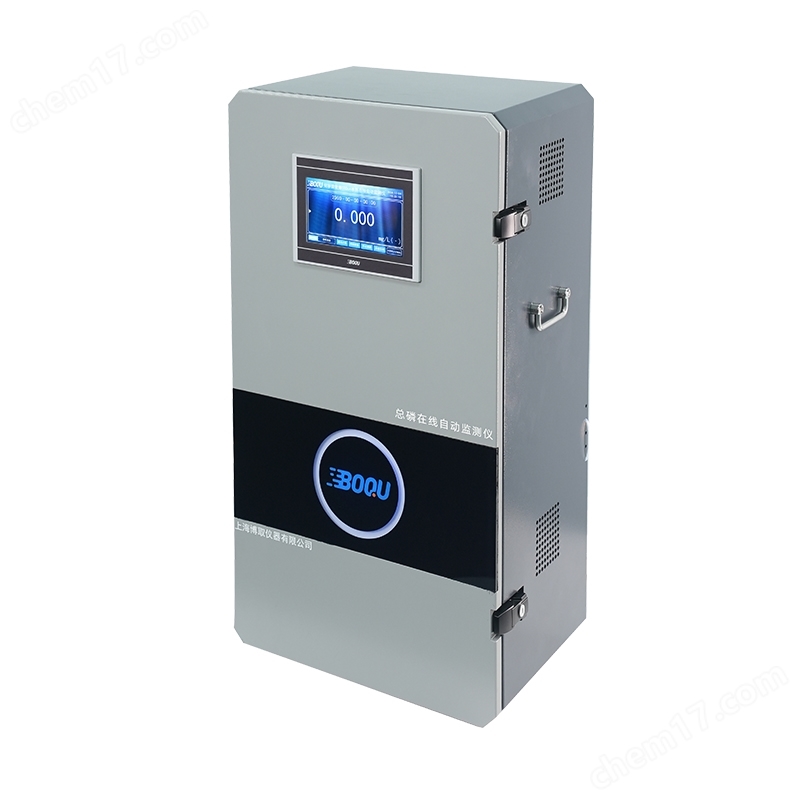
The industrial online total phosphorus automatic monitoring device is a high-precision monitoring equipment independently developed by Shanghai Botuo. It adopts the potassium persulfate digestion ammonium molybdate spectrophotometric method and supports automatic switching between three ranges of 0-2mg/L, 0-10mg/L, and 0-20mg/L. The measurement accuracy is; #177; 3%. Equipped with automatic calibration, data storage, and over limit alarm functions, compatible with Modbus RTU communication and 4-20mA output, suitable for scenarios such as surface water, industrial wastewater, municipal sewage, etc., to achieve real-time control of total phosphorus concentration and environmental compliance monitoring.
The online automatic monitoring instrument for total phosphorus water quality is the core equipment developed by Shanghai Botuo Instrument for monitoring the concentration of total phosphorus (TP) in water environments. It is designed for real-time monitoring of total phosphorus content in surface water, domestic sewage, and industrial wastewater. The device is based onPotassium persulfate digestion ammonium molybdate spectrophotometric methodBy high-temperature digestion, various types of phosphorus in the water sample are converted into orthophosphate, and then undergo color reaction to generate blue complexes. High precision photoelectric detection technology is used to calculate the concentration. Its core advantages lie in three range automatic switching, low reagent consumption, and intelligent operation and maintenance, which can meet the monitoring needs of multiple scenarios such as environmental protection supervision, sewage treatment plant standard discharge, and industrial process optimization. The data efficiency is ≥ 90%, providing reliable data support for water eutrophication prevention and control.
High precision and high stabilityAdopting imported photoelectric detection modules and 120 ℃ high-temperature digestion technology to ensure the conversion of phosphorus elements; The three range automatic switching design covers low concentration surface water to high concentration industrial wastewater scenarios, with measurement repeatability ≤ 3% and strong data stability.
Intelligent operation and maintenance designSupport automatic calibration (fixed-point/cycle mode), automatic cleaning, and reagent remaining monitoring, with a minimum maintenance cycle of>168 hours (7 days), significantly reducing labor costs; Built in fault self checking function, automatically alarms and records logs in case of extraction abnormalities, heating faults, and other issues, facilitating quick troubleshooting.
Flexible data managementMaximum storage capacity of 500000 historical data, supporting curve tracing, USB drive export, and real-time printing; By connecting with the environmental protection platform through the Modbus RTU protocol, it meets the data reporting requirements of standards such as the "Surface Water Environmental Quality Standards" (GB 3838-2002), and the data tagging function distinguishes between normal, maintenance, calibration, and other status data.
Strong environmental adaptabilityThe sampling pipeline is made of corrosion-resistant PTFE tubing and PPR material, which can withstand acid and alkali corrosion; The digestion chamber adopts a sealed design to avoid contamination caused by reagent volatilization; The water collection system supports automatic water level tracking to ensure the representativeness of water samples and is suitable for wall mounted or countertop installation.
Convenience of operation7-inch touch screen with guided menu, supports switching between Chinese/English, simplifies parameter settings and calibration steps; It has functions such as manual measurement, comparison and verification, and can be operated by non professionals after simple training.
Detection PrincipleAfter pre-treatment, the water sample is added with potassium persulfate reagent and digested at a high temperature of 120 ℃ for 30 minutes to convert various types of phosphorus into orthophosphate; After cooling, add ammonium molybdate and ascorbic acid reagent to form a blue complex. Measure the absorbance at a wavelength of 700nm and calculate the total phosphorus concentration according to Lambert Beer's law.
Measurement process:
Water sample collection: The water sample is extracted by an injection pump, and after removing large particles through a Y-shaped filter, it enters the metering unit;
Digestion reaction: Add reagent one (potassium persulfate) and dissolve at a constant temperature of 120 ℃ in the digestion chamber;
Color detection: After cooling, add reagent two (ammonium molybdate) and reagent three (ascorbic acid) to generate a blue complex, and enter the colorimetric cell to measure the absorbance;
Flow path cleaning: After measurement is completed, the pipeline and colorimetric cell are automatically cleaned to avoid cross contamination.
environmental monitoringMonitoring of total phosphorus concentration in natural water bodies such as surface water, lakes, and rivers to grasp the trend of eutrophication in water quality and provide data support for the prevention and control of algal blooms.
sewage treatment plantReal time monitoring of total phosphorus concentration in inflow/outflow to ensure that the discharge indicators comply with the "Pollutant Discharge Standards for Urban Sewage Treatment Plants" (GB18918-2002).
industrial wastewaterMonitoring of wastewater treatment processes in industries such as chemical, printing and dyeing, and food processing, optimizing phosphorus removal processes, and reducing treatment costs.
municipal water supplyMonitoring of total phosphorus in source water to prevent water quality deterioration caused by algae growth and ensure drinking water safety.
routine maintenance:
Check the remaining amount of reagents and the sealing of pipelines every week, and replace the filter element every month;
Perform user calibration every 3 months and verify measurement accuracy using standard solutions;
Regularly clean the measuring tube and colorimetric cell to avoid contamination from affecting the detection.
troubleshootingCommon faults such as "abnormal liquid extraction" can be checked for reagent level and pipeline blockage; Abnormal heating "requires investigation of the connection between the heating wire and fan. For complex issues, please contact after-sales remote diagnosis.
Service GuaranteeCore components come with a one-year warranty and lifetime technical support; National service network coverage, engineers come to repair within 48 hours, and provide free operation training and reagent preparation guidance.