-
E-mail
bjhtwc@163.com
-
Phone
18618396246
-
Address
No. 86 Wanxing Road, Changyang, Fangshan District, Beijing
Product Categories
Beijing Aerospace Weichuang Equipment Technology Co., Ltd


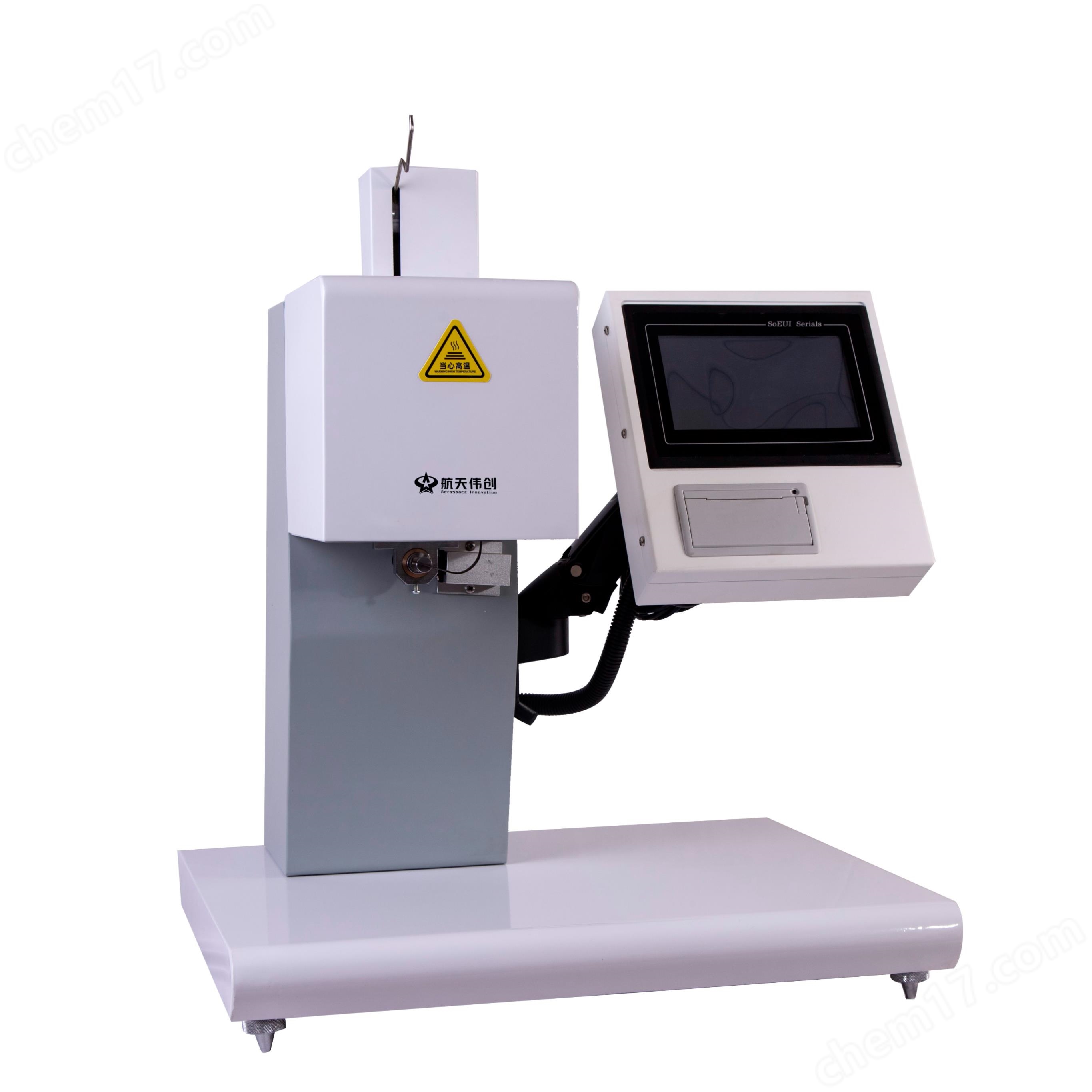
High precision vulcanized rubber voltage breakdown tester ASTM standard
NegotiableUpdate on 01/12
- Model
- Nature of the Manufacturer
- Producers
- Product Category
- Place of Origin
Overview
The LDJC-50F high-precision vulcanized rubber voltage breakdown tester ASTM standard is a new type of voltage breakdown testing instrument that uses stepless voltage regulation, with higher voltage regulation accuracy and free setting of boost rate, resulting in higher voltage testing accuracy.
Product Details
Voltage breakdown phenomenon
The breakdown theory of solid media:
Electric breakdown of solid media refers to the phenomenon where the dielectric is directly damaged and loses its insulation properties solely due to the action of an electric field.
There are a small number of electrons (conduction electrons) in the conduction band level in solid media, which accelerate under strong electric fields and constantly collide with atoms (or ions) at lattice nodes. When the energy obtained by conducting electrons from the electric field per unit time is greater than the energy lost during collision, the number of conducting electrons will rapidly increase when the energy of the electrons reaches a level that can ionize the lattice atoms (or ions), causing electron avalanche and damaging the lattice structure of the solid medium, resulting in a significant increase in conductivity and breakdown.
When the conductivity (or dielectric loss) of the medium is small, there are good heat dissipation conditions, and there is no partial discharge inside the medium, the breakdown of solid media is usually electrical breakdown, and its breakdown field strength can generally reach 105-106kV/m, which is much higher than that of thermal breakdown, which is only 103-104kV/m.
The main characteristics of electrical breakdown are that the breakdown voltage is almost independent of the surrounding environmental temperature, and except for short periods of time, the relationship between breakdown voltage and voltage application time is not significant; The medium does not generate significant heat; The uniformity of the electric field has a significant impact on the breakdown voltage.
The main factors affecting the breakdown voltage of solid dielectrics
○ Voltage application time
If the solid dielectric is broken down when the applied voltage is applied for a short period of time (such as less than 1/10s), then this breakdown is likely to be electrical breakdown. If the voltage is applied for a long time (several minutes to tens of hours) to cause breakdown, it is often thermal breakdown. Sometimes it is difficult to distinguish between the two, for example, when the test sample is broken down in a 1-minute AC withstand voltage test, it is often due to the dual effects of electricity and heat. When the voltage is applied for several tens of hours or even years before breakdown, it mostly belongs to electrochemical breakdown. In order to accurately determine the cause of breakdown, specific analysis should also be conducted based on the breakdown phenomenon, rather than simply measuring it by time.
○ Uniformity of electric field
The breakdown voltage of solid media in a uniform electric field is often high and increases approximately linearly with the increase of dielectric thickness; If the thickness of the dielectric increases in an uneven electric field, the electric field will become more uneven, and the breakdown voltage will no longer linearly increase with the increase of thickness. When the increase in thickness makes heat dissipation difficult to the point where it may cause thermal breakdown, the significance of increasing thickness becomes even smaller.
○ Temperature
Electrical equipment with solid dielectric as insulation material, if the local temperature is too high in a certain area, there is a risk of thermal breakdown under operating voltage. The heat resistance and heat resistance level of different solid dielectric materials are different, so the critical temperature at which they transition from electrical breakdown to thermal breakdown is generally different.
○ Moisture
The impact of moisture on the breakdown voltage of solid media is related to the properties of the material. For polar media that are prone to moisture absorption, such as cotton yarn, paper, and other fiber materials, the breakdown voltage after moisture absorption may only be a few percent or lower than when dry, due to a significant increase in conductivity and dielectric loss. Therefore, when manufacturing high-voltage insulation structures, attention should be paid to removing moisture, moisture-proof measures should be taken during operation, and the moisture situation should be checked regularly.
○ Cumulative effect
Electrical equipment that mainly uses solid media as insulation materials may experience a decrease in breakdown voltage due to cumulative effects as the number of impulse or power frequency test voltages increases. Therefore, when determining the number of times to apply voltage and the test voltage value during the withstand voltage test of such electrical equipment, this cumulative effect should be considered, and when designing solid insulation structures, a certain insulation margin should be ensured.
High precision vulcanized rubber voltage breakdown tester ASTM standardScope of application:
Insulating plastics, films, and film products
Insulating plastics are mainly thermosetting plastics. An insulating film is a thin film that can ensure good electrical insulation. This type of film generally has high electrical resistivity (above 1010 Ω· cm) and breakdown field strength. In order to be used for high-frequency insulation, it is also required that the material has low dielectric loss.
Insulated mica products
Mica sheets, mica paper, etc. made of mica are used as insulation materials for electrical equipment and electrical devices.
Organic insulating materials
Cordyceps, resin, rubber, cotton yarn, paper, hemp, silk, artificial silk, etc. are mostly used to manufacture insulation paint, coating insulation materials for winding wires, etc.
Inorganic insulation materials
Asbestos, marble, ceramics, glass, etc. are mainly used as winding insulation for motors and electrical appliances, as well as bottom plates and insulators for switches.
Insulated fiber products, laminated products, etc.
Including insulation paper, insulation cardboard, paper tubes, and various fiber fabrics such as insulation yarn, tape, rope, tube, etc. A layered electrical insulation material made by impregnating or coating different adhesives with fiber paper and cloth as substrates, and then hot pressing and rolling them.
Impregnated insulation material
Including lacquered silk, lacquered cloth and glass lacquered cloth, insulated lacquered pipes, etc.
High precision vulcanized rubber voltage breakdown tester ASTM standardApplicable standards:
GB/T 1408.1-2016 "Test Methods for Electrical Strength of Insulation Materials Part 1: Test at Power Frequency"
GB/T 1408.2-2016 "Test Methods for Electrical Strength of Insulation Materials Part 2: Additional Requirements for Application of DC Voltage Test"
JJG 795-2004 "Verification Regulations for Voltage Endurance Testers"
GB/T 1695-2005 "Determination method for power frequency breakdown voltage strength and withstand voltage of vulcanized rubber"
GB/T 3333-1999 "Test Method for Power Frequency Breakdown Voltage of Cable Paper"
GB/T 12913-2008 "Capacitor Paper"
ASTM D149 "Test Method for Dielectric Breakdown Voltage and Dielectric Strength of Solid Electrical Insulation Materials at Industrial Power Supply Frequency"
Product selection:

Product technical advantages:
Automatic discharge at the end of the experiment
After the experiment is completed, it will automatically discharge to ensure the personal safety of the operators.
Oil immersion test
Oil immersion test can avoid the phenomenon of creepage caused by air breakdown and misjudgment of breakdown.
Push pull window, safety door protection
High voltage operation protection, voltage can only be increased when the window is closed, the test process can be observed in real time, and the safety door automatically shuts off when opened to ensure the safety of operators.
One click switching for AC/DC testing
The software interface can switch between AC test and DC test with one click.
Real time display of experimental curves
During the experiment, the test curve can be dynamically drawn, and the test curve can be overlaid with multiple colors for comparison, locally enlarged, and any section of the curve can be analyzed by enlarging the area.
Modular system, automatic electrode alignment
Independent control system, modular structure, convenient for after-sales maintenance, and no noise throughout the entire experimental process.
The electrode automatically aligns and locates, making it easy to operate and achieving higher accuracy.
Special configuration options:
Multiple optional electrodes
The standard electrodes are two Φ 25 electrodes and one Φ 75 electrode, which can form a set of equal diameter electrodes and a set of unequal diameter electrodes. These two sets of electrodes have the widest range of applications, and there are also multiple electrode options available. Alternatively, you can provide relevant standards or drawings to support customized electrodes.
Optional high-temperature module
① Temperature range: Room temperature~90 ℃
Fuel tank material: Phenolic resin
Heating power: 1.5 kW
Fuel tank size: 300 × 400 × 200mm
Control accuracy: ± 1 ℃
Temperature gradient: ± 2 ℃
② Temperature range: Room temperature~300 ℃
Fuel tank material: marble
Heating power: 3kW
Fuel tank size: 300 × 400 × 200mm
Control accuracy: ± 1 ℃
Temperature gradient: ± 3 ℃
Touch screen optional
Optional touch screen configuration for easier operation.
The default configuration for stepless voltage regulation models is a touch screen.
Customizable high-frequency voltage
Customizable high-frequency voltage source: voltage waveform requirements (square wave, sine wave, etc.), maximum current requirements, frequency requirements (500Hz, 1kHz, etc.) need to be provided.
Typical users:
Testing and research institutions
China National Inspection and Testing Corporation (CTC)
Beijing Institute of Building Materials Inspection and Research
Youyan (Guangdong) New Materials Technology Research Institute
Guangdong Institute of Corrosion Science and Technology Innovation
Anhui Branch of China Electric Power Research Institute
Shanghai Electric Power Research Institute
Shenyang Product Quality Supervision and Inspection Institute
institutions of higher education
Northwestern Polytechnical University
Sichuan Agricultural University
Hunan University of Technology
Northeastern University
China University of Petroleum
North China Electric Power University
Huazhong University of Science and Technology
Beijing University of Chemical Technology
Zhejiang University
New Materials
Shanghai Wangxun New Materials Co., Ltd
Changzhou Qianli Electronic New Materials Co., Ltd
Shandong Silicon New Materials Co., Ltd
Zhejiang Huazheng New Materials Co., Ltd
Wankai New Materials Co., Ltd
Gaoren Electronic New Materials Co., Ltd
Shenzhen Rezdun New Materials Co., Ltd
Jiangxi Ganfeng Lithium Battery Technology Co., Ltd
Shanghai Anbitai New Materials Co., Ltd
Wires, cables, and power systems
Yangzhou Shuguang Cable Co., Ltd
TBEA (Deyang) Cable Co., Ltd
Jiangsu Shangshang Cable Group
Far East Cable Co., Ltd
Shanghai Qifan Cable Co., Ltd
State Grid Henan Luoyang Power Supply Company
Trade and Distribution
Wanju International (Hangzhou) Supply Chain Co., Ltd
Guang'an Hengxin Medical Equipment Co., Ltd
Changzhou Zhurui Scientific Instrument Co., Ltd
Hunan Huisheng Trading Co., Ltd
Changsha Lusheng Instrument Equipment Co., Ltd
Hunan Blue Star Electronic Technology Co., Ltd
Shaanxi Hongxin Experimental Instrument Co., Ltd
Suzhou Renyi Machinery Tools Co., Ltd
Henan Zhongyibao Industrial Co., Ltd
Jinan Yuejun Economic and Trade Co., Ltd
Jiangxi Bochen Automation Equipment Co., Ltd
Similar Product Recommend