-
E-mail
bjhtwc@163.com
-
Phone
18618396246
-
Address
No. 86 Wanxing Road, Changyang, Fangshan District, Beijing
Product Categories
Beijing Aerospace Weichuang Equipment Technology Co., Ltd


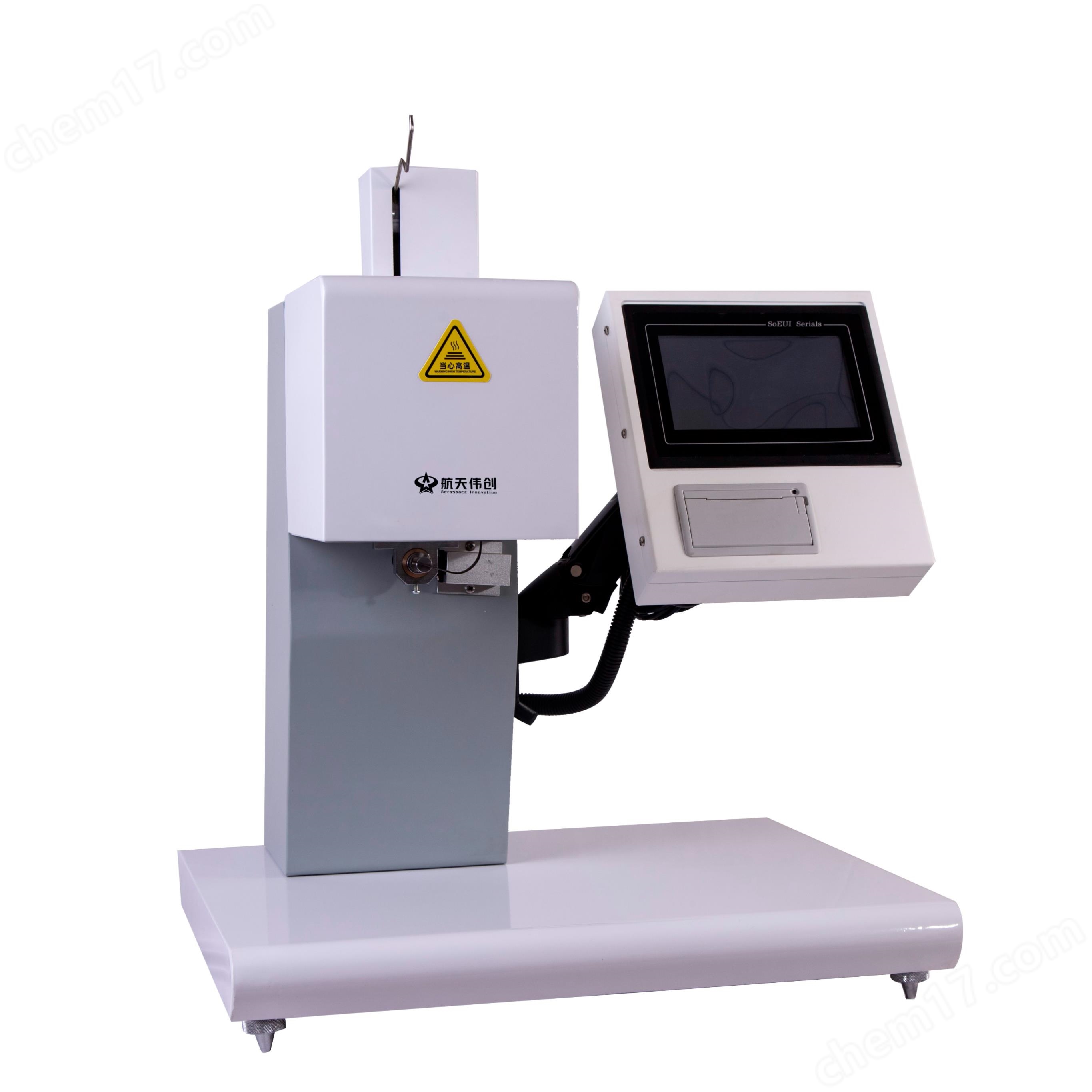
Aerospace Rubber Electrical Penetration Strength Tester Aerospace Weichuang LDJC Series
NegotiableUpdate on 01/12
- Model
- Nature of the Manufacturer
- Producers
- Product Category
- Place of Origin
Overview
The aerospace rubber electrical breakdown strength tester, Aerospace Weichuang LDJC series, adopts SPWM electronic boost technology, with voltage accuracy controlled within #177; Below 1%, set the boost rate arbitrarily.
Product Details
Aerospace Rubber Electrical Penetration Strength Tester Aerospace Weichuang LDJC SeriesAdopting SPWM electronic boost technology, the voltage accuracy is controlled below ± 1%, and the boost rate can be set arbitrarily. Suitable for electrical performance testing of aviation rubber.
Aviation rubber products have a wide range of applications, such as insulation gaskets and sealing of electronic components in many automatic control systems. Their insulation resistanceBreakdown strength and other electrical propertiesThere are requirements. The commonly used electrical performance testing methods for rubber include GB/T1692-2008 "Determination of insulation resistivity of vulcanized rubber", GB/T1693-2007 "Determination of dielectric constant and dielectric loss tangent of vulcanized rubber", and GB/T1695-2005 "Determination of dielectric strength and withstand voltage of vulcanized rubber at power frequency breakdown".
Breakdown strength test
The breakdown strength of rubberExperiment according toAccording to the provisions of GB/T1695-2005 "Determination method for dielectric strength and withstand voltage of vulcanized rubber at power frequency breakdown".
(1)Aerospace Rubber Electrical Penetration Strength Tester Aerospace Weichuang LDJC Seriesprinciple
The breakdown strength test is used to test the insulation strength of vulcanized rubber at a specified voltage, in order to assess the insulation level of the rubber material, detect insulation defects, and measure its ability to withstand overvoltage. There are two methods for testing the breakdown strength and voltage resistance of vulcanized rubber: continuous and uniform voltage boosting and step-by-step voltage boosting. An alternating voltage is applied to the sample until breakdown occurs. The breakdown voltage value is measured, and the breakdown voltage per unit thickness of the sample is calculated, which is the breakdown strength;The withstand voltage value of this sample is determined by rapidly increasing the voltage to the specified value and maintaining it for a certain period of time without breakdown. The testing principle is shown in the diagram. Test conditions: 23 ℃±2 ℃, relative humidity 50% ± 5%.

Principle of breakdown voltage testing
(2) Sample
The sample should be treated at 23 ℃ ± 2 ℃ for 24 hours, and the sample size is shown in the table. usuallyThe electrode diameter of the plate-shaped sample is 25.0mm ± 01mm、 The height is 25.0mm ± 0.1mm, tested in transformer oil.

(3) Result evaluation
Using the continuous boost method, the test voltage starts from zero and increases continuously until the sample is broken down, and the breakdown voltage value is read. When the breakdown voltage is less than 20kV, the boosting speed is 1kV/s, and when the breakdown voltage is greater than 20kV, the boosting speed is kV/s.
Using the step-by-step pressure increase method (i.e. 1-minute step-by-step pressure increase), from the first sampleBreakdown valueStarting from 50%, hold each step for 1 minute and gradually increase the pressure until the sample is broken down. If breakdown occurs during the boosting process, the voltage value of the previous stage should be read. If the breakdown occurs in a constant stateVoltage levelIf it is above, the voltage at that level will be used as the breakdown voltage.
calculate according to the formula:

In the formula, E - breakdown strength, kV/mm;
U - breakdown voltage, kV;
D - sample thickness, mm。
Each group shall have no less than 3 samples, and the test results shall be expressed as the median of the test values for each group.
(4) Influencing factors
① Testing instruments
When conditions permit, an automatic boost breakdown voltage tester should be used as much as possible, which can ensure uniform voltage rise and further improve testing accuracy.
② Sample thickness
For the same material, as the thickness of the sample increases, the dielectric strength decreases. This is because the sample is thick and has poor heat dissipation, resulting in a decrease in the dielectric strength per unit thickness;The thicker the sample, the longer the electron acceleration time, making it easier for electrons to escape from the electrode and resulting in a decrease in dielectric strength;In addition, the thicker the sample, the more internal defects there are, making it more prone to early breakdown and a decrease in dielectric strength.
③ Boosting speed and holding time
The sample mainly subjected to electrical breakdown has little effect on the dielectric strength due to the rate of voltage rise;For samples with thermal breakdown as the main mode, the faster the voltage rise rate, the corresponding increase in dielectric strength. Therefore, the standard stipulates that the boosting speed is 1kV/s when the breakdown voltage is less than 20kV, and 2kV/s when the breakdown voltage is greater than 20kV.
The step-by-step pressure boosting method stipulates a holding time of 1 minute. If the time is prolonged, the dielectric strength will decrease with increasing time due to heat accumulation.
④ Electrode chamfering
During testing, the electrode chamfer r is 2.5mm. The electrode must be machined according to the requirements, as chamfering directly affects the test results.The smaller the chamfer, that is, the sharper the chamfer, the lower its dielectric strength. This is because the electrode chamfers are different, and their edge effects are also different, that is, under the action of an external electric field, the electric field strength near the sharp corners of the edge is greater. Therefore, the electric field strength in the middle of the electrode is much lower than the dielectric strength, but the edge has already reached the breakdown voltage of the sample, causing it to break down.
⑤ Environmental temperature and humidity
The standard stipulates that it should be at 23 ℃±Conduct the test under the conditions of 2 ℃ and relative humidity of 50% ± 5%. Usually, when the temperature is higher than the glass transition temperature T of the material, the dielectric strength rapidly decreases with increasing temperature. The reason is that in addition to electrical breakdown, there are also "secondary" breakdowns such as thermal breakdown and electromechanical breakdown.
The influence of humidity is the same as that of dielectric properties. Moisture immersion in dielectric materials leads to a decrease in resistance and an increase in conductivity, resulting in a decrease in dielectric strength.
⑥ Insulation medium
The breakdown test usually involves placing the sample and electrode together in an insulating medium (such as transformer oil) to prevent surface arcing. However, insulating media can affect the electric field distribution between electrodes, resulting in changes in dielectric strength. If the insulating medium is clean, free of conductive impurities or has a fixed amount of conductive impurities, then the electrical properties of the insulating medium itself are stable, and therefore the test results are also stable. If the content of conductive impurities in the insulating medium is high and the composition is not fixed, and the electrical performance indicators of the insulating medium itself fluctuate greatly, some suspended conductive impurities with a dielectric constant larger than that of the insulating medium will concentrate near the electrode under the action of an electric field, forming a thin layer visible to the naked eye on the sample, that is, there are obvious traces of impurity aggregates at the edge of the sample. This thin layer of aggregate has a semiconductor film effect, which promotes uniform distribution of electric field, resulting in a higher dielectric strength of the sample mainly subjected to electrical breakdown, affecting the test results, while having a lower impact on the material mainly subjected to thermal breakdown. Therefore, the standard stipulates that the dielectric strength of the transformer oil used should not be less than 25kV/2.5mm.
(5)Precautions for breakdown strength test
①When conducting high-voltage tests, it is necessary to have 2 or more personnel participate, with clear division of labor, clear communication methods between each other, and a dedicated person to monitor on-site safety and observe the test status of the samples. The operator must wear insulated rubber gloves and place rubber pads under their feet to prevent high voltage electric shock from causing life-threatening situations.
② When connecting or disassembling the tested object, it is necessary to ensure that the high-voltage output is "0" and in the "reset" state. Do not short-circuit the output ground wire with the AC power line to avoid the shell being charged and causing danger. Test lampSuper leakage lampOnce damaged, it must be replaced immediately to avoid misjudgment. When troubleshooting, the power must be cut off and repaired by professional technicians.
③ The instrument should be avoided from direct sunlight and should not be used or stored in high temperature, humidity, or dusty environments. The work and storage areas should be free of gases, vapors, chemical dust, and other explosive and corrosive media that seriously affect insulation
④ During the experiment, the boosting speed should not be too fast, and sudden full voltage power on or off is not allowed. During the boost or withstand voltage test, if any of the following abnormal conditions are found, the voltage should be immediately reduced, the power should be cut off, the test should be stopped, and the cause should be identified before conducting the test: the pointer of the voltmeter swings greatly;Discovery of burnt insulation odor and smoking phenomenon;There is abnormal sound inside the tested sample. In the experiment, if the sample is short circuited or breaks down due to a fault, the overcurrent relay in the control box will work. At this time, the voltage regulator should be returned to zero and the power supply should be cut off before the sample can be removed.
⑤ When not conducting a DC high-voltage leakage test, after the test is completed, lower the voltage regulator to zero and cut off the power supply. Then, use a discharge rod to discharge the high-voltage end of the sample or capacitor to the ground to avoid the risk of electric shock caused by the potential remaining in the capacitor.
Similar Product Recommend