-
E-mail
wangxing@yzqjm.com
-
Phone
15316162949
-
Address
No. 666 Zhenhua Road, Xihu District, Hangzhou City, Zhejiang Province
Product Categories
Hangzhou Yuzhiquan Precision Instrument Co., Ltd

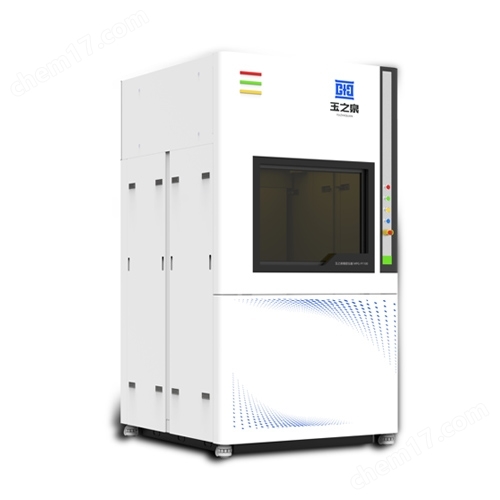
Two-photon desktop computer
NegotiableUpdate on 02/10
- Model
- Nature of the Manufacturer
- Producers
- Product Category
- Place of Origin
Overview
The two-photon desktop machine has very high processing accuracy, which can precisely control the reaction area of photoresist, ensuring the clarity of patterns and the fidelity of details. Due to the nonlinear characteristics of two-photon lithography technology, the photoresist will only react in the focal area of the laser beam, which makes the lithography process highly selective and can effectively avoid the influence of scattered light and thermal effects on the surrounding area.
Product Details
1、 Working principle
The two-photon desktop machine is based on two-photon lithography technology, which achieves nanometer level precision machining by precisely controlling the focusing position and intensity of the laser. Its working principle mainly includes the following steps:
1. Principle of two-photon lithography
Two photon lithography is a technique that uses laser to induce material chemical reactions through the two-photon absorption effect. Unlike traditional single photon lithography, two-photon lithography relies on the focusing effect of photons in a local area, absorbing two low-energy photons simultaneously at the focal point of the photosensitive material, causing the material to undergo a chemical reaction. Due to the nonlinear nature of this effect, only under high-intensity laser irradiation at the focal point, the photosensitive material will react, thereby achieving etching or cross-linking of micro regions.
2. Desktop design
Traditional two-photon lithography equipment is bulky and expensive, typically requiring use in laboratories or specialized micro/nano manufacturing workshops. The innovation of the two-photon desktop computer lies in its combination of two-photon lithography technology and desktop design, making the device more compact and easier to operate. It adopts high-precision laser light source and motion platform, and achieves efficient and accurate 3D printing and lithography through precise optical system and computer control system.
3. Laser scanning and optical control
The core component is a high-precision laser scanning system that precisely exposes the photoresist surface by controlling the intensity of the laser beam and the position of the focusing point. In practical work, the computer control system will adjust the scanning path of the laser and the power of the laser beam according to the user's needs, achieving high-precision pattern etching or 3D structure printing.
2、 Main features
The design concept and technical characteristics give it unique advantages in the field of micro nano manufacturing, mainly manifested in the following aspects:
1. Ultra high resolution
One of its notable features is its high resolution. Due to the dependence of two-photon lithography technology on the focusing effect of laser beams, its pattern resolution can reach the nanometer level, and even achieve processing accuracy of less than 10 nanometers. This enables two-photon desktop computers to accurately depict complex three-dimensional structures in a small space, making them suitable for manufacturing ultra small micro optical devices, microelectromechanical systems (MEMS), microsensors, and more.
2. 3D machining capability
Capable of processing in three-dimensional space. By precisely controlling the focusing position of the laser beam, pattern carving can be performed at different levels, thereby achieving complex three-dimensional microstructures. Both three-dimensional shaped optical components and complex microsensors and microfluidic chips can achieve precise 3D manufacturing.
3. High precision and high selectivity
The two-photon desktop machine has very high processing accuracy, which can precisely control the reaction area of photoresist, ensuring the clarity of patterns and the fidelity of details. Due to the nonlinear characteristics of two-photon lithography technology, the photoresist will only react in the focal area of the laser beam, which makes the lithography process highly selective and can effectively avoid the influence of scattered light and thermal effects on the surrounding area.
4. High photosensitivity and low energy consumption
The high photosensitivity of two-photon photoresist enables two-photon desktop machines to achieve high-precision processing at lower laser power, which not only reduces energy consumption but also minimizes thermal effects on the photoresist. In addition, low energy consumption enables it to maintain a low temperature rise during long-term operation, improving the stability and service life of the equipment.
5. Desktop operation and simplicity
Desktop design makes it suitable for use in small environments such as laboratories, research and development centers, and maker spaces. Users can operate through a graphical interface without the need for complex professional equipment or skills, greatly reducing the threshold for operation. This makes two-photon lithography technology no longer limited to research fields, and ordinary engineers and researchers can also use this technology for innovative design and prototype manufacturing.
3、 General parameters:| system parameters | |
| Femtosecond Lasers | 1. Pulse energy: ≥ 0.01mJ@1MHz |
| 2. Average power: 10W@1MHz | |
| 3. Pulse width<300fs | |
| 4. Repetition frequency: 1Hz~1MHz | |
| 5. Processing beam center wavelength 517nm | |
| High precision displacement table | 1. Controllable in six dimensions (X, Y, Z, θ X, θ Y, θ Z) |
| 2. Translation stroke 100mm × 100mm × 20mm | |
| 3. Translational repeat positioning accuracy ± 75nm | |
| 4. Rotation repeat positioning accuracy ≤ 0.001 ° | |
| High precision kilometer level fiber optic automatic processing module | 1. Suitable for fiber diameter range of 100-250 μ m |
| 2. Maximum fiber feeding speed of 50m/min | |
| lens | Support processing of various objective magnifications such as 20X, 50X, 60X, and 100X |
| Processing characteristics | 1. Crystal surface processing line width less than 200nm |
| 2. Fiber Bragg Grating Processing Single Grating Maximum Processing Length 15mm | |
| 3. The grating processing cycle is less than 1 μ m | |
| Optional module | 1. Spatial light modulator |
| 2. Refractive index characterization module | |
| 3. High speed scanning galvanometer | |
| 4. High precision focal plane automatic tracking module | |
| 5. Polymer material lithography system | |
| software configuration | 1. Support importing multiple processing graphics |
| 2. Software support structure design and scripting programming | |
| 3. For fiber Bragg grating engraving processing, it supports various processing methods such as point by point scanning, line by line scanning, apodization scanning, multi-core parallel scanning, etc | |
| 4. Support automatic identification, alignment, and angle adjustment of fiber cores |