-
E-mail
wangxing@yzqjm.com
-
Phone
15316162949
-
Address
No. 666 Zhenhua Road, Xihu District, Hangzhou City, Zhejiang Province
Product Categories
Hangzhou Yuzhiquan Precision Instrument Co., Ltd
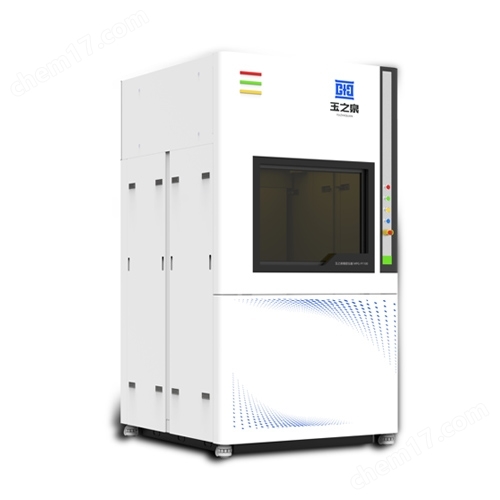
High precision 3D structural processing
NegotiableUpdate on 02/10
- Model
- Nature of the Manufacturer
- Producers
- Product Category
- Place of Origin
Overview
High precision 3D structural processing technology mainly achieves micro - or nano level precision in three-dimensional space through various advanced processing methods. High precision 3D machining technology can directly manufacture from digital models and has a high degree of design freedom. This technology can create complex geometric structures that are difficult to achieve with traditional methods, such as internal channels, nested structures, etc.
Product Details
1、 Principle of high-precision 3D structural processing technology
High precision 3D structural processing technology mainly achieves micro - or nano level precision in three-dimensional space through various advanced processing methods. This technology typically involves the following basic principles and methods:
1. Additive manufacturing technology
Additive manufacturing, commonly known as 3D printing, is a processing method based on layer by layer stacking. Unlike traditional subtractive manufacturing methods such as milling, cutting, etc., additive manufacturing gradually adds materials and accurately constructs three-dimensional objects according to computer designed models. This technology can not only process complex geometric shapes, but also achieve high-precision 3D structure manufacturing at the microscale.
Laser melting: Laser melting is a common additive manufacturing technology that rapidly melts metal powder through a laser beam and constructs metal structures layer by layer. This method has high material utilization and finished product accuracy, and is widely used in industries such as aerospace and medical equipment.
Light curing: Light curing is an additive manufacturing method that uses laser or ultraviolet light to irradiate photosensitive resin and cure it into shape. This technology has high resolution and is suitable for manufacturing complex micro 3D structures, commonly used in precision model making and microfluidic chip production.
2. Micro machining technology
Micro machining technology mainly refers to the use of precision tools and equipment to perform micro level processing. This technology has unique advantages in manufacturing small-sized, high-precision structures. Common microfabrication methods include:
Micro milling: high-precision machining using micro milling cutters, suitable for manufacturing small and complex parts. Micro milling has high precision and surface smoothness, and is commonly used in the processing of precision molds, micro mechanical parts, etc.
Micro electric discharge machining: using the principle of electric discharge to perform high-precision cutting and engraving, suitable for machining hard materials and complex geometric shapes.
3. Nanomachining technology
Nanoprocessing technology is a technique that achieves micro nano scale structural processing through precise control at the nanoscale, typically involving the use of electron beams, ion beams, and other materials for microscopic processing. This technology is not only suitable for manufacturing ultra small electronic devices, but also for processing very fine 3D structures, which are used in fields such as photonics and nanosensors.
Electron beam lithography: Electron beam lithography technology uses an electron beam to expose and etch photosensitive materials, enabling high-precision processing at the nanometer level. This technology is widely used in the manufacturing of semiconductors and nanodevices.
2、 The advantages of 3D machining technology
1. High precision and high complexity
3D machining technology can produce very complex and fine structures, suitable for manufacturing components at the micro to nano scale, meeting the application requirements for high machining accuracy.
2. Degrees of freedom and design flexibility
Traditional processing methods usually rely on molds and tools, while high-precision 3D machining technology can directly manufacture from digital models, with high design freedom. This technology can create complex geometric structures that are difficult to achieve with traditional methods, such as internal channels, nested structures, etc.
3. Save materials and reduce waste
Compared with traditional subtractive manufacturing methods, a significant advantage of additive manufacturing is its high material utilization rate. The additive manufacturing process only stacks materials as needed, with almost no excess waste, in line with the concept of green manufacturing.
4. Rapid prototyping and customized production
High precision 3D machining technology can quickly produce prototypes, suitable for rapid iteration of products and small batch customized production. Especially for personalized customization and complex structural components, it can greatly shorten the development cycle.
5. Save time and costs
Due to the 3D structural processing technology, complex mold and tool manufacturing processes can be eliminated, and high-precision processing can be carried out in one go, saving a lot of processing time and manufacturing costs.
3、 Application Fields
The application scope of high-precision 3D structural processing technology is wide, covering almost all fields that require high-precision structural manufacturing. Here are some of the main application areas:
1. High precision 3D structural processing technology enables the realization of complex spatial topological structures, thereby promoting innovation and efficient functional development of nano optical devices.

2. Provided precise microstructure manufacturing capabilities for photonic chip coupling devices, achieving efficient optical signal coupling and transmission.

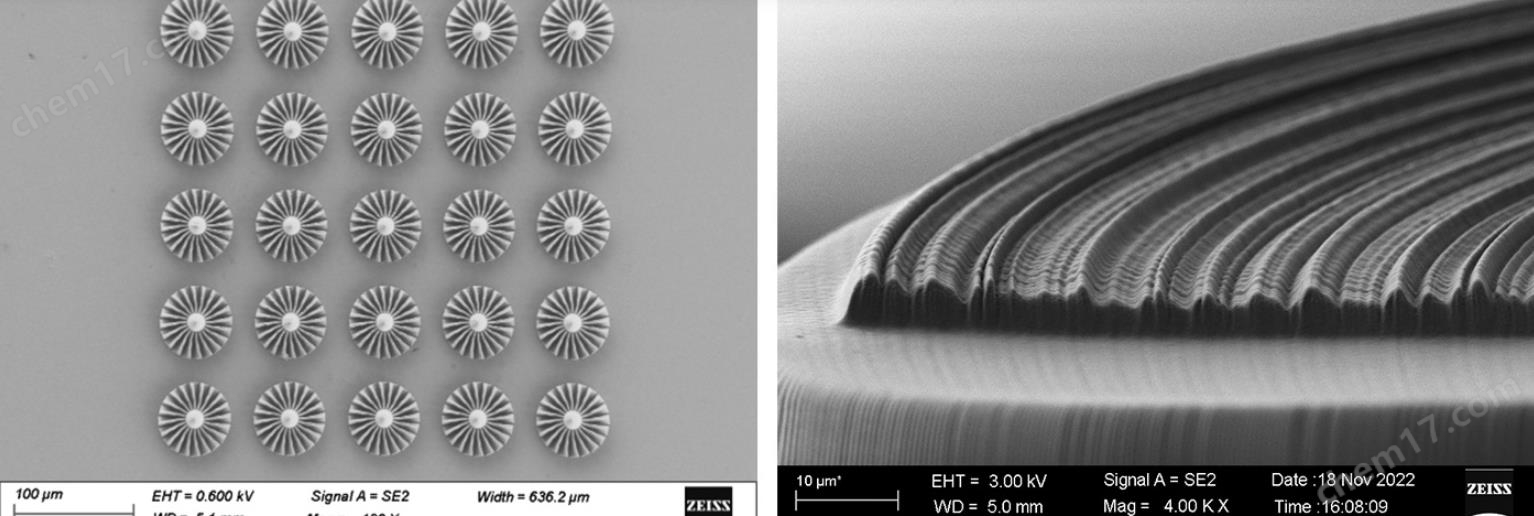
3. High precision 3D structural processing technology has significantly improved the miniaturization, lightweighting, and high performance of Fresnel lenses, promoting innovation and application of optical systems.
4. This provides the possibility for precise design and manufacturing of mechanical metamaterials and photonic leads, thereby promoting their innovative development in advanced materials and optical applications.
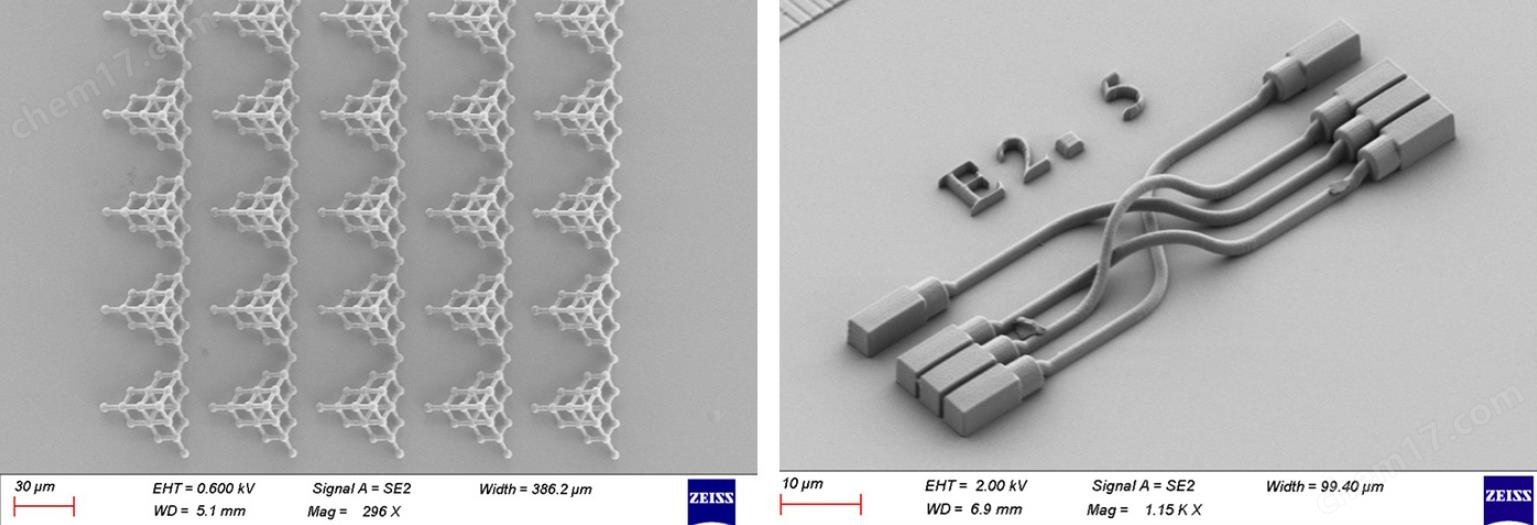
5. Provided support for the precise construction of cell scaffold arrays and dazzling gratings, promoting innovative applications in the fields of biomedicine and optics.

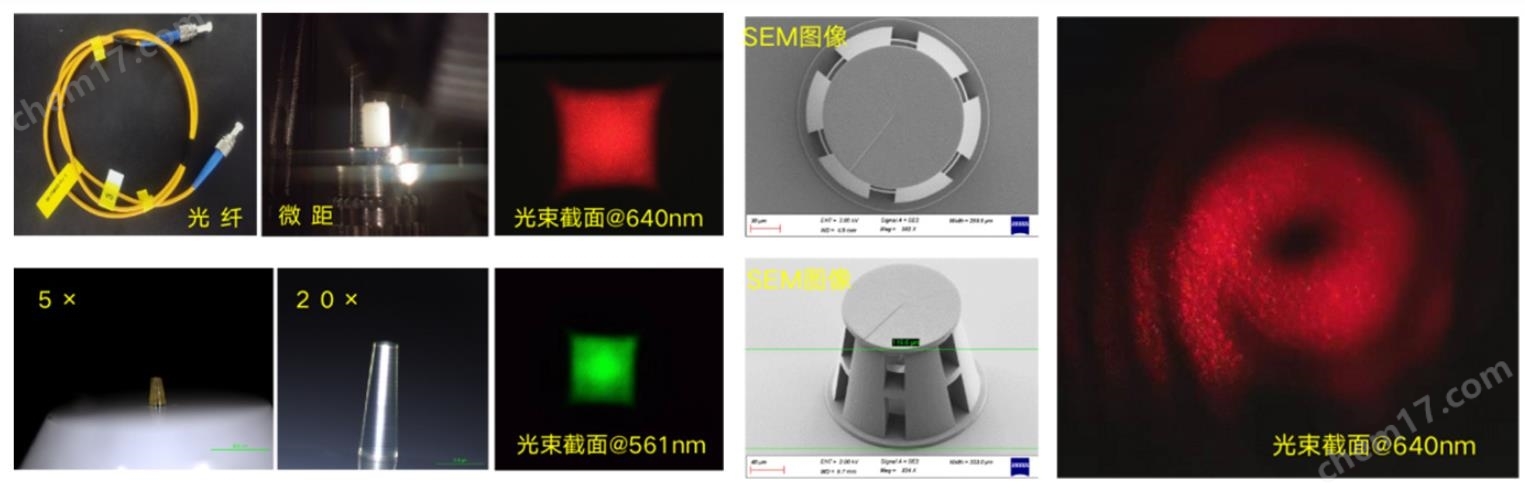
6. High precision 3D structural processing technology optimizes the production process of fiber end faces, improving the efficiency of optical signal transmission and the accuracy of fiber optic connections.