-
E-mail
wangxing@yzqjm.com
-
Phone
15316162949
-
Address
No. 666 Zhenhua Road, Xihu District, Hangzhou City, Zhejiang Province
Product Categories
Hangzhou Yuzhiquan Precision Instrument Co., Ltd
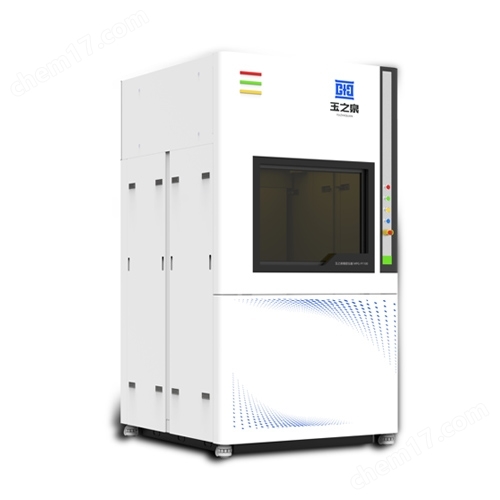
Two photon 3D laser direct writing lithography machine&photoresist
NegotiableUpdate on 02/10
- Model
- Nature of the Manufacturer
- Producers
- Product Category
- Place of Origin
Overview
Two photon photoresist is a type of photoresist based on photosensitive materials, which undergoes chemical reactions under the action of two-photon absorption. This process is different from traditional single photon lithography, where a single photon can excite electrons and generate chemical reactions, while two-photon lithography relies on the simultaneous absorption of two low-energy photons. In this case, the photosensitive material can only undergo photochemical reactions when it is irradiated with high-intensity laser at the focal point.
Product Details
1、 The basic principle of two-photon photoresist
Two photon photoresist is a type of photoresist based on photosensitive materials, which undergoes chemical reactions under the action of two-photon absorption. This process is different from traditional single photon lithography, where a single photon can excite electrons and generate chemical reactions, while two-photon lithography relies on the simultaneous absorption of two low-energy photons. In this case, the photosensitive material can only undergo photochemical reactions when it is irradiated with high-intensity laser at the focal point.
Two photon absorption refers to the simultaneous absorption of the energy of two photons by a material when the wavelength of the laser is long. Through the two-photon absorption effect, certain molecules in the material undergo electronic transitions, thereby changing their chemical properties. The key to this phenomenon is that the reaction of two-photon photoresist only occurs in the high-energy focusing area, while the photosensitive material in the surrounding area does not react due to insufficient photon energy, thus enabling fine processing at the nanoscale.
In the process of two-photon lithography, the intensity of the laser beam and the photosensitivity of the photoresist are two crucial factors. High intensity laser focusing on a smaller space can effectively trigger two-photon absorption, leading to chemical changes such as cross-linking or polymerization of photosensitive materials. This feature enables two-photon lithography to achieve high-resolution pattern manufacturing in three-dimensional space.
2、 Main characteristics of two-photon photoresist
1. Ultra high resolution
Compared with traditional single photon lithography technology, two-photon lithography has significant advantages, highlighted by its high resolution. Due to the fact that two-photon lithography relies on the focusing effect of photons in a local area, the reaction region is almost limited to the vicinity of the laser beam's focal point, which enables photoresists to achieve precision as small as a few nanometers. At present, the resolution of two-photon lithography technology has reached the level of 10 nanometers, far exceeding traditional lithography technology and meeting the demand for nanoscale processing.
2. 3D machining capability
Two photon lithography technology has unique three-dimensional spatial processing capabilities. Traditional photolithography techniques typically only perform pattern etching on a two-dimensional plane, while two-photon photoresist can achieve precise engraving in three-dimensional space by controlling the focusing position of the laser. This three-dimensional processing capability gives two-photon lithography technology an advantage in micro nano processing and the manufacturing of three-dimensional nanostructures.
3. High photosensitivity and precise control
High photosensitivity enables it to initiate photochemical reactions at very low laser power, making the processing more precise and controllable. Meanwhile, the exposure time and beam focusing size during the photolithography process can be precisely adjusted, further improving the processing accuracy of the pattern.
4. Low heat effect
Due to the fact that two-photon lithography only occurs in the focused area of the beam, other parts of the photosensitive material are not exposed to laser irradiation, resulting in relatively less heat generation and avoiding the impact of thermal effects on the material that may occur in traditional lithography processes. This makes two-photon lithography advantageous in the processing of some thermally sensitive materials.
5. High selectivity and anti backscattering ability
Two photon photoresist has high selectivity and can only react under high-intensity irradiation of the laser focal point. The reaction area is usually the laser focal point, which can effectively avoid backscattering and interference and improve the pattern quality of lithography.
3、 General parameters:
| system parameters | |
| Support printing height | ≤10mm |
| Highest surface roughness(Ra) | ≤5nm |
| Minimum feature line width | ≤50nm(XYFlat) and≤300nm(ZAxis) |
| Minimum cycle(XYFlat) | ≤300nm; Z≤600nm; |
| Maximum scanning speed | ≥100mm/s (1000mm/s@100Objective lens) |
| Splicing accuracy | ≤100nm(XYFlat) |
| Support engraving area (circular) | diameter4Inches (customizable) |
| Laser parameters | |
| center wavelength | 515±5nm |
| average power | ≥1W |
| pulse width | ≤200fs |
| power stability | <1%RMS |
| beam quality | <1.2 |
| repetition frequency | 80±5MHz |
| system dimensions | |
| Overall Dimensions | wide1700mm×deep1500mm×tall2200mm |
| weight | <2000kg |
| Installation requirements | Cleanrooms of Class 1000 or above;The seismic isolation level is superior toVC-C |
| Electrical conditions | 220/380VPower consumption>5kW |
| Stable environment | 20±1℃; ±0.1℃;noise<65dB;humidity±5%(temperature control) |
| compressed air | Filter to0.25μmNo oil, stable at0.5-0.6MPaThe traffic should be within500-800SLPM |
| ambient lighting | yellow light |

