-
E-mail
info@excipolar.com
-
Phone
15395560171
-
Address
Building 5, Chuangyan Port, Changzhou Science and Education City, No. 18-50 Changwu Middle Road, Wujin District, Changzhou City, Jiangsu Province, China
Product Categories
- Modular Microscopic Fluorescence Spectrometer
- Transient absorption spectrometer
- Second harmonic testing system
- Spatiotemporal Multidimensional Microscopic Angle Resolution Spectrometer
- In situ electrochemical interference scattering imaging system
- Confocal microscopy Raman/fluorescence spectrometer
- Confocal microscopy multidimensional spectrometer
- Confocal microscopy steady-state transient fluorescence spectroscopy system
Changzhou Puguang Huilian Technology Co., Ltd


Transient absorption spectroscopy system
NegotiableUpdate on 02/06
- Model
- Nature of the Manufacturer
- Producers
- Product Category
- Place of Origin
Overview
Excipolar Spinon transient absorption spectrometer, transient absorption spectroscopy system $r $n • Transient intelligence, fully automatic optical path calibration, software switching and control, no need for manual adjustment, forming a highly integrated, automated and intelligent workflow $r $n • Based on micro optical path design, it can achieve μ m level spatial resolution $r $n • Covering a wide band of 185-1700 nm $r $n • Dual spectrometer configuration, high signal-to-noise ratio detection
Product Details
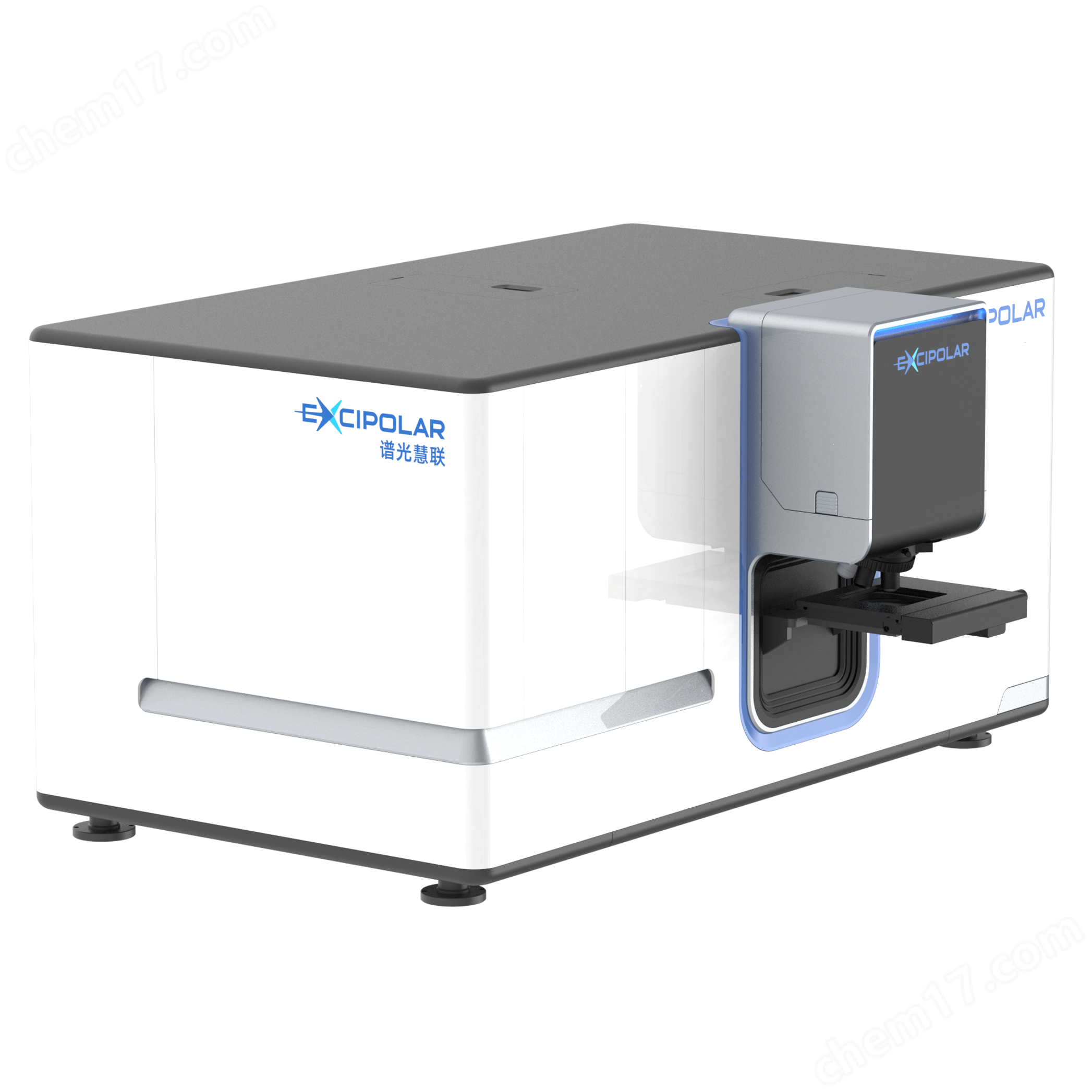
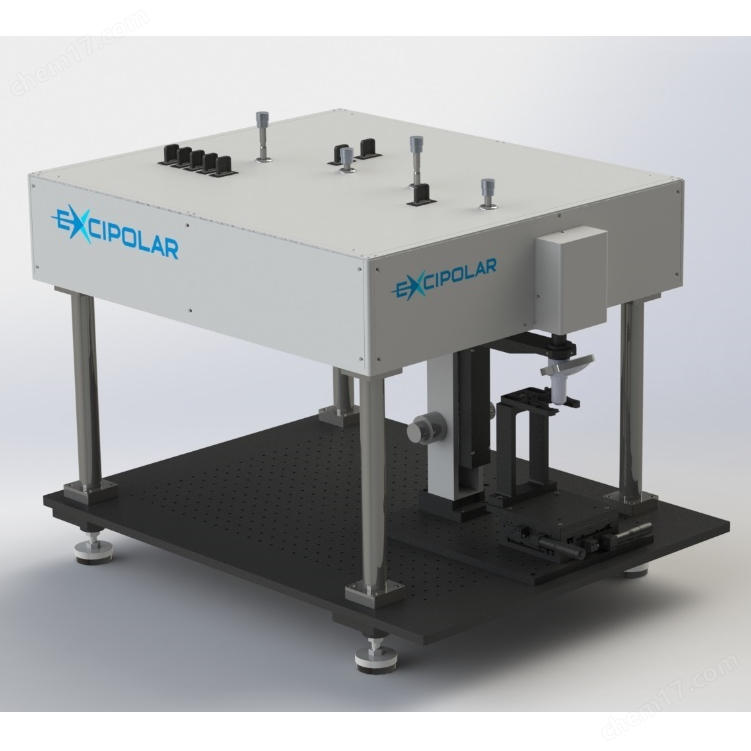
Spinon ExcipolarTransient absorption spectrometer,Transient absorption spectroscopy system
High resolution, multi-dimensional, reliable, and easy-to-use
high precisionTransient absorption spectroscopy systemThis provides a powerful testing platform for the transient absorption characteristics of micro nano materials, bulk materials, solutions, and other materials. Femtosecond level time resolution accurately characterizes the absorption characteristics at different times, wideband response range characterizes the absorption capacity and changes at different wavelengths, nanosecond level time window characterizes the absorption changes over a large time scale, and micrometer level spatial resolution accurately characterizes the spatial absorption differences of the sample. We can customize products according to customer needs, such as expanding functions for low temperature, photocurrent, low temperature magnetic field, etc. The Excipolar Spinon system is a high-resolution, high-precision, monochrome/multi-color compatible, stable and highly reliable transient spectral detection system that can fully meet the extensive needs of scientific research and industrial detection fields.
Key Features:
High resolution, high precision
The unique optical design achieves high temporal, spatial, and spectral resolution.
High precision optical delay lines can achieve up to 3 fs time accuracy while ensuring optical stability.
High resolution dual spectrometer configuration, high signal-to-noise ratio detection.
Can be equipped with a microscope module, achieving a spatial resolution of μ m.
more efficient
High speed spectrometer acquisition system, capable of reachingZ has a global sampling rate of 2500 frames per second.
The dual spectrometer is equipped with spectral reference calibration function to ensure the stability of the test signal.
The absorption test range is 185-1700 nm, and all spectral range data is collected at once.
More features and scalability
Can perform monochromatic or two-color pump probe or transient absorption testing.
• Transversal excitation collection design, capable of achieving transient absorption spectra through transmission/reflection.
• Support for wide field imaging, carrier migration, fluorescence upconversion, optical Kerr, and nanosecond transient absorption extensions
In situ time-resolved spectroscopic characterization can be performed by combining low temperature, electricity, and magnetism.
Multi spectral joint testing can be conducted in conjunction with other spectral products of our company, expanding functions such as micro Raman, fluorescence, and angle resolved spectroscopy to achieve in-situ steady-state and transient spectroscopy.
Spinon ExcipolarTransient absorption spectrometerApplication fields:
Transient absorption processes of bulk materials, thin films, micro nano materials, nanoparticles, and solutions.
Characterization of carrier dynamics and time-domain thermal properties in semiconductor materials.
Femtosecond transient absorption spectra of CrPS ₄ nanosheets. The color is Δ OD (mOD). After time zero (>0ps), the full spectrum absorbance at 740-940 nm is positive. A narrow and strong positive signal ridge appears near zero, which then evolves into a broad-spectrum positive absorption background. The intensity slowly decays over time and lasts until the nanosecond time scale.

The full positive sign indicates that the dynamics are dominated by excited state absorption/free carrier absorption rather than ground state bleaching. The ultrafast strong peak (<1-2 ps) corresponds to the instantaneous ESA of hot carriers or high-energy states, which rapidly decays; The subsequent 10-100 ps decay reflects carrier cooling and inter state relaxation; The nanosecond long tail implies the involvement of long-lived species such as traps/polarons or triplet states. Slight redshift is consistent with cooling and bandgap reformation recovery.
Transient dynamics in the visible wavelength range of CsPbBr3 single crystal under 515 nm selective excitation of the receptor.

A significant negative signal region appears in the shortwave region, indicating band edge ground state bleaching; Its upper edge shows a red shift/broadening trend over time, indicating the recovery of hot carrier cooling and bandgap reforming. In the early stage (<1-2 ps), weak positive signals are superimposed near the band edge, which belongs to instantaneous excited state absorption and rapid decay. Subsequently, bleaching slowly rebounded within tens to hundreds of picoseconds but continued to the nanosecond scale, indicating slow carrier recombination/possibly accompanied by trap release; On the medium to long wave side (~620-660 nm), a slowly decaying weak positive absorption can be observed, corresponding to higher energy levels or charge/phonon related ESA components.