-
E-mail
info@excipolar.com
-
Phone
15395560171
-
Address
Building 5, Chuangyan Port, Changzhou Science and Education City, No. 18-50 Changwu Middle Road, Wujin District, Changzhou City, Jiangsu Province, China
Product Categories
- Modular Microscopic Fluorescence Spectrometer
- Transient absorption spectrometer
- Second harmonic testing system
- Spatiotemporal Multidimensional Microscopic Angle Resolution Spectrometer
- In situ electrochemical interference scattering imaging system
- Confocal microscopy Raman/fluorescence spectrometer
- Confocal microscopy multidimensional spectrometer
- Confocal microscopy steady-state transient fluorescence spectroscopy system
Changzhou Puguang Huilian Technology Co., Ltd
Second harmonic testing system
NegotiableUpdate on 02/06
- Model
- Nature of the Manufacturer
- Producers
- Product Category
- Place of Origin
Overview
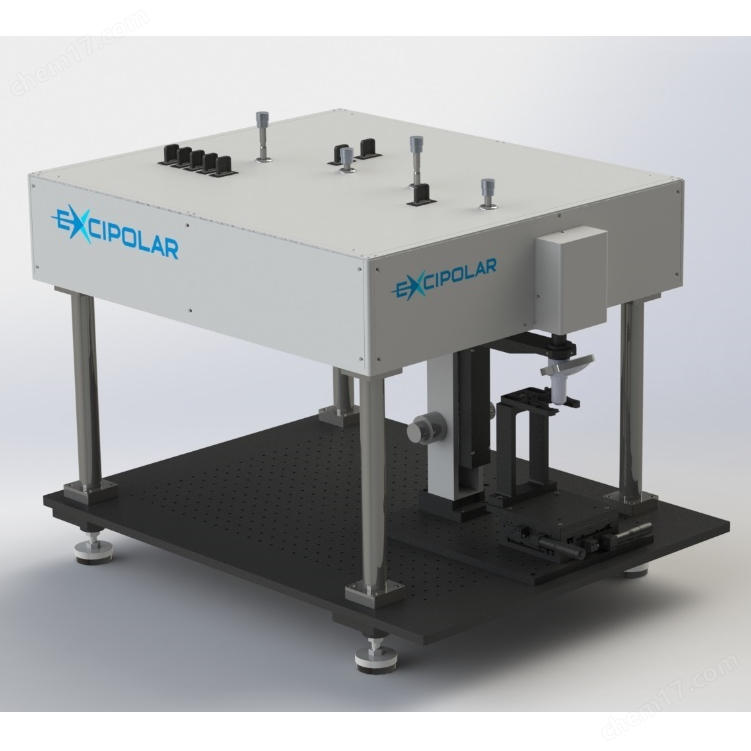
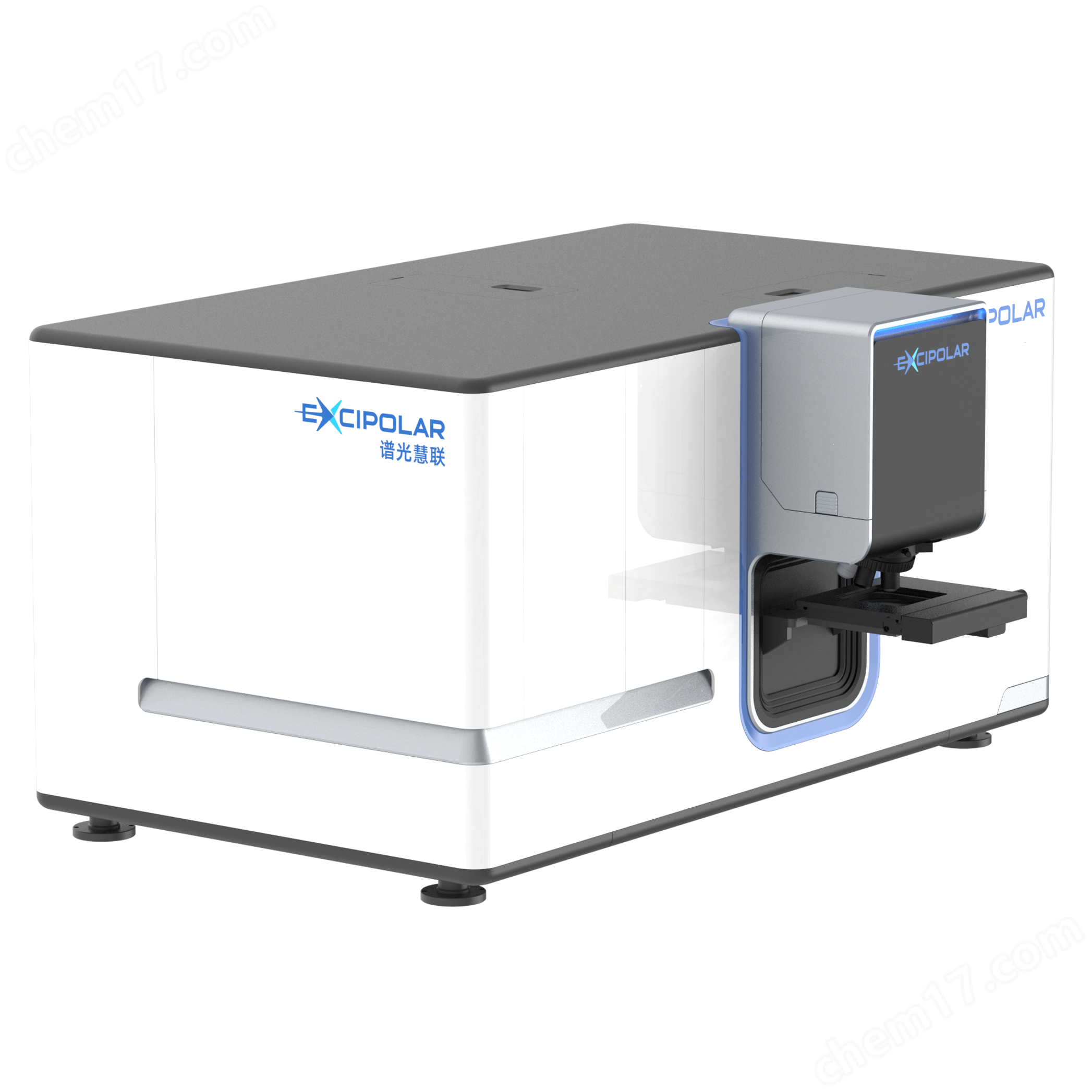
The Excipolar SHG Second Harmonic Testing System adopts a polarization maintaining confocal optical path to achieve precise coaxial and high repeatability alignment. It integrates imaging, spectroscopy, and polarization detection, supports synchronous acquisition and joint analysis, and uses fundamental frequency suppression technology to significantly improve signal-to-noise ratio and reduce background interference
Product Details
Excipolar SHG Second Harmonic Microscopy and Characterization System
Specially designed for applications such as nonlinear optics, two-dimensional materials, ferroelectric/piezoelectric devices, semiconductor crystals, and biological collagen imaging.
Excipolar SHG utilizes femtosecond/picosecond excitation combined with polarization maintaining confocal imaging link, combined with color separation/filtering and high-sensitivity detection, to achieve imaging and quantitative characterization of the second-order nonlinear polarizability χ (2) of the sample. The system integrates automated polarization control and power/response calibration to improve collection efficiency, suppress fundamental frequency background, and reduce instrument errors; It can complete crystal symmetry and principal axis determination, domain/anisotropy mapping, layer identification, and stress and orientation analysis with one click, and is co axial with Raman/PL to integrate imaging, spectroscopy, and polarization measurement into a one-stop process.

SHG scheme schematic diagram
Second harmonic testing systemMain Features
Polarization maintaining confocal optical path: excitation collection maintains polarization state throughout the entire link, suitable for polarization dependent SHG measurement.
Imaging and Spectral Linkage: One click switching between SHG microscopy and spectroscopy within the same field of view; Select the area for automatic spectrum collection and statistics.
Automated polarization analysis: Electric polarization/polarization detection and waveplate scanning generate polarization rose plots and P-SHG curves, supporting chi (2) tensor and point group fitting.
Dual calibration of intensity/response: power normalization and instrument response calibration are carried out in parallel to reduce system errors and ensure comparability between different batches/samples.
Multi geometry measurement: Reflection, transmission, and surface SHG can be freely switched, supporting angular resolution and Z-scan to obtain phase matching and interface information.
• Coaxial coupling: coaxial with Raman/PL, no need to readjust the optical path, mutual verification of spectra, forming a one-stop characterization process.
Efficient color separation and filtering: Strong suppression of fundamental frequency, priority transmission of second harmonic, significantly improving signal-to-noise ratio and weak signal visibility.
• Preview and alignment friendly: real-time preview of camera channel, micro area alignment and large field of view stitching; Compatible with 2D material transfer/characterization platform.
Process oriented software: One click measurement, batch processing, and report export, with built-in script interfaces for automation and secondary development.
• Safety and Expansion: Power interlocking and low-dose workflow ensure sample safety; Optional THG/EFISHG, temperature control, electric field/stress loading modules are plug and play.
Second harmonic testing systemApplication fields:
Two dimensional materials: layer number and symmetry determination, crystal axis and twist angle measurement, domain structure and stress orientation mapping
• Ferroelectric/piezoelectric devices: domain structure and inversion boundary imaging; In situ SHG changes under external electric field
Semiconductor/photonic devices: evaluation of crystal orientation and interface quality of LN/GaN/AlN and other materials
Surface and Interface: In Situ S-SHG Dynamic Monitoring of Adsorption/Functionalization/Oxidation Processes
Biology and Soft Matter: Structural Imaging and Anisotropy Analysis of Collagen and Other Materials Without Staining

SHG intensity plot of CdSe under 1550nm excitation