-
E-mail
info@excipolar.com
-
Phone
15395560171
-
Address
Building 5, Chuangyan Port, Changzhou Science and Education City, No. 18-50 Changwu Middle Road, Wujin District, Changzhou City, Jiangsu Province, China
Product Categories
- Modular Microscopic Fluorescence Spectrometer
- Transient absorption spectrometer
- Second harmonic testing system
- Spatiotemporal Multidimensional Microscopic Angle Resolution Spectrometer
- In situ electrochemical interference scattering imaging system
- Confocal microscopy Raman/fluorescence spectrometer
- Confocal microscopy multidimensional spectrometer
- Confocal microscopy steady-state transient fluorescence spectroscopy system
Changzhou Puguang Huilian Technology Co., Ltd

Angular resolution spectroscopy system
NegotiableUpdate on 02/06
- Model
- Nature of the Manufacturer
- Producers
- Product Category
- Place of Origin
Overview
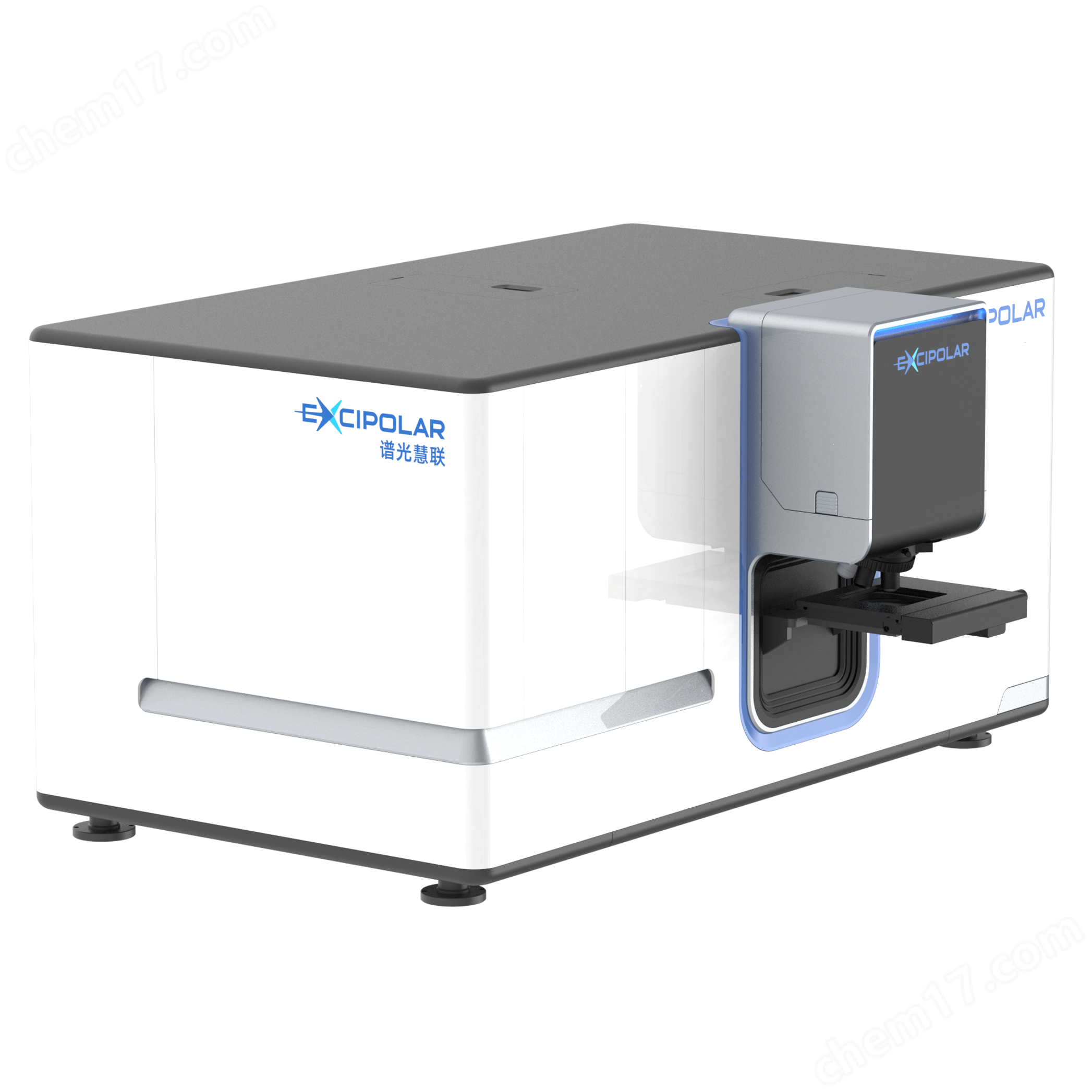
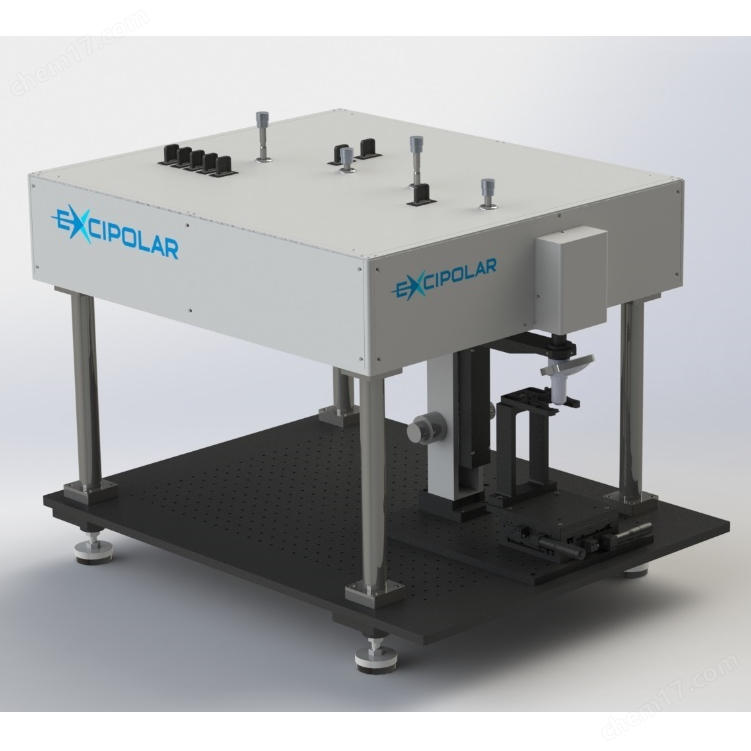
Excipolar KSP spatiotemporal multidimensional micro angle resolution spectrometer, angle resolution spectroscopy system $r $n • Fourier leaf surface direct imaging optical path, quickly obtains momentum space information $r $n • Combined with a series of optical measurement techniques such as micro Raman, fluorescence, absorption, and polarization, it can achieve multidimensional spectral information such as momentum space+position space+energy distribution+polarization resolution. $r $n • Multi dimensional information fusion of space, time, and momentum, intuitively representing the temporal evolution dynamics of momentum spatial information in micro areas $r $n • AI intelligent representation of all scenarios
Product Details
Excipolar KSPSpatiotemporal Multidimensional Microscopic Angle Resolution Spectrometer,Angular resolution spectroscopy system
High resolution, multi-dimensional, reliable, and easy-to-use
Angle resolved spectroscopy and imaging technology utilizes the Fourier transform function of the focal plane behind the microscope objective lens. Based on the microscope platform, momentum space information is converted into angular information of collected light, and direct imaging of momentum space is achieved through conjugate imaging optical path (i.e. imaging of the focal plane behind the objective lens, rather than traditional sample surface imaging).
Excipolar KSP spatiotemporal multidimensional microscopy is used to investigate the multidimensional light field modulation properties that different types of samples may possessAngular resolution spectroscopy systemAfter 20 years of technological improvement, nine different measurement modes can be provided. By combining a series of optical measurement techniques such as micro Raman spectroscopy, fluorescence spectroscopy, absorption spectroscopy, polarization spectroscopy, and time-resolved spectroscopy, multidimensional resolution of spectra can be achieved, including momentum space, position space, energy distribution, polarization resolution, and temporal evolution.

Principle of Microscopic Angular Resolution Spectroscopy 1

Measurement Mode
AI intelligence
The company's R&D team has achieved various intelligent operations, including automatic calibration of the entire optical path, full process intelligent spectrum collection, automatic sample positioning and tracking, and database based characterization result calibration, through software and hardware collaborative intelligence to address various challenges encountered during the use of spectral equipment.
The intelligent detection equipment of Spectral Light Intelligent Connection has taken spectral instruments from "specialized" to "universal", solving the experimental constraints of researchers in interdisciplinary and non professional fields. From parameter settings, data acquisition to instrument calibration, the assistance of AI greatly reduces the threshold for instrument use, allowing researchers in more fields to focus on their own experimental exploration.
Excipolar KSPSpatiotemporal Multidimensional Microscopic Angle Resolution SpectrometerKey Features:
• Large angle range: Based on a large numerical aperture flat field apochromatic objective lens, collect angular radiation spectra exceeding 120 °.
• High angular resolution: By using specially optimized chromatic aberration and aberration reduction optical paths, the angular resolution can be increased to 0.1 °, significantly enhancing spectral analysis capabilities.
Scalability: A system designed specifically for application-oriented applications, compatible with mainstream expansion platforms in the market, and meeting the needs of multi physics testing.
User friendly design: Intelligent products combined with AI technology, including various automated operations such as automatic light path alignment and automatic focusing.

Large angle range fixed angle measurement
Application fields:
The optical properties of optical materials such as photonic crystals, metamaterials, metasurface lenses, and optical thin films, such as band structure, beam polarization, direction, and frequency modulation, are highly dependent on the incident angle in micro nano photonics and optical materials. The angle resolved spectrometer can accurately characterize the spectral characteristics at different incident and exit angles, providing key data for optimizing the preparation process and assisting in the design of new optical devices.
The luminous efficiency and color gamut of organic light-emitting materials and OLED organic light-emitting materials will significantly change at different angles. Angle resolved spectrometer can be used to measure its spatial light intensity distribution and angle dependence, optimizing the luminescence performance of the device.
The fluorescence properties of quantum dots are angle dependent, and angle resolved spectrometers can measure their luminescence intensity and wavelength distribution at different angles, providing support for the application of quantum dots in display and biological labeling.
The biomedical and chemical analysis angle resolved spectrometer can be used for biological imaging and diagnosis, analyzing the spectral characteristics of biological samples at different angles, revealing the interaction mechanism between light and organisms, and providing support for disease diagnosis and drug development.


References:
1. G Khitrova, et al., H. M. Gibbs, M. Kira, S. W. Koch and A. Scherer, Vaccum Rabisplitting in semiconductors[J]. Nature Physics 2006, 2: 81
2. Long Zhang ,et al., PNAS 2015,112:,13(2015)
3. F Hsu et.al.,Phys. Rev. B 2015, 91,: 195312 (2015)