-
E-mail
hzjoule@163.com
-
Phone
19012707638
-
Address
No. 598 Hejing Road, Hezhuang Street, Qiantang District, Hangzhou City, Zhejiang Province
Product Categories
Hangzhou Joule Intelligent Technology Co., Ltd

Thermogravimetric Analyzer
NegotiableUpdate on 02/07
- Model
- Nature of the Manufacturer
- Producers
- Product Category
- Place of Origin
Overview
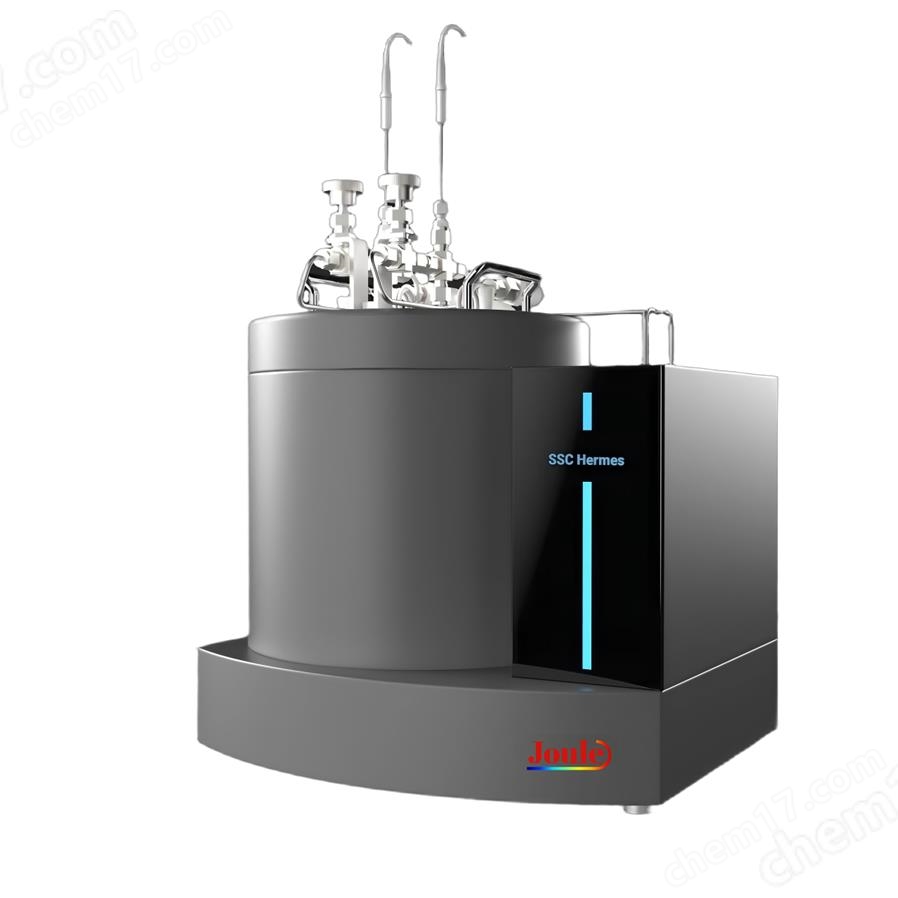
TGA thermogravimetric analyzer, TGA Planck/TGA Planck+thermogravimetric analyzer has good performance and a wide temperature range, which can be extended from room temperature to up to 1200 ℃, meeting the high temperature testing needs of different materials
Product Details
TGA thermogravimetric analyzerIntroduction
TGA thermogravimetric analyzerAs an excellent instrument for analyzing the thermal properties of materials. Its working principle is based on thermogravimetric analysis, which accurately measures the changes in sample quality with temperature or time in a program-controlled environment. By working in conjunction with a highly sensitive weighing sensor and precise temperature control system, it is possible to capture with high accuracy the mass fluctuations of the sample caused by physical changes (such as evaporation and sublimation) and chemical changes (such as decomposition and oxidation-reduction) during the heating process. TGA Planck has good performance and a wide temperature range, which can be extended from room temperature to up to 1200 ℃, meeting the high temperature testing needs of different materials; It adopts a highly sensitive electromagnetic compensation weighing sensor with high mass resolution, which can detect mass changes at the microgram level, ensuring the accuracy of analysis results. Meanwhile, the heating rate can be flexibly adjusted within a wide range, ranging from 0.1 ℃ to 500 ℃ per minute, in order to optimize testing conditions for different sample characteristics and experimental purposes.
Test Standard
JJG 1135 2017、GBT 27761-2011、GBT 27762-2011
Product Specifications
| Product Model | TGA Planck | TGA Planck+ |
| Temperature range (℃) | RT~1000 | RT~1200 |
| Heating furnace type | resistance heating furnace | Infrared heating furnace |
| Heating rate (℃/min) | 0.1~100 | 0.1~500 |
Technical Specifications
| parameter | value |
| load cell | High precision electromagnetic compensation balance |
| Maximum sample size | 5g |
| Dynamic weighing range | 5g |
| Weighing sensitivity | 0.1 ug |
| Quality zero drift | 10 ug |
| Quality baseline drift | 50 ug |
| Quality repeatability | 0.01% |
| Quality indication error | ±0.01% |
| temperature accuracy | 1 K |
| Temperature precision | 0.1 K |
| Heating rate indication error | ±1% |
| Differential Thermal Analysis (DTA) | have |
| System sampling rate | 10Hz |
| Blowing atmosphere system | have |
| Blowing atmosphere control | 3 channels, controllable flow rate (0-300ml/min) |
| Protecting the Atmosphere | 200ml/min |
Function Mode
| test mode | data collection |
| isothermal mode | Temperature collection, quality collection |
| scanning mode | Temperature collection, quality collection |
| High resolution TGA mode | Temperature collection, quality collection |
| Modulation mode | Temperature collection, quality collection |
Optional features
| function | Brand/Model | parameter |
| auto-sampling | Joule Intelligence | 60 sample locations |
Product Features
Infrared heating furnaces have advantages such as safety, reliability, and high and low heating and cooling rates.
High precision electromagnetic compensation balance, traceable high-precision quality measurement.
High resolution TGA control mode, wide and overlapping weight loss separation, higher productivity and better resolution. Wide material compatibility to meet the multi domain thermal analysis needs from basic scientific research to industrial applications.
Intelligent operation interface, simplified operation process, improved work efficiency and user satisfaction.
Powerful data analysis software, providing deep data mining and visualization reports to assist in scientific research and production optimization.
Installation requirements
| power supply | AC220V/50Hz |
| Venue requirements | The equipment is placed on the experimental platform to avoid vibration, equipped with a regulated power supply and independent grounding. |
| Environmental Requirements | The equipment should be placed horizontally in a well ventilated laboratory, with sufficient space around for operation and maintenance. Temperature: (5-40) ℃, humidity:<85% RH |
| environmental requirements | The exhaust gas needs to be filtered by activated carbon or discharged externally, and the waste samples should be collected according to hazardous waste classification |
TGA thermogravimetric analyzerOperation process:
1. Sample preparation
Sample size control: Powder/particle sample 3-10mg, film/fiber needs to be cut to a diameter of ≤ 3mm and a thickness of ≤ 2mm, ensuring uniform distribution and no contact with the crucible wall (to avoid thermal conduction deviation).
Crucible selection: Select according to temperature range - aluminum crucible (≤ 400 ℃, low cost but prone to acid reaction), ceramic crucible (≤ 800 ℃, corrosion-resistant), platinum crucible (≤ 1200 ℃, high temperature but prone to metal contamination).
Pre processing requirements: Moisture absorbing samples (such as biomass and inorganic salts) need to be vacuum dried at 60 ℃ for 12 hours; Samples that are prone to oxidation (such as metal powders) need to be dried under inert gas protection; Strong acid/alkali samples need to be diluted before testing; Magnetic samples need to be confirmed to have no magnetic interference.
2. Instrument calibration and inspection
Quality calibration: Use 10mg and 50mg standard weights to calibrate the balance, with an error of ≤± 0.01mg
Temperature calibration: Verified using standard substances such as indium (melting point 156.6 ℃) and zinc (melting point 419.5 ℃), with an error of ≤± 1 ℃.
Baseline calibration: Conduct an empty crucible operation test to ensure no mass drift (original baseline drift<10 μ g, flatness<1 μ g).
Environmental inspection: laboratory temperature of 20-25 ℃, humidity ≤ 60%, no vibration (away from centrifuges and air conditioning), stable airflow; Gas purity ≥ 99.995% (nitrogen/oxygen), flow rate 20-50mL/min, advance ventilation for 10-15 minutes to replace the pipeline.
3. Parameter settings
Heating program: Set the starting temperature (such as 30 ℃), ending temperature (such as 800 ℃), heating rate (5-20 ℃/min, 20 ℃/min for fast reaction and 5 ℃/min for slow reaction), and isothermal time (such as 0 min).
Atmosphere control: Inert gases (nitrogen/argon) are used for oxidation prevention, reactive gases (oxygen/air) are used for oxidation research, and hydrogen is used for reduction reactions; The gas flow rate needs to be stable (such as 30mL/min).
Data collection: Sampling interval of 1 second per point to ensure capture of decomposition details; DTG (Differential Thermogravimetric) curve assisted analysis of maximum weight loss rate temperature.
4. Run tests
Power on preheating: Turn on the nitrogen/oxygen cylinder (pressure ≥ 0.5MPa), start the instrument power and circulating water, preheat for 30 minutes until stable.
Sample loading and balancing: Place the crucible in the sample holder, turn off the heating furnace, and check the sealing; Enter the sample information (name, quality, operator) in the software, confirm the parameters, and click "Start".
Process monitoring: Real time observation of TG (mass temperature) and DTG (mass change rate temperature) curves, recording anomalies (such as sudden mass drop, baseline drift); Ceramic crucibles are required for high temperature ranges (>600 ℃) to avoid melting aluminum crucibles.
5. Data analysis
Curve processing: Normalize the initial mass (set to 100%) and calculate the weight loss percentage; Analyze the decomposition stages (such as dehydration, decomposition, oxidation) by combining TG and DTG curves.
Dynamics calculation: Calculate activation energy and pre exponential factor through TG curves with different heating rates.
Feature parameter extraction: initial decomposition temperature (T ₀, temperature at which mass loss is 5%), maximum weight loss rate temperature (T ₘₐₓ, DTG peak), residue amount (inorganic filler/flame retardant content).
6. Safety and Maintenance
Operation safety: Wear gloves and goggles; Flammable and explosive samples (such as organic peroxides) are prohibited from testing; Toxic/volatile samples are operated in a fume hood and equipped with gas detectors; Do not touch high-temperature components (furnace body, crucible).
Instrument maintenance: monthly baseline calibration, quarterly quality and temperature calibration; Regularly clean the furnace cover and exhaust pipe (to prevent the accumulation of pollutants); Check the gas filter quarterly to avoid blockage; When not in use for a long time, preheat for 30 minutes every week to prevent moisture.
Shutdown process: When the furnace temperature drops below 50 ℃, turn off the gas and circulating water; Take out the sample and clean the crucible (platinum crucible soaked in dilute nitric acid, disposable aluminum crucible treated as hazardous waste).
Similar Product Recommend