-
E-mail
hzjoule@163.com
-
Phone
19012707638
-
Address
No. 598 Hejing Road, Hezhuang Street, Qiantang District, Hangzhou City, Zhejiang Province
Product Categories
Hangzhou Joule Intelligent Technology Co., Ltd

Lithium battery thermal runaway testing instrument - Hangzhou Joule Intelligent Technology Co., Ltd
NegotiableUpdate on 02/07
- Model
- Nature of the Manufacturer
- Producers
- Product Category
- Place of Origin
Overview
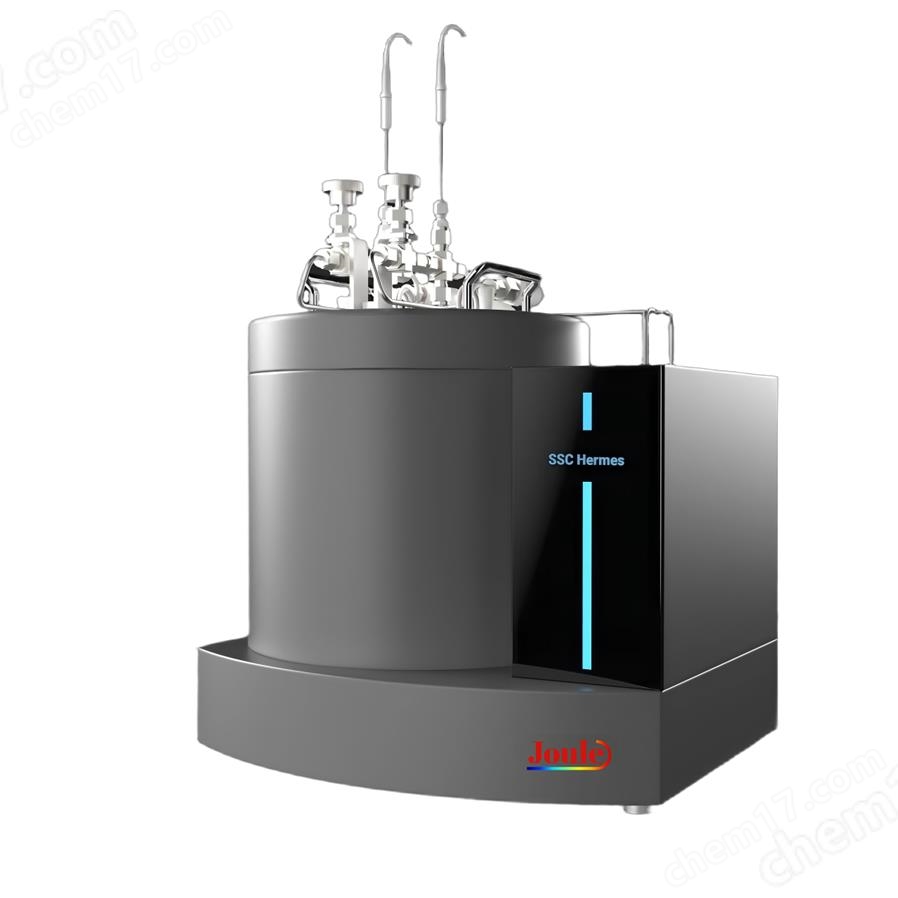
The lithium battery thermal runaway testing instrument has the characteristics of simple operation, smooth experimental start-up and operation, accurate experimental data collection, and reliable data analysis. Integrated with thermal and electrical abuse functions, it synchronously collects data on battery voltage, current, charge, temperature, pressure, and time under various abuse conditions.
Product Details
Lithium battery thermal runaway testing instrumentIntroduction
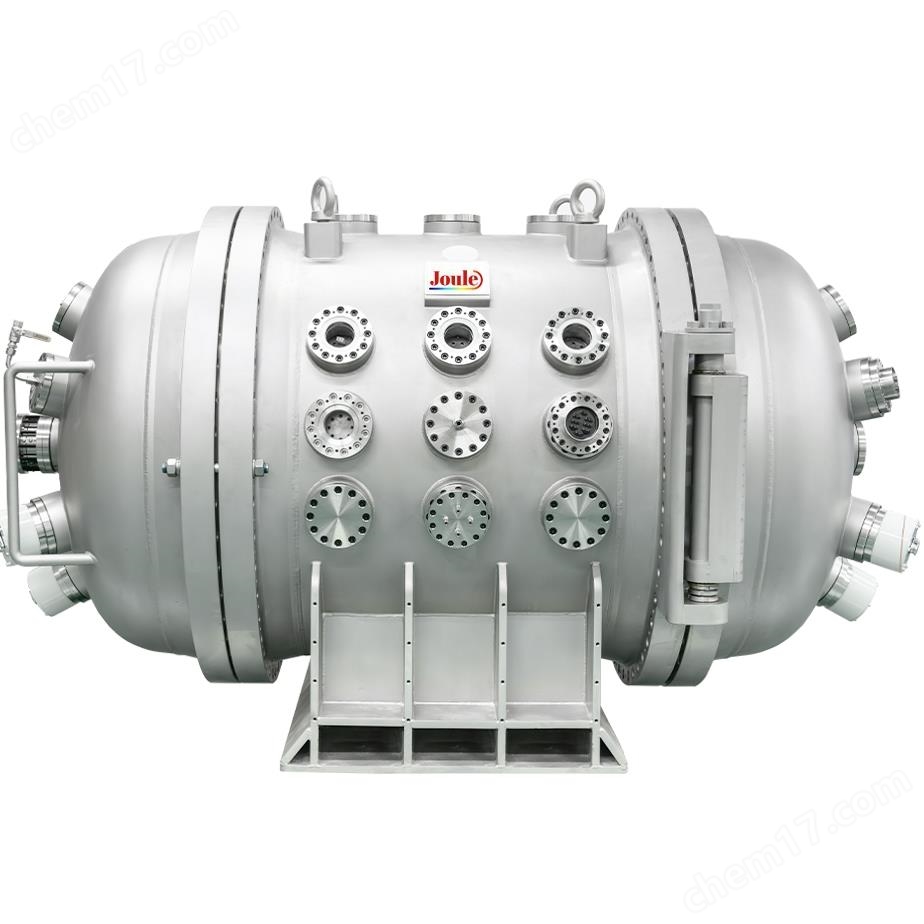
Lithium battery thermal runaway testing instrumentIt can be used to study the thermal runaway and thermal propagation mechanisms of large-sized cells such as square and soft packs, as well as small modules. Dynamically adjust the temperature of the calorimeter chamber based on changes in battery temperature, and achieve battery insulation by eliminating the temperature difference between the battery and the calorimeter chamber. It has testing modes such as battery thermal runaway, adiabatic temperature rise, charge discharge heat generation, and specific heat capacity, which can accurately obtain parameters such as battery charge discharge heat generation and specific heat capacity, thermal runaway initiation temperature, maximum thermal runaway rate, adiabatic temperature rise characteristics, thermal runaway gas production rate, and gas production rate. It can also be measured by gas chromatography, Fourier transform infrared spectroscopy, and mass spectrometryUse spectrum and other methods to obtain more information on thermal runaway gas production. The instrument can provide data basis for the safety performance evaluation of lithium batteries and battery modules, and provide guidance for the design of thermal management systems for power batteries.
standard
USABC SAND99-0497、SAEJ2464-R2009、ASTME1981-98(2020)、GB/T36276-2023、UL9540A、UL1973、GB 38031-2020
Lithium battery thermal runaway testing instrumentProduct specifications and technical parameters
| Product Model | ARC Titans 450 | ARC Titans 850 | ARC Titans-C 1000 |
| (Pressure relief type) | (Pressure relief type) | (Sealed type) | |
| Container diameter | 450 | 850 | 1000 |
| Container depth | 550 | 700 | 1200 |
| Temperature control range | RT~300℃ | RT~300℃ | -30~300℃ |
| (Can be equipped with liquid nitrogen refrigeration) | |||
| Temperature Control Mode | HWS、 Adiabatic temperature rise, specific heat capacity testing, charge discharge heat generation | HWS、 Adiabatic temperature rise, specific heat capacity testing, charge discharge heat generation | HWS、 Adiabatic temperature rise, specific heat capacity testing, charge discharge heat generation |
| Temperature rise rate detection threshold | 0.01℃/min~0.05℃/min | 0.01℃/min~0.05℃/min | 0.01℃/min~0.05℃/min |
| Temperature tracking rate | 0.01℃/min~15℃/min | 0.01℃/min~15℃/min | 0.01℃/min~15℃/min |
| Temperature display resolution | 0.001℃ | 0.001℃ | 0.001℃ |
| Temperature stability of calorimeter chamber | ±0.005℃/min | ±0.005℃/min | ±0.005℃/min |
| Acupuncture speed | 1mm/s-100mm/s | 1mm/s-100mm/s | 1mm/s-100mm/s |
| Maximum needling force | ≥2000N | ≥2000N | ≥2000N |
| Maximum load of charging and discharging poles | ≥600A | ≥600A | ≥600A |
| Furnace cover opening method | manual | electric | manual |
| Calorimetry chamber pressure resistance | / | / | 3 MPa |
| Explosion proof design | 3.5mm stainless steel explosion-proof box | 3.5mm stainless steel explosion-proof box | Complies with the GB/T 150-2024 pressure vessel design standard |
*Customization accepted for other sizes
Function Mode
| test mode | data collection | safety function |
| Specific heat capacity test | Temperature acquisition | pressure relief valve |
| adiabatic temperature rise | Pressure collection | Explosion proof design |
| Charge discharge heat generation | Vacuum degree collection | Anti leakage design |
| thermal runaway | Current and voltage collection | Pressure Alarm |
Optional features
| Module Name | function |
| Charging and discharging module | Excessive use of electricity leads to thermal runaway, as well as testing for heat generation during charging and discharging |
| Acupuncture module | Mechanical abuse leads to overheating and loss of control |
| Infrared temperature measurement module | High spatial resolution measurement of battery surface temperature |
| Multi channel temperature measurement module | Distributed measurement of battery surface temperature |
| Camera module | Video monitoring of thermal runaway process |
| weighing module | Real time monitoring of quality loss during thermal runaway process |
| Gas production collection | Thermal runaway gas production programmable acquisition |
Lithium battery thermal runaway testing instrumentThe purpose is to evaluate the safety performance of batteries under certain conditions. By simulating abuse conditions such as overcharging, heating, and needle puncture, the thermal runaway behavior and system response of batteries are observed. The testing process can be divided into preparation stage, experimental stage, observation and recording stage, and evaluation and analysis stage. The specific process and key points are as follows:
1、 Preparation stage
Sample selection and pretreatment
Select fully charged battery cells or modules to ensure they are in a healthy state (SOH>80%).
According to the testing requirements, pre cycle the battery (such as charging and discharging at a constant rate for 3 times) to stabilize its state.
Record the initial quality, voltage, internal resistance, and other basic data of the battery.
Test environment setup
Equipment preparation: equipped with heating devices (such as heating plates, thin film heating plates), temperature sensors (K-type thermocouples), voltage acquisition equipment, data recorders, adiabatic acceleration calorimeter (ARC), etc.
Environmental control: Simulate different temperature conditions (such as 25 ± 5 ℃) in a constant temperature box or environmental chamber to ensure a stable testing environment.
Safety protection: Testing is conducted inside an explosion-proof box, equipped with fire extinguishing devices, explosion-proof valves, pressure relief ports, etc., to prevent explosions or fires during the testing process.
Development of testing plan
Clearly define the testing purpose (such as evaluating the triggering conditions, propagation patterns, or effectiveness of safety measures for thermal runaway).
Design test conditions (such as overcharging, heating, needle puncture, short circuit, etc.) and set test parameters (such as heating power, charging rate, temperature threshold, etc.).
Plan data collection points (such as battery surface temperature, voltage, internal air pressure, etc.) and determine the sampling frequency (≥ 1Hz).
2、 Experimental phase
Thermal runaway test of battery cells
Overcharge trigger: Continuously charge the battery with a current of 1C or higher until the battery voltage exceeds the safe threshold (such as 4.2V), triggering overcharging thermal runaway.
Heating trigger: Use a heating device to heat the surface of the battery, adjust the heating power according to the testing requirements (such as gradually increasing from 50W to 200W), until the battery temperature reaches the thermal runaway trigger point (such as 180-250 ℃).
Needle puncture trigger: Use a steel needle to puncture the battery at a certain speed (such as 10-30mm/s), causing an internal short circuit and triggering heat out of control.
Battery pack/system thermal diffusion test
Modified battery pack: Select a battery cell in the battery pack as the object of thermal runaway, install heating devices or needle punching equipment, and arrange temperature, voltage, air pressure and other sensors.
Thermal runaway: Trigger the thermal runaway of the target battery cell by heating, needling, or overcharging, and observe the process of heat diffusion to other units.
System response monitoring: Record the temperature changes, voltage fluctuations, and response of system protection measures (such as power outage, exhaust, insulation, etc.) of other battery cells in the battery pack.
3、 Observation and recording stage
Real time data collection
Record the temperature change curve, voltage change curve, and internal pressure change curve of the battery surface.
Use an infrared thermal imager to capture the temperature distribution on the surface of the battery and generate a thermal map sequence.
Record visual phenomena during the testing process (such as smoke, fire, explosion, shell rupture, etc.).
Key parameter extraction
Thermal runaway temperature: Record the highest temperature reached on the surface of the battery (such as 350 ℃) and the temperature at which thermal runaway is triggered (such as 186 ℃).
Temperature rise rate: Calculate the temperature rise rate of the battery during thermal runaway (e.g. dT/dt>3 ℃/s).
Gas production: Measure the amount and rate of gas produced during the thermal runaway process of the battery through a pressure sensor or gas collection device.
Similar Product Recommend