-
E-mail
bjrkth@163.com
-
Phone
13911362653
-
Address
Industrial South District, Yangfang Town, Changping District, Beijing
Product Categories
- Temperature pressure linkage intelligent injection controller
- piston pump
- Electric six way valve head
- Pneumatic twelve way switching valve
- Electric twelve way valve
- ball valve
- Linear needle valve
- 1-4 Electric High Voltage Sequential Switching Valve
- 1-6 Electric High Voltage Sequential Switching Valve
- 1-10 Electric High Voltage Sequential Switching Valve
- Pneumatic Switching Valve Series
Beijing Ruike Tongheng Technology Development Co., Ltd
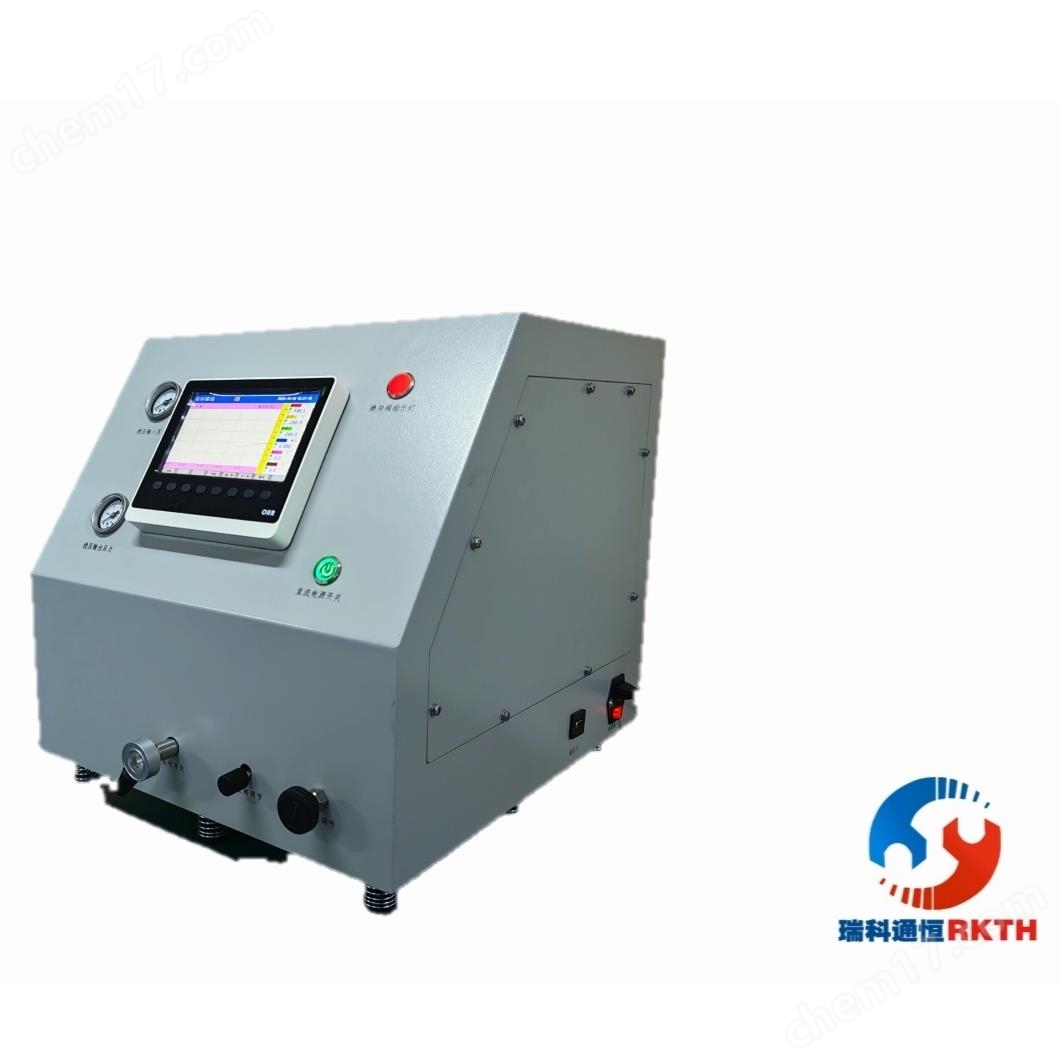
Temperature pressure linkage intelligent gas injection controller
NegotiableUpdate on 01/05
- Model
- Nature of the Manufacturer
- Producers
- Product Category
- Place of Origin
Overview
Temperature pressure linkage intelligent gas injection controller $r $n1, synchronous temperature control 0.5 ℃+precise voltage stabilization, intelligent switching of gas paths, bidding farewell to moisture condensation and pressure fluctuations! $r$n2、 Intelligent PID temperature control+automatic threshold switching, the entire process is controllable, solving the three major pain points of poor repeatability, strong manual dependence, and difficult adaptation to complex working conditions! $r $n3, 5MPa high pressure, 300 ℃ high temperature stable operation, ppb level trace detection, high-purity gas analysis more accurate and reliable!
Product Details
In gas chromatography (GC/GC-MS) analysis, the accuracy of gas sample injection directly determines the reliability of detection results - traditional injectors often cause sample water to fluctuate due to temperature fluctuations
Condensation and unstable pressure can cause injection volume deviation, especially in the analysis scenarios of trace components (such as ppb level VOCs) and high-purity gases (such as 99.999% high-purity nitrogen)
The problem is more prominent.
Ruike Tongheng received a customer's commission to design and produceTemperature pressure linkage intelligent gas injection controllerWith "synchronous temperature control+precise voltage stabilization" as the core, the electric sequence selection valve and manual switching are used
Combining valve replacement and stabilizing valve for intelligent switching of gas paths, achieving temperature fluctuations of sample gas within ± 0.5 ℃ range, no condensation of sample moisture, and precise pressure control detection. When the temperature is low
When the precipitation exceeds the threshold, the program automatically switches the gas path to stabilize the backend gas state. The controller is suitable for 5MPa pressure input and 300 ℃ high temperature (valve body resistant to high temperature) environment, and can be directly connected
Connect the input gas source.

By using intelligent PID temperature control algorithm to eliminate temperature error interference and accurately control the moisture content in the injected gas. According to the set temperature and pressure signal threshold, intelligently switch the valve group and control the injection
The gas path is controllable throughout the entire process, which can solve the three major pain points of traditional equipment: poor repeatability, strong manual dependence, and difficulty in adapting to complex working conditions. Breaking through the limitations of traditional "separate control" design, temperature control is improved
The depth of coordination between temperature control and pressure regulation ensures that the sample remains stable throughout the entire injection process.