- Phone
-
Address
First Floor Factory Building, Area A, Fengshu Industrial Park, Dongfeng Avenue, Wuhan Economic and Technological Development Zone, Hubei Province
Product Categories
Wuhan Andexin Testing Equipment Co., Ltd

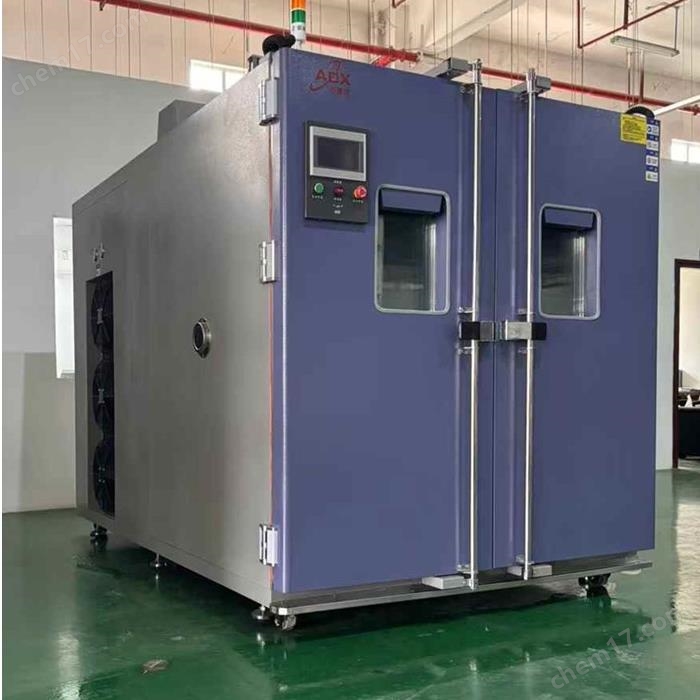
Step in ice cover simulation test chamber
NegotiableUpdate on 05/06
- Model
- Nature of the Manufacturer
- Producers
- Product Category
- Place of Origin
Overview
The walk-in icing simulation test chamber is a testing equipment used to simulate the phenomenon of icing in natural environments. It can reproduce low-temperature conditions in laboratory environments, forming ice layers on the surface of objects. It is mainly used to study the performance of equipment in many fields such as power, communication, transportation, aerospace, etc. in icing environments.
Product Details
Step in ice cover simulation test chamberIt is an experimental equipment used to simulate the phenomenon of ice cover in natural environments, which can reproduce low-temperature conditions in laboratory environments and form ice layers on the surface of objects. It is mainly used to study the performance of equipment in many fields such as power, communication, transportation, aerospace, etc. in ice cover environments. The following will introduce the system composition, technical parameters, and experimental advantages.

1Step in ice cover simulation test chamberSystem Composition
1. Box body: Adopting insulation structure to effectively control internal temperature and reduce heat loss. The box is equipped with multiple climate control components, which can simulate various climate conditions such as freezing rain, frost, and wind speed.
2. Lift turntable: The design is flexible, and the height and angle can be adjusted according to the needs of the experiment, adapting to different types and sizes of test samples. During the experiment, the test sample is placed on a lifting platform and adjusted to appropriate temperature and humidity conditions.
3. Spray water supply system: Spray water droplets through precision nozzles, and the droplets quickly freeze in a low-temperature environment, forming an ice layer. The spray system can adjust the size and spray amount of water droplets to simulate different precipitation intensities (such as drizzle, moderate rain, rainstorm, etc.). The nozzle is usually made of anti freezing materials to ensure long-term stable operation in low-temperature environments.
4. High pressure gas source and supply system: Mist the water vapor and cooperate with the spray system to gradually freeze the water on the surface of the sample under predetermined temperature and humidity conditions, forming an ice cover.
5. Temperature regulating device: Equipped with an efficient refrigeration system, it can quickly lower the temperature inside the box below freezing point (usually -40 ° C to 0 ° C) to simulate extremely cold environments. The temperature control system usually adopts PID (proportional integral derivative) algorithm to ensure the accuracy and stability of temperature regulation, and avoid the influence of temperature fluctuations on experimental results. In some advanced devices, rapid temperature rise and fall functions can also be implemented to simulate sudden temperature changes in nature.
6. Flow control and regulation device: The entire system is monitored and controlled by a controller, which precisely adjusts the spray water and gas according to preset parameters such as spray water flow rate, gas temperature, etc., to achieve stable and accurate ice/frost rain testing of the test sample.
2、 Technical parameters
1. Temperature range: -40~80 ℃, can be flexibly adjusted according to different experimental needs.
2. Spray water temperature: 0 ℃~5 ℃, which is beneficial for accelerating the formation of ice/freezing rain on the test sample.
3. Spray intensity: 25mm/h, simulate different precipitation intensities.
4. Rainwater diameter: 1.0mm~1.5mm, the size of water droplets can be adjusted according to actual needs.
5. Ice thickness: 6mm/13mm/20mm/37mm/75mm (optional). Different test products have different materials and sizes, and the required time for ice thickness to form varies.
6. Ice density: 0.2g/cm ³ to 0.9 g/cm ³.
7. Temperature display accuracy: 0.01 ℃, ensuring the accuracy of temperature monitoring.
8. Humidity display accuracy: 0.1% RH, accurately grasp humidity changes.
9. Temperature fluctuation: ≤± 0.5 ℃, ensuring temperature stability.
10. Humidity fluctuation: ≤± 1.5% RH.
11. Temperature deviation: ≤± 2.0 ℃.
12. Humidity deviation: ≤± 3.0% (≥ 75.0% RH); ≤± 5.0% (. 0% RH).
13. Heating rate:+20 ℃+100 ℃ for less than 50 minutes (average throughout the entire process, no load).
14. Cooling rate:+20 ℃ -40 ℃ for 70 minutes (average throughout the process, no load) - Dual compressor refrigeration (no load).
3、 Experimental advantages
1. Intelligent control: Adopting excellent automation control system, real-time monitoring and adjustment of test environment parameters to ensure the stability and accuracy of the test.
2. Multiple safety measures: equipped with safety devices such as water level sensors and gas temperature sensors, to promptly detect and handle abnormal situations, ensuring the safety of the test.
3. Accurate flow regulation: The spray water flow rate and gas flow rate can be precisely adjusted according to demand, ensuring accurate reproduction and controllability of test conditions.
4. Simulate real environments: Different temperatures, water temperatures, and gas temperatures can be set according to actual application needs to simulate various types of freezing rain environments.
5. Flexible and adjustable: The lifting turntable can adjust its height and angle according to the needs of the experiment, adapting to different types and sizes of test samples.
Through large-scale icing simulation test chambers, researchers can gain a deeper understanding of icing phenomena and their impact on equipment and materials, providing scientific basis for technological innovation and engineering practice in related fields.
Similar Product Recommend