- Phone
-
Address
Risda, Dongguan City
Product Categories
Dongguan Risda Environmental Protection Technology Co., Ltd
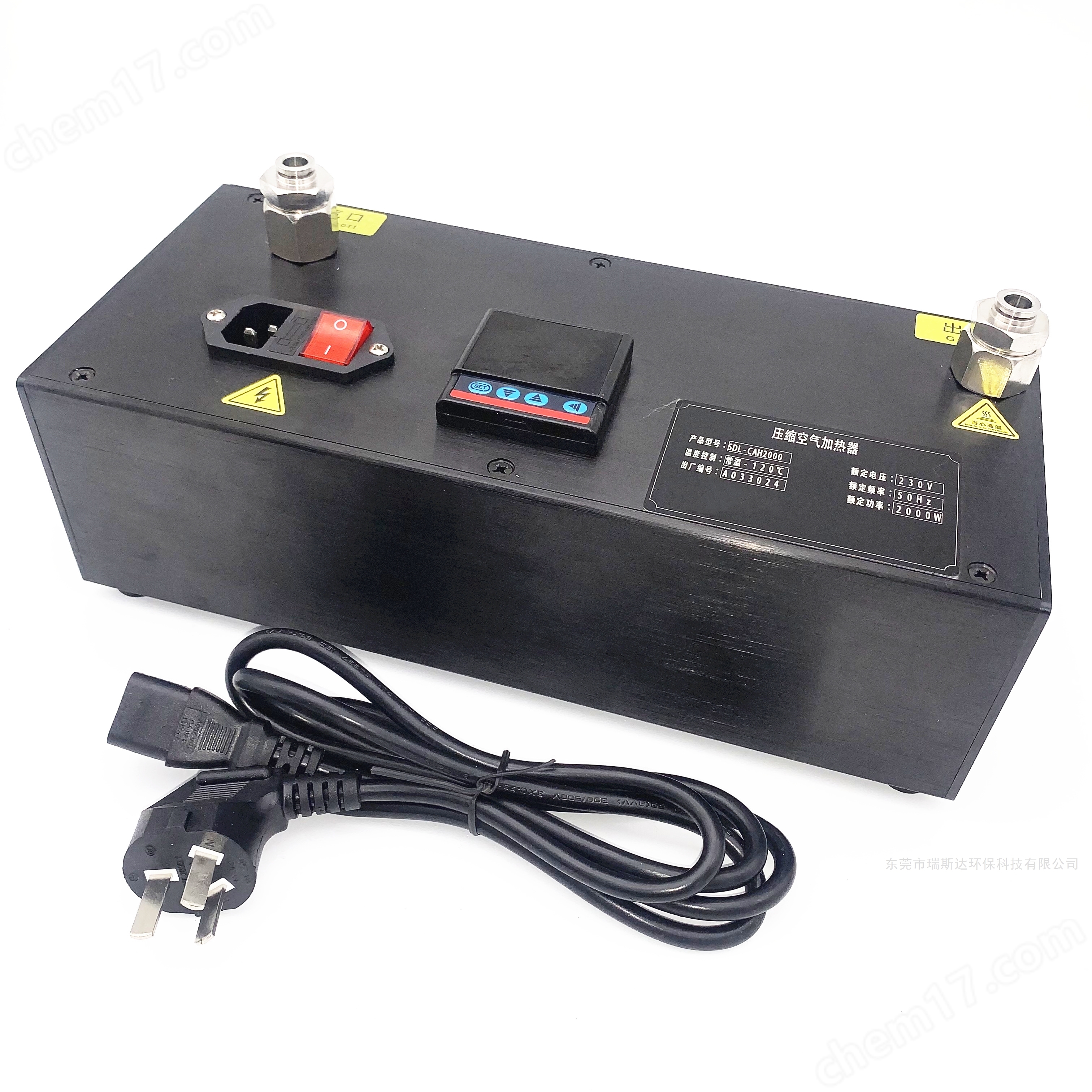


Small gas nitrogen pipeline heater
NegotiableUpdate on 05/06
- Model
- Nature of the Manufacturer
- Producers
- Product Category
- Place of Origin
Overview
Compressed air heater, small gas nitrogen pipeline heater, air source anti freezing, dehumidification, drying, heating and insulation is an electric heating equipment designed specifically for industrial air source systems. It solves two core problems by accurately raising the gas temperature: anti freezing protection: preventing pipeline and equipment from malfunctioning due to low-temperature icing. Dehumidification and drying: reducing gas dew point, reducing condensation water generation, and protecting downstream equipment and product quality
Product Details
1. Anti freezing mechanism:
Heat the gas above the ambient dew point temperature (usually+5~+15 ℃) to prevent water vapor from condensing into liquid water
Maintain pipeline temperature above freezing point, avoid 'ice blockage' phenomenon, and ensure stable operation of pneumatic equipment
2. Dehumidification principle:
By raising the temperature to reduce the relative humidity of the gas, the moisture is kept in gaseous form in the airflow
Cooperate with pipeline insulation to reduce secondary condensation caused by temperature drop during transmission
Workflow:
Compressed air filter heater (heating) insulation pipeline usage point (dry hot air)
IIISmall gas nitrogen pipeline heater/Quick check of nitrogen heater parameters
parameterstandard formNitrogen specific typeremark
power range0.5-3kW (commonly 0.8-1.5kW)1-5kWThe greater the power, the stronger the heating ability
Temperature control range20-120 ℃ (adjustable)20-300 ℃ (special up to 600 ℃)120 ℃ is sufficient for standard applications
temperature control accuracy±1~±2℃±1℃Select ± 1 ℃ for high-precision applications
work pressure0.8~1.6MPa1.6MPaMatch the output pressure of the air compressor
Applicable traffic5-50Nm³/h5-100Nm³/hSelect based on actual gas consumption
Interface SpecificationG1/4、G3/8、G1/2Multiple specifications to choose fromMatch pipeline size
material304 stainless steel (standard)316L stainless steel (food grade)Choose 316L for corrosive environments
protection levelIP54 (dustproof and splash proof)IP65 (fully sealed)Choose IP65 for humid environments
weight2-5kg3-8kgPortable design, single person installable
4Small gas nitrogen pipeline heaterDetailed explanation of the three core functions
one ️⃣ Antifreeze protection: the 'guardian angel' of winter air supply system
Ice hazard:
Pipeline freeze cracking, high maintenance cost
Valve stuck, equipment malfunction
Pneumatic components damaged, production interrupted
Instrument measurement distortion affects process control
Solution:
Install heaters at critical nodes of pipelines (in front of valves, elbows, and instruments)
Set temperature>5 ℃ (above freezing point) to prevent the formation of liquid water
Paired with insulation layer to reduce heat loss and improve energy efficiency
two ️⃣ Dehumidification and Drying: A Precision Crafted 'Moisture Shield'
Hazards of condensate water:
Product contamination (especially in the food, pharmaceutical, and electronics industries)
Equipment corrosion, shortening service life
The efficiency of pneumatic tools decreases and energy consumption increases
Spray/coating quality defects (bubbles, sagging)


Solution:
Heat to 10-15 ℃ above the dew point temperature,Eliminate condensation risk
Used in conjunction with refrigerated/adsorption dryers to achieve a lower dew point (below -40 ℃)
Reheat the dried gas to prevent secondary condensation caused by temperature drop during transportation
three ️⃣ Constant temperature heating: the 'guarantor' of process stability
Application Scenario:
Precision spraying: providing hot air at 60-80 ℃ to accelerate curing and improve coating adhesion
Food processing: drying, heat shrink packaging to prevent moisture condensation
Electronic manufacturing: SMT surface mount preheating, component drying, humidity control<10%
Pharmaceutical industry: drug drying, medical device disinfection, in compliance with GMP standards
Laboratory: Provide a stable gas source to ensure the accuracy of experimental data
5、 Small nitrogen specific heater: 'temperature control expert' for inert gases
Characteristics and Requirements of Nitrogen:
Inert gas, does not react with heating elements, high safety
Extremely low dew point (below -60 ℃), it is even more important to prevent pipeline condensation
Commonly used in processes sensitive to oxidation, such as semiconductors and lithium batteries
Special design features:
Using 316L food grade stainless steel to avoid material contamination
Special insulation design to prevent static electricity accumulation
Optimize the airflow channel to ensure uniform heating
Higher power density, suitable for low thermal conductivity of nitrogen gas
Recommended model:
EHP series: Portable design, power 1.5-5kW, temperature control accuracy ± 1 ℃, suitable for laboratories and small production lines
HTR-200D series: Pipeline installation, made of 304 stainless steel material, suitable for industrial nitrogen systems
MCA500N series: Micro design, can be directly inserted into pipelines, suitable for precision applications
6、 Selection guide: Accurately match your gas source needs
one ️⃣ Calculate the required power
Simple formula:
plaintext
Power (kW)=Flow rate (Nm ³/h) × Temperature rise (℃) ÷ 250 × Safety factor (1.2-1.5)
Example: Flow rate of 10Nm ³/h, heating from 10 ℃ to 50 ℃ is required
plaintext
Power=10 × 40 ÷ 250 × 1.3 ≈ 2.1kW (choose 2.5kW model)
two ️⃣ Core Selection Parameter Table
parameterChoose Suggestions
Application TypeChoose the 120 ℃ standard type for antifreeze; Precision process selection nitrogen specific type (up to 300 ℃)
Gas typeSelect 304 stainless steel for ordinary air; 316L stainless steel for food/medicine/electronics selection
environmental conditionsChoose IP65 protection for humid environments; Select IP54 for general environment
temperature control accuracyPrecision process selection ± 1 ℃ (equipped with PID controller); Generally, ± 2 ℃ is sufficient for application
Traffic matchingheatermaximumTraffic ≥ actualmaximumGas consumption x 1.2
7、 Practical Installation and Usage Guide
one ️⃣ Installation steps (15 minutes to complete)
Positioning: Select a straight pipe section that is close to the gas consumption point and easy to maintain
Pipeline preparation: Ensure that the pipeline is clean and free of impurities, and add fixed brackets 50cm before and after installation
connect:
Inlet end: Install a filter (accuracy ≤ 5 μ m) to protect the heating element
Heater: horizontally installed, ensuring that the airflow direction is consistent with the arrow
Exhaust end: It is recommended to install a temperature sensor to monitor the actual temperature
Electrical connection:
Dedicated power supply to ensure good grounding
Power>2kW, it is recommended to use contactor control
Insulation: Wrap with 50mm thick polyurethane/rock wool insulation material to reduce heat loss
two ️⃣ Precautions for use
Start sequence: ventilation first, then power on; Turn off the power first when shutting down, and then cut off the gas after cooling down
Temperature setting:
Antifreeze protection: set to ambient temperature+5 ℃(low5℃)
Dehumidification application: set to ambient dew point temperature+10 ℃
Safe operation:
Regularly check the insulation resistance (≥ 2M Ω)
Avoid prolonged power on in the absence of airflow (anti dry burn protection will activate, but frequent triggering will affect lifespan)
8、 Comprehensive solution: the 'golden partner' for antifreeze and dehumidification
For comprehensive protection of the gas source system, the following combination schemes are recommended:
Economic plan:
plaintext
Air compressor storage tank filter heater (800-1500W) insulation pipeline usage point
Applicable to: Small factories, laboratories, mainly antifreeze, limited budget
Solution:
plaintext
Air compressor freeze dryer (dew point 3-5 ℃) filter heater (1.5-3kW)
Precision filter (0.01 μ m) insulated pipeline (50mm) usage point
Applicable to: food processing, painting lines, electronics factories, requiring both drying and constant temperature
Precision solution:
plaintext
Air compressor adsorption dryer (dew point -40 ℃) nitrogen generator heater (nitrogen specific)
Precision use point of temperature control system (PID) vacuum insulated pipeline
Applicable: Semiconductor, medical equipmentSpraying requires extremely low dew point and precise temperature control


