- Phone
-
Address
Room 1206, No. 2, Lane 3620, Zhongshan North Road, Shanghai
Product Categories
Shanghai Boshitong Electric Appliance Co., Ltd
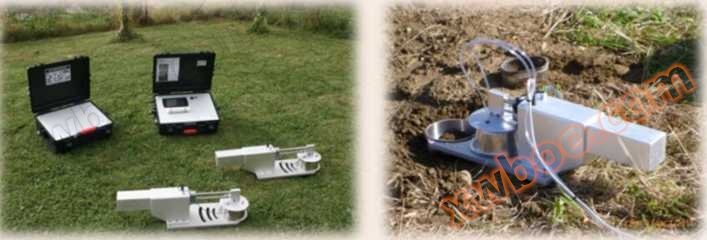
Online Soil Dynamic Gas Content Detector Flux CO2
NegotiableUpdate on 01/30
- Model
- Nature of the Manufacturer
- Producers
- Product Category
- Place of Origin
Overview
Online Soil Dynamic Gas Content Detector Flux CO2
Product Details

Why measure soil gas flux?
The concentration of carbon dioxide in the atmosphere has been steadily increasing, from approximately 315 ppm (parts per million) in 1959 to an average of approximately 385 ppm (Keeling et al., 2009). The current prediction is that by 2100, the concentration will continue to rise to 500-1000 ppm (IPCC, 2007).
Soil respiration plays a crucial role in regulating carbon cycling in ecosystems and on a global scale. Approximately 120 picograms (Pg) or 120 x 109 tons (t) of carbon are absorbed by terrestrial plants each year and released into the atmosphere through ecosystem respiration. Research has shown that soil respiration releases 77 Pg of carbon into the atmosphere annually, which is more than the carbon emissions caused by anthropogenic sources such as fossil fuel combustion (6 Pg per year). Therefore, small changes in soil respiration can significantly alter the balance between atmospheric CO2 concentration and soil carbon storage. We must also consider that human activities have a significant impact on soil respiration.
The production of CO2 in soil is influenced by environmental factors (soil temperature, soil moisture, etc.) and biological factors (aboveground canopy size and growth, etc.). The challenge of measurement is to provide an accurate tool that minimizes interference with environmental conditions that affect CO2 production and transport within the soil profile.
For over twenty years, ECHO has been developing systems for measuring CO2 flux in different environments. Flux CO2 has a special robotic arm that minimizes interference with environmental conditions. The air inside the chamber is mixed to ensure representative sampling without creating pressure differentials that would affect the evolution of CO2 from the soil surface.
Where can soil gas flux be measured?
Urban Environment and Rural Areas
Quantifying the role of urban areas in global carbon budgets mainly focuses on short-term studies of CO2 concentration, documenting spatial patterns across cities or individual locations. The concentration of CO2 in urban areas is higher than in rural areas, which is considered a result of human activities. However, recording the actual flux of CO2 and its diffusion characteristics in urban environments is crucial for assessing potential impacts on climate and biosphere at all scales.
Special applications:
-Land
-Coal industry
-Volcano
-Forest
-Swamp
Soil fluxes in various ecosystems
Soil flux CO2 or CO2 removal from soil is the main function of soil respiration. Soil respiration reflects the ability of soil to sustain soil life, including crops, soil animals, and microorganisms. It describes the level of microbial activity, soil organic matter (SOM) content, and their decomposition. Measurement also provides and indicates the ability of soil to sustain plant growth. In the absence of additional inputs, depleted SOM, reduced soil aggregation, and limited plant and microbial nutrients can lead to a decrease in crop yield.
Analysis and Control
Long term multi space measurement
The automatic soil gas measurement system can accurately measure CO2 exchange in soil, which is very useful for investigation or long-term measurement. The daily and seasonal patterns of CO2 evolution are the result of changes in soil moisture, temperature, carbon resources, and other factors. Long term measurements can be conducted in one location for weeks or months.
Due to the inherent variability of soil, measurements are usually required at multiple locations to obtain reliable average soil CO2 flux values. To evaluate spatial variability and time measurement, it is possible to multiplex and measure up to four chambers. Modular systems enable researchers to build their customized systems according to their requirements.
Sensor Technology
The humidity, temperature, pressure, and other auxiliary sensors of the soil are built into each chamber, and the wind and rain tight enclosed space system includes:
1) CO2, H20, T, p infrared sensors
2) Auxiliary sensor interfaces (O2, H2S, CH4, NH3, VOC, etc.)
Airborne data collection
The pneumatic circuit transports the sample gas from the chamber to the control unit. Data analysis is provided by user-friendly software applications. Users can quickly draw meaningful analysis charts to evaluate and manage measurements.
Lithium battery power unit
Each chamber system is powered by an internal battery. The battery is rechargeable. Equipped with an external battery for long-term measurement. The battery can be easily replaced through continuous operation.
Mechanical cavity arm system
Specially designed robotic arm systems can minimize interference from harsh environmental conditions such as wind, snow, precipitation, natural sunlight, and soil. Please check the performance of the robotic arm on www.instrumentants.eu.
Similar Product Recommend


