-
E-mail
wuzq1970@126.com
-
Phone
13601525919
-
Address
206 Qingyang North Road, Changzhou
Product Categories
Jiangsu Peide Water Treatment Equipment Co., Ltd
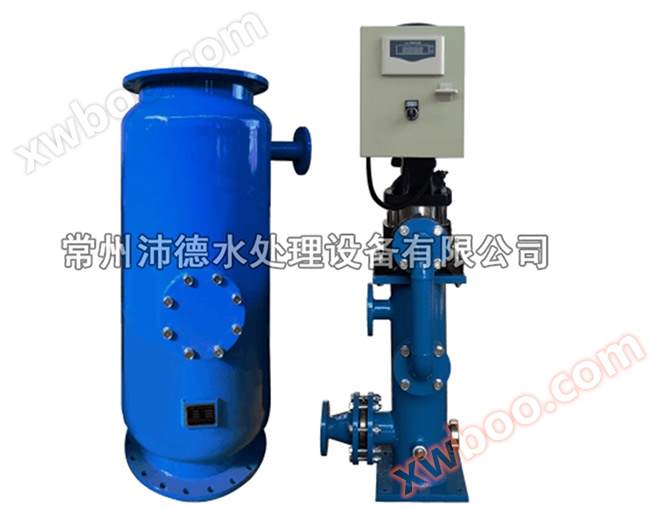
New rubber ball cleaning device
NegotiableUpdate on 03/19
- Model
- Nature of the Manufacturer
- Producers
- Product Category
- Place of Origin
Overview
As a device for cleaning condensers, the rubber ball cleaning device improves the refrigeration efficiency of the unit and saves electricity. From this perspective, both broad-spectrum induction water processors and cooling tower scale collectors can achieve this goal.
Product Details

Product Model: LNQJ
foreword
Peide Water Treatment provides you with a detailed introduction to the upgraded version of the central air conditioning condenser ball cleaning device, which has been continuously accumulated through customer feedback and problems encountered during the use of the ball cleaning device. The R&D team and design department of Peide Water Treatment Company have conducted performance comparison tests and continuously explored, experimented, and tackled problems. The principle, appearance, and internal structure of the rubber ball cleaning device have been redesigned to be more convenient for customers to use. The improved rubber ball cleaning device has stable effects, safety and reliability, simple operation, small size, and easy installation. It has a 12% higher ball collection efficiency than the first generation and a 95% lower failure rate.
As a device for cleaning condensers, the rubber ball cleaning device improves the refrigeration efficiency of the unit and saves electricity. From this perspective, adoptingBroad spectrum induction water processorandCooling tower scale absorberEveryone can achieve this goal.
The new rubber ball cleaning device produced by Peide Water Treatment has been strictly examined by the Patent Office of the China National Intellectual Property Administration of the People's Republic of China and has obtained five related patent certificates. This patent is the result of independent research and development by our company's scientific research department under the leadership of the company's general manager.
Overview of rubber ball cleaning device
The rubber ball cleaning device is a device that uses physical methods to clean the inner wall of the heat exchange tube of the central air conditioning condenser. During the cooling process of central air conditioning, the temperature of the refrigerant increases and must be cooled. The cooling water system is a piping system used to cool the refrigerant, and the condenser is a heat exchange device for cooling the refrigerant. The cooling water enters the condenser and flows through the inner wall of the heat exchange tube before flowing out. The cooling refrigerant flows through the outer wall of the heat exchange tube, and the condenser exchanges heat through the heat exchange tube, thereby cooling the refrigerant. The cooling water enters the condenser at low temperature to absorb heat and flows out at high temperature. After long-term operation, scale and stains will deposit on the inner wall of the heat exchange tube, affecting the heat exchange efficiency. If the refrigerant cooling is small, it will affect the refrigeration effect, increase the load on the central air conditioning unit, and reduce the service life of the central air conditioning unit. Therefore, it is necessary to regularly clean the inner wall of the condenser heat exchange tube to extend the service life of the central air conditioning unit.
The condenser online cleaning system is a device that automatically cleans the inner wall of the condenser heat exchange tube through physical means during the operation of the refrigeration unit. By launching and recovering rubber balls, periodic cleaning of heat exchange pipelines can be achieved. Once the system is installed, it can reduce the use of water treatment agents, improve the refrigeration efficiency of the unit, and save electricity.
Working principle of rubber ball cleaning device
Start the water pump of the rubber ball cleaning device, and send the rubber ball together with water and ball from the ball launcher to the inlet end of the condenser. The rubber ball enters the condenser end cover with the cooling circulating water, and randomly enters the copper tube of the condenser. Under the push of the cooling circulating water, the rubber ball moves inside the copper tube, wiping the inner wall of the copper tube. After leaving the copper tube, the rubber ball enters the ball collector installed on the outlet pipeline with the cooling circulating water after leaving the condenser end cover. The ball stopper net in the ball collector blocks the rubber ball, and water flows through the mesh. The rubber ball returns to the ball launcher from the ball collector net, completing the entire cleaning process. Set the cleaning frequency and frequency through a microcomputer control program to achieve automatic online cleaning function.
Control mode of rubber ball cleaning device
Automatic control: The cleaning frequency and frequency are set through a microcomputer control program to achieve automatic online cleaning function.
Manual control: Manually activate the rubber ball cleaning device.
rubber ball cleaning devicesystem composition
Server: a container for storing rubber balls, used for launching and retrieving rubber balls. The installation position of the server and the inlet and outlet connecting pipes should ensure the uniformity of the rubber ball and prevent blockage.
Ball collector: When the ball leaves the condenser, it is captured by the ball collector. The overall material is carbon steel or stainless steel, with a pressure of 10-25 bar, an effective flow area greater than three times that of the connecting pipeline, and a fluid resistance loss of less than 5 Kpa. The design of the ball collecting net should have good hydraulic characteristics to prevent the net plate from vibrating under water flow impact. The design of the ball collecting net should ensure that there is no ball blockage or ball running.
Sponge ball: Clean the inner wall of the condenser heat exchange tube. The rubber ball should have uniform density and good recovery performance. When operating at a water temperature of 5-36 ℃, the diameter of the wet rubber ball should not exceed the diameter of the dry rubber ball by 0.5 millimeters. During operation, the diameter of the rubber ball should be 1-2mm larger than the inner diameter of the heat exchange tube. It should remain stable during operation to prevent the rubber ball from blocking the cooling water tube.
Rubber ball specifications and suitable cleaning copper tube inner diameter
|
Inner diameter of copper tube (mm) |
16 |
17 |
18 |
19 |
20 |
21 |
22 |
23 |
24 |
25 |
|
Rubber ball diameter (mm) |
17 |
18 |
19 |
20 |
21 |
22 |
23 |
24 |
25 |
26 |
Microcomputer controllerAutomatic control, set cleaning frequency and time, and can also trigger cleaning based on the temperature difference between the water entering and leaving the condenser.
The problem caused by scaling of condenser copper pipes
The scaling on the pipe wall reduces the surface heat exchange efficiency and affects the heat exchange coefficient of the pipeline
After using the rubber ball cleaning device, the heat exchange coefficient of the pipeline can be maintained at the initial state of the system.
Function of rubber ball cleaning device
Improve operational efficiency
Because the online cleaning system of the condenser can free the copper pipes of the condenser from scaling, the operation of the compressor will not exceed the design limit, so the central air conditioning will operate at its optimal efficiency.
Extend the lifespan of central air conditioning and reduce maintenance
Because the operation of the compressor does not exceed its design limit, the lifespan of the equipment is extended, thereby improving the efficiency and return on investment of central air conditioning. Less maintenance is still necessary.
Reduce overall energy consumption
When the compressor is operating at its maximum power, the central air conditioning consumes less energy to produce the same output. In a typical example, the energy-saving department of a semiconductor manufacturing plant conducted an audit before and after installing an online cleaning system for an 800 ton central air conditioner condenser and found that using a rubber ball cleaning device can save $83000 in energy annually, with a payback period of 4 months.
Reduce water treatment costs
Because the online cleaning system of the condenser can remove scaling from the copper pipes of the condenser, water treatment only requires some auxiliary equipment to prevent scaling, such as cooling towers and valves. An independent audit by the manufacturing plant found that the installation of an online condenser cleaning system reduced the cost of chemicals used to treat water by 51%. In an audit of another commercial building with two 300 ton central air conditioners, the total hardness and total dissolved solids were reduced by 51% and 53%, respectively.
Prevent corrosion of condenser tubes
Microbial corrosion and concentrated cell corrosion are caused by scaling on the pipe wall. Because the rubber ball cleaning device can prevent pipeline scaling, these corrosion mechanisms are eliminated, thereby extending the lifespan of the pipeline.
Comparison between rubber ball cleaning device and traditional descaling method
|
method |
Chemical+mechanical cleaning |
rubber ball cleaning device |
|
Cleaning method |
Chemistry/Artificial |
Automatic/Physical |
|
Cleaning of scale and dirt |
Temporarily clear |
Significant and stable effect |
|
Cleaning of microbial membranes |
Temporary partial effect |
better |
|
Prevent bacteria and algae |
Production of Legionella requires the addition of antibacterial drugs |
better |
|
environmental pollution |
Serious, producing high concentrations of harmful chemical water pollution |
not have |
|
Damage to equipment |
Corrosion and wear equipment |
not have |
|
Cleaning cost |
higher |
not have |
|
Conditional limitations |
The host needs to be shut down |
not have |
Benefit analysis of rubber ball cleaning device
Taking a central air conditioner with three chillers as an example, the compressor power is 429KW, and the units are used all year round. In summer, three units are operated, and the total compressor power is 1287KW. The operating time is calculated based on four months. Operate 2 units in other seasons, with a total compressor power of 858KW. Calculate the operating time for 6 months. According to the different water quality in different regions, the energy-saving effect ranges from 15% to 35%. We calculate based on 0% energy-saving, 80% average load, 24-hour operation per day, and 30 days per month, with an electricity fee of 1.0 yuan per kilowatt hour.
So: Monthly electricity savings during summer operation:
1287 kW x 80% x 1 hour x 1.0 yuan/kWh x 20% x 24 hours x 30 days=148262.4 yuan
Energy savings per hour during operation in other seasons:
858kW x 80% x 1 hour x 1.0 yuan/kWh x 20% x 24 hours x 30 days=98841.6 yuan
The annual electricity cost savings are:
148262.4 yuan x 4 months+98841.6 yuan x 6 months=1186099.2 yuan
In addition, including annual chemical cleaning, labor costs, and equipment maintenance expenses, calculated based on an annual start-up time of 10 months, a total economic benefit of up to 1.2 million yuan can be generated throughout the year. It has been proven that users can recover the investment cost of the equipment in a short period of time!
Characteristics of rubber ball cleaning device
1. The main unit of the rubber ball cleaning device is composed of a water pump and a ball launcher, which saves space and occupies less space.
2. Easy to operate, the cleaning process can be completed by controlling the start and stop of the water pump through time, and it can be self operated
Set the cleaning time, interval time, and frequency.
3. A water flow switch is installed on the ball collector to clean the device when the cooling circulating water is not flowing
The water pump cannot rotate to avoid running without water.
4. The ball blocking net adopts a stainless steel large-diameter net, which only intercepts rubber balls and has low water resistance.
5. The rubber ball only circulates in the pipeline and does not pass through the water pump, avoiding damage to the rubber ball by the pump impeller and prolonging it
Rubber ball usage time.
6. The operating cost is low, and sponge rubber balls are the only consumables.
rubber ball cleaning deviceComparison chart before and after use

Scope of application of rubber ball cleaning device
Suitable for the following high-energy consumption systems: non cooling refrigeration equipment; Constant temperature and humidity control system; Water cooling system for ships;
Supporting facilities: buildings, hotels, shopping malls, banks, hospitals, and other public facilities;
Freezing facilities: chain supermarkets, frozen warehouses;
Chemical factory: cooling system on the production line;
Manufacturers of electronic components, semiconductor integrated circuits, liquid crystal displays, etc;
Specification parameters of rubber ball cleaning device
1. Performance indicator: ball collection rate ≥ 99%
2. Input voltage: 380V/50HZ (can be customized according to customer requirements)
3. Power: ≤ 4KW
4. Work environment requirements: temperature ≤ 55 ℃, relative humidity ≤ 95 ℃
5. Pressure loss: 0.003MPa-0.05MPa
6. Applicable water temperature: ≤ 50 ℃
7. Working pressure: ≤ 1.6MPa (2.5MPa needs to be customized)
How to choose a rubber ball cleaning device
The design and selection of the rubber ball cleaning device are determined based on the cooling capacity of the chiller unit and the diameter of the cooling water outlet pipe. The size of the rubber ball is determined by the inner diameter of the condenser heat exchange pipe of the chiller unit.
2. In order to prevent welding slag, welding rods, metal debris, sand and gravel, organic fabrics, as well as foreign objects such as cooling tower fillers and rust in cooling pipes generated during the installation process from entering the condenser and evaporator, a filter with a filtering aperture of no more than 1.5mm should be installed before the inlet of the condenser (evaporator) of the chiller unit during design, and the effective filtering area of the filter should be greater than three times the cross-sectional area of the connecting pipeline to ensure that the water resistance of the filter is reasonable.
Specification and model of rubber ball cleaning device
|
Serial Number |
model |
Selection reference, based on the actual diameter of the cooling water pipe |
|
1 |
LNQJ-150-N-1.6 |
Conventional engines with a cold ton capacity of less than 200 |
|
2 |
LNQJ-200-N-1.6 |
200-500 cold ton conventional host |
|
3 |
LNQJ-250-N-1.6 |
300-500 cold ton conventional host |
|
4 |
LNQJ-300-N-1.6 |
500-800 cold ton conventional host |
|
5 |
LNQJ-350-N-1.6 |
600-1000 cold ton conventional host |
|
6 |
LNQJ-400-N-1.6 |
1000-1500 cold ton conventional host |
|
7 |
LNQJ-450-N-1.6 |
Conventional engines with a cold ton capacity of over 1500 |
Precautions for installation of rubber ball cleaning device
1. Connect the pipeline according to the requirements of the piping system diagram, and do not connect it incorrectly.
2. Drill a DN50 hole near the end cap of the condenser inlet pipe, connect the ball outlet of the receiver, and install a DN50 ball valve on the pipeline. The hole must be located behind the filter.
3. Install a ball collector on the condenser outlet pipeline, connect the DN50 flange outlet of the ball collector to the ball receiver port of the ball launcher, and install a DN50 ball valve on the pipeline. The main unit of the rubber ball cleaning device should be positioned as close as possible to the condenser.
4. The pipeline is simple, reducing the bends and length of the pipeline.
5. To ensure the smooth cleaning of the heat exchange tube by the rubber ball without being blocked or scratched by debris, it is necessary to ensure that there is no welding slag, iron filings or other debris in the pipeline from the condenser inlet pipe launching point to the ball receiver receiving point and the condenser end cover. It is recommended to install a filter before the condenser inlet pipe launching point.
6. Leave 0.6 meters of maintenance space around the mainframe of the rubber ball cleaning device. Connect the wires of the water flow switch and the electric valve of the filter according to the corresponding numbers. Connect a 380V/50Hz power supply inside the control box, and ensure that the direction of the water pump is consistent with the direction arrow indicated on the water pump label.


