-
E-mail
18622392231@189.cn
-
Phone
18622392231
-
Address
Intersection of Jialing Road and Hongqi Road, Nankai District, Tianjin
Product Categories
San Chuan Yi Anti Chemical Technology (Tianjin) Co., Ltd
Negative pressure distillation equipment
NegotiableUpdate on 12/18
- Model
- Nature of the Manufacturer
- Producers
- Product Category
- Place of Origin
Overview
The core of negative pressure distillation equipment is to utilize the boiling point differences of each component in the mixture and achieve separation through multiple vaporization condensation processes at low temperatures
Product Details
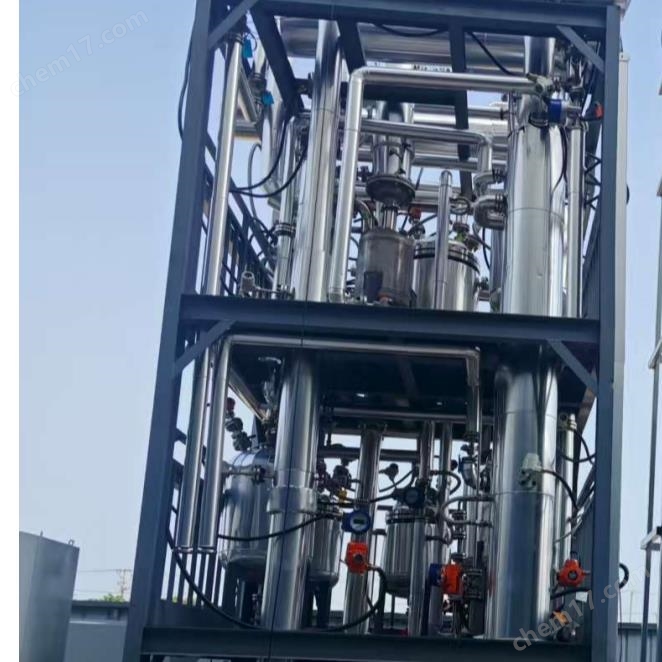
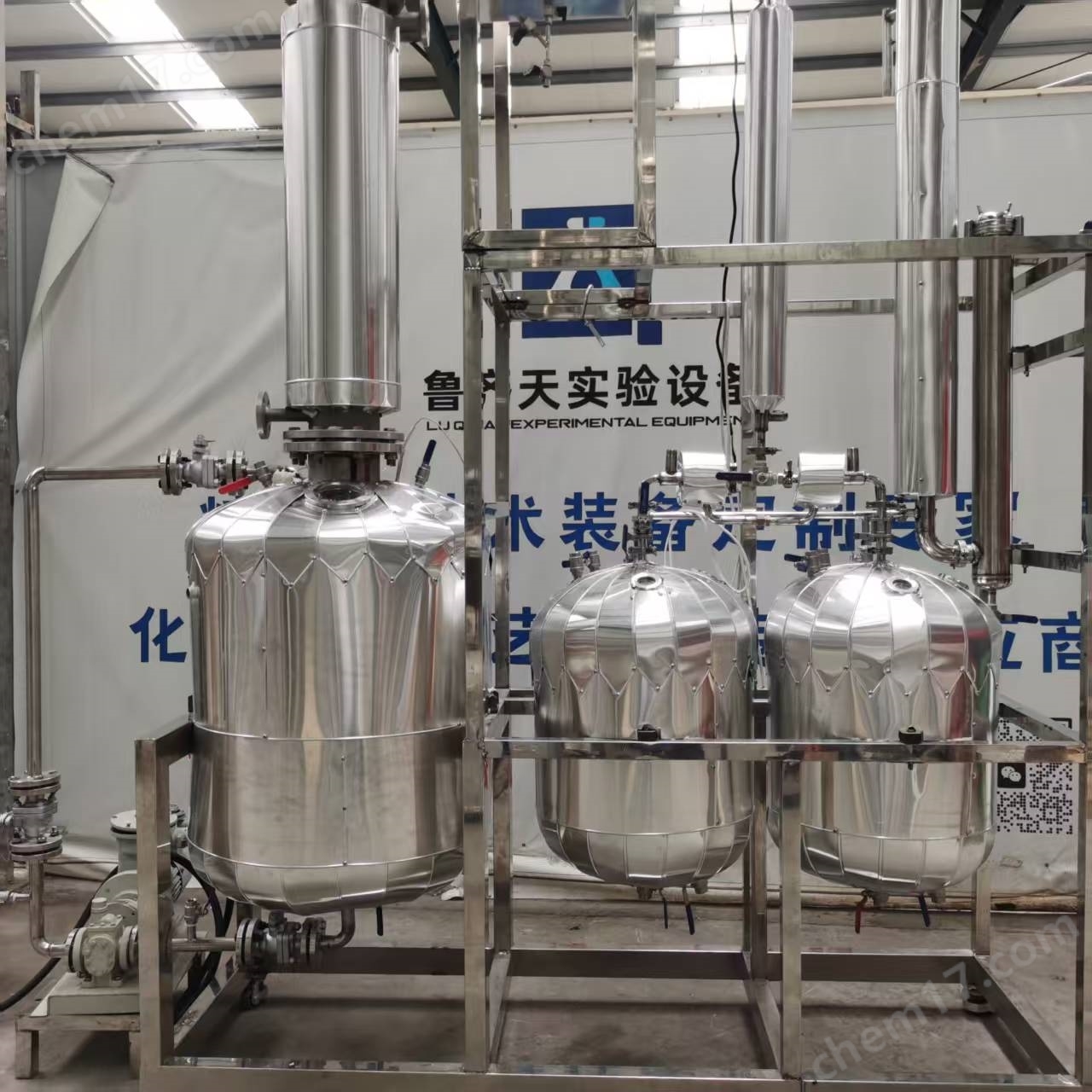
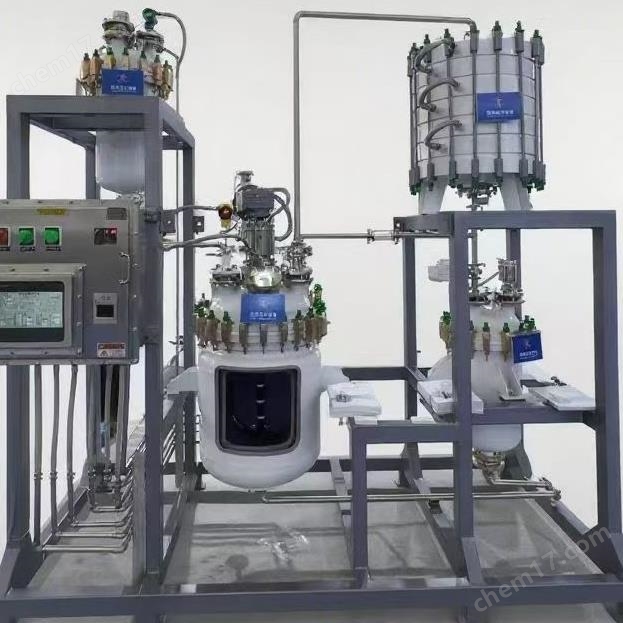
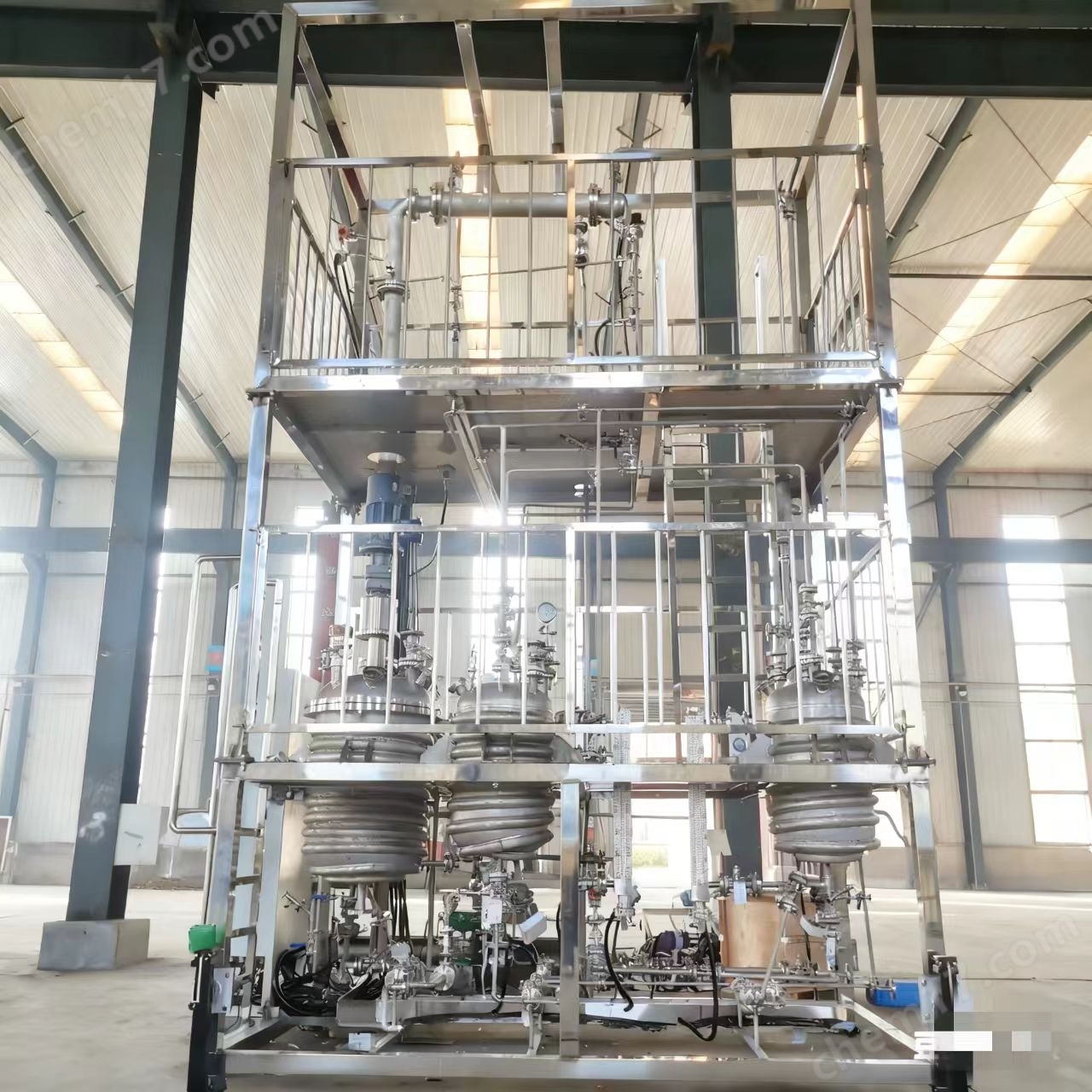
Negative pressure distillation equipmentFull analysis of characteristics, structure, and applications
In the field of chemical separation, for the purification needs of high boiling point, thermosensitive, easily oxidizable or polymer materials,Negative pressure distillation equipment(Also known as vacuum distillation equipment) has become a key equipment for ensuring product quality and production safety due to its core advantage of "low-temperature separation". It actively reduces the operating pressure inside the tower, significantly lowering the boiling point of materials, thereby achieving efficient separation under mild temperature conditions. It is widely used in manufacturing fields such as petrochemicals, fine chemicals, pharmaceuticals, food, and electronic chemicals. This article will discuss the working mechanism, core structure, applicable scenarios, operational points, and development trendsNegative pressure distillation equipmentConduct a comprehensive analysis.
1、 Core working principle: Pressure regulation achieves boiling point "downgrading"
The theoretical basis of negative pressure distillation is the Clausius Clapeyron equation, which reveals the inverse relationship between the boiling point of a liquid and external pressure - the lower the pressure, the lower the boiling point of the liquid. This feature provides a core solution for the separation of thermosensitive materials: for example, crude ethylene glycol with a boiling point of 320 ℃ under normal pressure can drop its boiling point to below 180 ℃ in a negative pressure environment of 10kPa (absolute pressure), successfully avoiding its 220 ℃ thermal decomposition temperature; For example, in the extraction of vitamin E in the pharmaceutical industry, the negative pressure environment can control the separation temperature at 80-100 ℃, preserving its biological activity intact.
The workflow of the equipment can be summarized as four steps: vacuum establishment material vaporization mass transfer separation component condensation. Firstly, the gas inside the distillation tower is extracted through a vacuum system to create a stable negative pressure environment with an absolute pressure of 0.1-100kPa (the specific pressure needs to be customized according to the characteristics of the material); Subsequently, the tower kettle heating system provides heat with low energy consumption, causing the material to vaporize and form a gas phase at low temperatures; During the process of gas phase rising, it comes into countercurrent contact with the descending liquid phase inside the tower, and completes the mass transfer and exchange of light and heavy components through the tower components; The final light component gas phase at the top of the tower is condensed into liquid through a condenser, and high-purity heavy components are obtained in the tower kettle, achieving precise separation.
Compared with atmospheric distillation, negative pressure distillation has a more prominent mass transfer driving force (gas-liquid concentration difference), but the decrease in gas phase density leads to a decrease in the upper limit of gas velocity. It is necessary to optimize the tower structure design to balance separation efficiency and operational stability, and avoid problems such as liquid leakage and flooding.
2、 Key structural components: "Sealed+Vacuum" dual core architecture
Negative pressure distillation equipmentOn the basis of conventional distillation towers, the sealing, vacuum control, and gas-phase transport capabilities have been strengthened, forming a complete architecture of "distillation tower body+vacuum system+supporting auxiliary system", and each part's functions are closely adapted to the requirements of negative pressure working conditions, and none of them are indispensable.
(1) Distillation tower body: a carrier for low-pressure sealing and efficient mass transfer
As the core site of the separation process, the design of the distillation tower body focuses on two dimensions: "leakage prevention" and "high efficiency", including the tower structure, tower components, and inlet and outlet systems.
1. Tower structureAdopting a circular cylinder design, the material is selected according to the corrosiveness of the material, such as 304/316L stainless steel (suitable for neutral materials), titanium alloy (suitable for strongly corrosive materials), fluorine lined material (suitable for acidic and alkaline materials), etc. Due to the negative pressure, the thickness of the tower wall needs to be determined through strength calculation, usually 15% -25% thicker than the same specification atmospheric tower, to prevent instability and deformation under negative pressure. Sealing performance is the core indicator. The tower flange adopts a mortise and tenon surface or concave convex surface sealing structure, equipped with high-temperature and vacuum resistant graphite wrapped gaskets, to ensure an overall leakage rate of ≤ 1 × 10 ⁻⁷ Pa · m ³/s and avoid damage to the vacuum environment.
2. Tower componentsPrioritize the use of components with low pressure drop and high mass transfer efficiency, forming two technical routes: "packing type" and "tray type". The packed tower is suitable for equipment with a diameter of ≤ 1.5m, using metal corrugated packing, ceramic packing, etc. The gas-liquid contact is uniform and the pressure drop is ≤ 0.5kPa/m, suitable for precision separation scenarios; The tray tower is suitable for large equipment with a diameter greater than 1.5m, using guided float valve trays, sieve plates, etc. It has high operational flexibility (30% -120%), strong processing capacity, and is suitable for large-scale industrial production. Regardless of the type, high precision is required for component installation, with a verticality deviation of ≤ 1 ‰ inside the tower to ensure even gas-liquid distribution and avoid a decrease in separation efficiency.
3. Import and Export SystemThe feed inlet is located in the upper part of the tower and equipped with an anti impact distributor to evenly spray the material on the surface of the tower components, avoiding local gas-liquid imbalance; The discharge port of the tower kettle is linked with the liquid sealing device to prevent vacuum damage through liquid level control; The gas phase outlet at the top of the tower adopts a large-diameter short tube design to reduce gas phase flow resistance and improve vacuum transfer efficiency.
(2) Vacuum system: the "power source" of negative pressure environment
The vacuum system isNegative pressure distillation equipmentThe performance of the "heart" directly determines the pressure stability and separation effect inside the tower. It needs to be configured according to the required vacuum level combination to ensure that the vacuum pumping rate is dynamically matched with the gas phase generation inside the tower. Common configuration schemes are divided into three levels:
1. Low vacuum range (50-100kPa absolute pressure)Adopting a water ring vacuum pump with simple structure, low cost, and convenient maintenance, it is suitable for rough separation scenarios with low vacuum requirements, such as crude oil vacuum distillation pretreatment; If the material contains flammable solvents, explosion-proof motors and sealing liquid recovery devices should be equipped to prevent safety hazards.
2. Medium vacuum range (1-50kPa absolute pressure)Adopting a combination system of "Roots vacuum pump+water ring vacuum pump", Roots pump provides high pumping speed to ensure stable pressure, and water ring pump serves as the front-end pump to achieve basic vacuum, suitable for most fine chemical separation needs, such as pharmaceutical intermediate purification, pesticide raw material refining, etc.
3. High vacuum range (0.1-1kPa absolute pressure)Adopting a three-stage system of "diffusion pump+Roots vacuum pump+mechanical vacuum pump", the diffusion pump can achieve ultra-high vacuum environment and is suitable for material separation with strong thermal sensitivity, such as electronic grade silane purification, lubricating oil refining, etc.
In addition, the vacuum system needs to be equipped with a vacuum buffer tank (stable pressure fluctuation ≤± 0.2kPa), a gas-liquid separator (to prevent material vapor from entering the vacuum pump and causing corrosion or blockage), and a precision vacuum control valve (such as a thin film control valve) to form a complete vacuum control circuit.
(3) Supporting auxiliary system: ensuring stable operation of processes
1. heating systemDue to the low operating temperature, saturated steam heating or thermal oil heating is often used. The tower kettle heater adopts a tubular or jacket structure, and the heating area needs to be accurately calculated to ensure that the heat load matches the material vaporization demand and avoid local overheating causing material deterioration.
2. Condensation systemThe tower top condenser adopts a shell and tube structure, and low-temperature water or frozen salt water is preferred as the cooling medium to improve condensation efficiency; The outlet of the condenser needs to be equipped with a gas-liquid separator to separate uncondensed light components before sending them into the vacuum system, reducing the load on the vacuum pump.
3. control systemAdopting a high-precision automation control system, pressure control is achieved through the linkage of vacuum regulating valve and vacuum pump frequency conversion to achieve closed-loop control; The temperature control adopts a cascade regulation scheme, with the sensitive plate temperature as the main variable and the tower kettle heating steam flow rate as the secondary variable, ensuring temperature control accuracy of ± 1 ℃; Simultaneously equipped with monitoring and alarm functions for key parameters such as liquid level and flow rate, ensuring the safe operation of the system.
Negative pressure distillation equipment: full analysis of characteristics, structure, and applications attribs':{'0':'*0+i'}},'apool':{'numToAttrib':{'0':['author','713995733447561']},'nextNum':1}},'type':'page'}},'IKOBfcBApd49ZvcKE5ocRhk3nCL':{'id':'IKOBfcBApd49ZvcKE5ocRhk3nCL','snapshot':{'type':'text','parent_id':'NTkdf1DzidX8JLcxhkVcdi3RnOb','comments':[],'revisions':[],'locked':false,'hidden':false,'author':'713995733447561','children':[],'text':{'initialAttributedTexts':{'text':{'0':' In the field of chemical separation, for the purification needs of high boiling point, thermosensitive, easily oxidizable or polymer materials,Negative pressure distillation equipment(Also known as vacuum distillation equipment) has become a key equipment for ensuring product quality and production safety due to its core advantage of "low-temperature separation". It actively reduces the operating pressure inside the tower, significantly lowering the boiling point of materials, thereby achieving efficient separation under mild temperature conditions. It is widely used in petrochemical, fine chemical, pharmaceutical, food, electronic chemicals, and other industries