-
E-mail
18622392231@189.cn
-
Phone
18622392231
-
Address
Intersection of Jialing Road and Hongqi Road, Nankai District, Tianjin
Product Categories
San Chuan Yi Anti Chemical Technology (Tianjin) Co., Ltd


Evaporative concentration device
NegotiableUpdate on 12/18
- Model
- Nature of the Manufacturer
- Producers
- Product Category
- Place of Origin
Overview
Evaporation and concentration device is a device that vaporizes solvents in a solution by heating to increase solute concentration. Its core consists of a heater, evaporator, condenser, etc. It can be operated under normal or reduced pressure and is suitable for fields such as chemical, food, and pharmaceutical industries, such as juice concentration and wastewater reduction. It can efficiently achieve material volume reduction and component enrichment.
Product Details
1、 Equipment structure and working principle
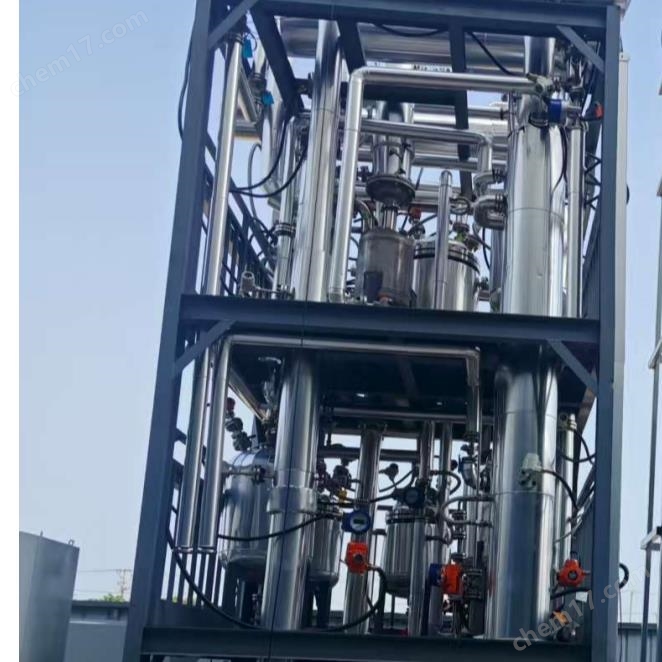
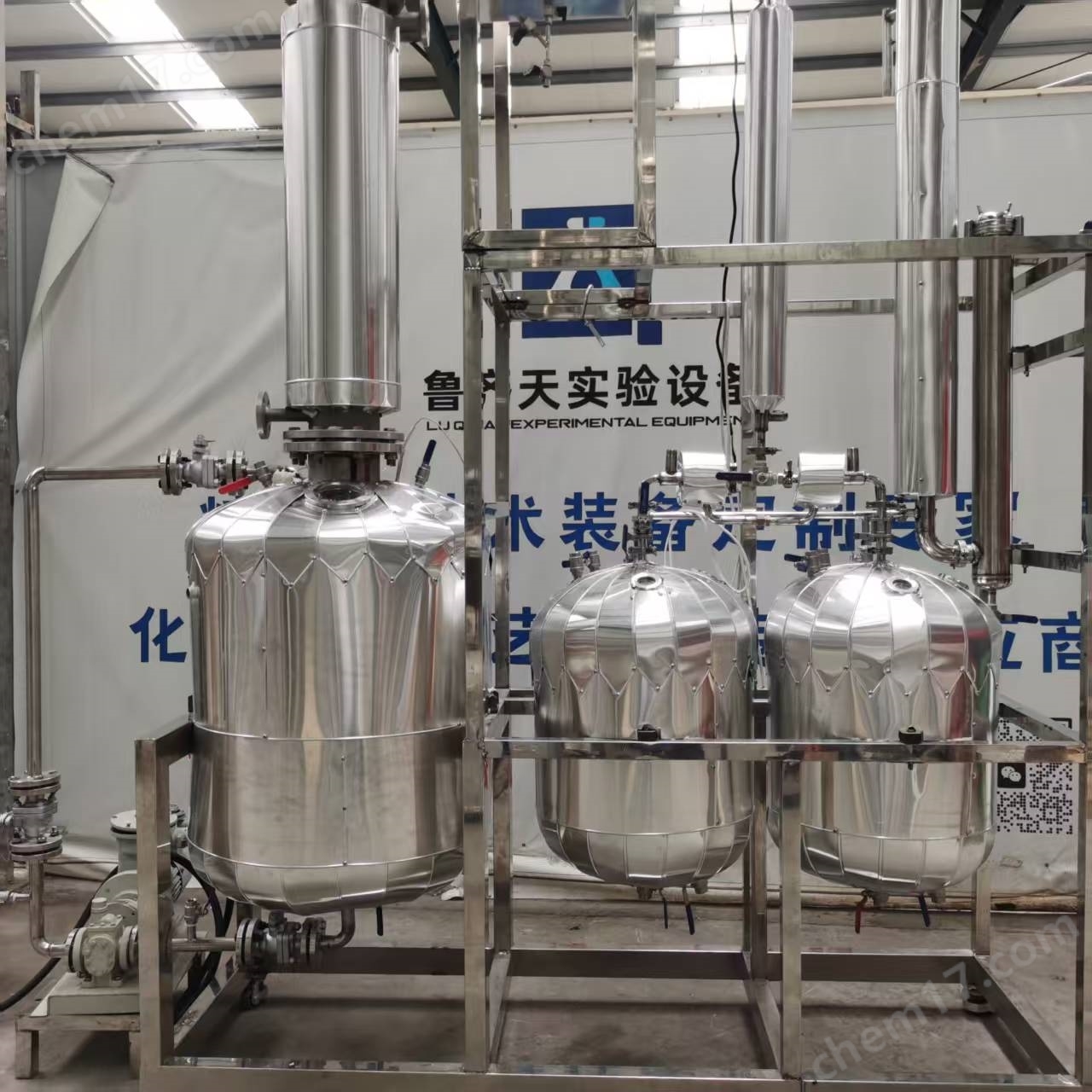
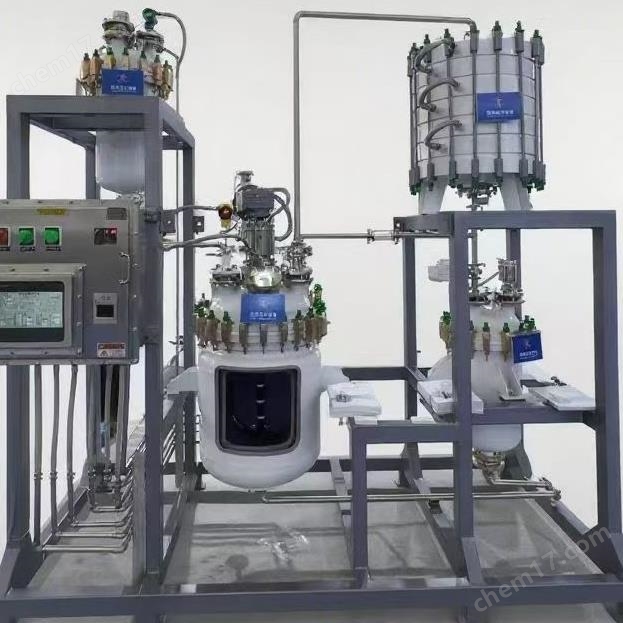
Evaporative concentration deviceIt is the core equipment for achieving solvent vaporization and solute enrichment in solutions, and its structural design revolves around the two core goals of "efficient heat transfer" and "energy conservation and consumption reduction". The entire system usually consists of four parts: the heater is responsible for heating the raw material liquid to the boiling point, and the heat is quickly transferred through a tube or plate structure; The evaporator provides space for solvent vaporization, and a demister can be installed inside to reduce mist entrainment; The condenser is used to recover vaporized solvent vapor and condense it into liquid form for easy recycling or standard discharge; The separator separates the concentrated liquid from the secondary steam, ensuring the purity of the concentrated product.
Its working principle is based on phase change heat transfer: the raw material liquid absorbs heat in the heater and enters the evaporator. The solvent (mostly water or organic solvent) vaporizes under normal or reduced pressure to form steam. The solute remains in the solution because it does not evaporate. As the solvent continues to decrease, the concentration of the solution gradually increases, and finally a concentrated solution that meets the process requirements is obtained.
2、 Technical type and performance characteristics
According to the operating pressure and energy utilization method,Evaporative concentration deviceIt can be divided into multiple types of technologies to meet the needs of different scenarios. The atmospheric evaporation device is suitable for materials with high boiling points and no flammable or explosive risks, such as juice concentration in the food industry; The vacuum evaporation device reduces the boiling point of solvents by lowering the system pressure, which can process heat sensitive materials such as biological products and enzyme preparations, avoiding component damage caused by high temperatures.
From an energy-saving perspective, single effect evaporation devices have a simple structure but high energy consumption, making them suitable for small-scale production; Multi effect evaporation devices use the secondary steam from the previous effect as the heating source for the subsequent effect, increasing heat utilization by 30% -50%. They are widely used in large-scale production scenarios such as chemical and pharmaceutical industries; The heat pump evaporation device utilizes heat pump technology to recover low-level heat energy, with energy consumption only one-third of that of single effect devices, and is highly favored in energy scarce areas.
3、 Applicable fields and typical applications
In industrial production,Evaporative concentration deviceThe application covers multiple fields and demonstrates strong adaptability. In the food industry, it is used for the concentration of fruit juice and dairy products, such as concentrating fresh orange juice from a solid content of 10% to over 65%, extending the shelf life while retaining flavor compounds; In the pharmaceutical industry, it is used for the concentration of traditional Chinese medicine extracts and antibiotic fermentation broths. Under vacuum conditions, the water is evaporated to increase the concentration of active ingredients by 5-10 times; In the field of environmental protection, it is used for industrial wastewater treatment, concentrating high salt wastewater from a moisture content of 95% to below 50%, reducing the processing load of subsequent evaporation crystallization equipment, and lowering the cost of hazardous waste disposal.
In wet metallurgy, it can concentrate the leachate, increase the concentration of metal ions, and reduce energy consumption for subsequent purification processes; In the chemical industry, it is used for the concentration of dye and coating intermediates. By precisely controlling the evaporation temperature, it avoids material decomposition or discoloration.
4、 Operating standards and maintenance points
The key to stable operation lies in strict operating standards and regular maintenance. Before starting up, it is necessary to check the airtightness of the system, especially the vacuum evaporation device. Leakage can cause an increase in boiling point and energy consumption; During operation, it is necessary to control the matching between the feed rate and heating temperature to avoid the liquid level in the evaporator being too high or too low, which may affect the heat transfer efficiency.
In terms of maintenance, the heater needs to be regularly cleaned to remove scaling on the inner wall (such as calcium and magnesium precipitation, organic matter adhesion). Acid washing or high-pressure water jet cleaning can be used to ensure that the heat transfer coefficient remains above 80% of the design value; Seals (such as flange gaskets and valve packing) need to be replaced regularly to prevent solvent leakage from causing safety hazards or environmental pollution; For devices that handle corrosive materials, components in contact with the materials should be made of 316L stainless steel, titanium, or plastic lined materials to extend the service life of the equipment.
5、 Differences and advantages compared to similar devices
Compared to drying equipment,Evaporative concentration deviceMore suitable for scenarios where liquid products need to be retained, such as preparing liquid syrup and concentrated drug solutions, while drying equipment ultimately produces solid products; Compared with membrane separation equipment, it has stronger adaptability to material viscosity, can handle solutions with viscosity up to 1000cp, and is not limited by membrane fouling problems, but its separation accuracy is slightly inferior to membrane separation technology.
Its core advantages lie in its large processing capacity and stable operation, especially in the concentration of high concentration materials, where the comprehensive cost is lower than other separation technologies, making it a popular choice in industries such as chemical, food, and environmental protectionThe key equipment.