- Phone
-
Address
No. 5500 Yuanjiang Road, Minhang District, Shanghai
Product Categories
Shanghai Maikewei Semiconductor Technology Co., Ltd
Multi channel high-precision and low-noise comprehensive electrical measuring instrument
NegotiableUpdate on 05/07
- Model
- Nature of the Manufacturer
- Producers
- Product Category
- Place of Origin
Overview
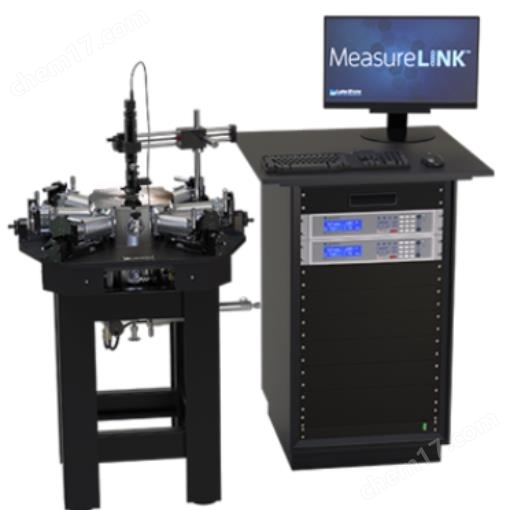
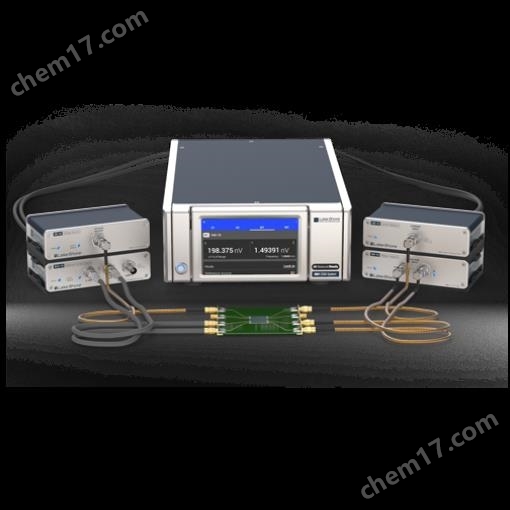
The new generation multi-channel high-precision and low-noise comprehensive electrical measuring instrument M81-SSM provides a simple and direct method for excellent measurement applications.
Product Details
An innovative architecture dedicated to low-level measurement from DC to 100kHz
new generationMulti channel high-precision and low-noise comprehensive electrical measuring instrumentM81-SSM provides a simple and direct method for excellent measurement applications. M81-SSM eliminates the complexity of installing various specific functional instruments, combining the convenience of DC and AC sources with measurement, including the sensitivity and measurement performance of phase locking. This highly low-noise synchronous signal source and measurement system ensures inherent synchronous measurement capabilities with 1-3 signal source channels and 1-3 measurement channels in a small instrument space (per half rack), making it highly adaptable to various materials and device research applications.
Main features of M81-SSM
Special real-time sampling architecture for synchronous source and measurement
All channels can perform amplitude, time, and frequency synchronization
Specially designed for research grade low-level measurement applications
Provide highly configurable phase-locked measurements for all measurements
Simultaneously output DC and AC (up to 100 kHz) signals on independent signal chains
Integrate 1-3 channels of DC and AC power supply and 1-3 channels of DC and AC measurement in a half rack space
Special real-time sampling architecture that enables synchronous source and measurement
☛MeasureSync ™ Technology can sample all channels at the same time, ensuring that the tested device or sample is tested under the same conditions and obtaining consistent data
☛Users can select DC/AC amplitude and phase detection on all measurement channels
Shared DAC/ADC sampling clock ensures highly accurate and consistent signal source/measurement value timing synchronization between 3 signal sources and 3 measurement modules
Specially designed for research grade low-level measurement applications
☛The linear module power architecture ensures the lowest possible source/measurement noise
☛There is a fully analog signal path between the data converter, module, and device under test (DUT)
☛The remote module can achieve the shortest possible signal path to the device under test (DUT), thereby isolating sensitive analog circuits from digital circuits and typical unnecessary interference sources in traditional single shell instrument designs
Absolute accuracy of DC instruments+detection sensitivity of AC instruments
☛All sources and measurement channels support signals from DC and AC up to 100 kHz
☛Optimized fundamental, harmonic, and phase AC+DC bias measurements
☛Modular design allows users to flexibly configure modules to meet the needs of specific applications
Special and flexible instrument/distributed module architecture
☛The amplifier module that can be remotely installed can be interchanged between different instruments
☛Dynamically recognize modules during system reconfiguration
☛By using a concise user interface (UI) and a universal application programming interface (API), one can quickly set up and shorten the learning curve
new generationMulti channel high-precision and low-noise comprehensive electrical measuring instrumentM81-SSMcomponent
☛The M81 host can connect up to three source modules and three measurement modules
☛Exchange modules for each different measurement and adjust the configuration
☛All modules support measuring DC and AC up to 100 kHz
☛All modules have been optimized to achieve ultra-high precision measurement through shared amplitude and frequency

Flexible measurement capability
new generationMulti channel high-precision and low-noise comprehensive electrical measuring instrumentM81-SSMProvide DC and AC excitation and measurement functions for characterizing the performance of materials and devices in low-temperature, room temperature, and high-temperature environments.

In low resistance measurement applications, selecting a combination of differential current source and voltage measurement module requires precise excitation current and balanced (floating) sampling connection for noise reduction advantages; Alternatively, it can be mixed and matched with additional voltage sources and current measurement modules for complex high impedance or gate bias applications that require precise voltage control and scan testing mechanisms.
Unlike narrow bandwidth DC systems,M81-SSMThe operating frequency of the module can range from extremely low to 100kHz. Users can choose to measure bandwidth to avoid 1/f noise and other frequency bands with high testing environment noise.
MeasureSync ™ Technology can sample all signal sources and measurement channels at the same time, ensuring that the tested device or sample is tested under the same conditions to obtain consistent data.
Lake Shore MeasureLINK ™ The software can provide configurable measurement scripts and circuits to support various applications. It can also be easily integrated with Lake Shore low-temperature probe stations, low-temperature thermostats, superconducting magnets, and third-party systems.
These comprehensive capabilities make M81-SSM an excellent solution for characterizing various structures, including nanostructures, single-layer and multi-layer atomic structures, MEMS, quantum structures, organic semiconductors, and superconducting materials.
M81-SSMApplication Areas
|
DC transmission: I-V curve, 4-wire method (Main modules: VS module+CM module) Ideal applications: 2D materials, nanowires, organic semiconductors Advantages of M81: Low voltage source noise, low current measurement noise |
 |
|
Communication transportation: AC resistors, block resistors, and AC current Hall sensors (BCS module+VM module) Ideal applications: metal insulator transition, two-dimensional materials, superconducting materials Advantages of M81: AC current Hall: synchronous measurement of resistance and Hall voltage; Measuring up to three different frequency devices simultaneously in a low-temperature thermostat |
 |
|
Photodiodes and phototransistors (CM module+occasional use of VS module) Ideal applications: infrared sensitive materials, sun blind materials, two-dimensional materials Advantages of M81: Programmable bias voltage source |
 |
|
Spin transport (DC/AC: BCS module+VM module) Ideal applications: spin orbit torque (SOT), non local resistance, spin valve Advantages of M81: SOT: synchronous measurement of resistance, Hall voltage, and harmonic Hall voltage |
 |
|
differential conductance (VS module+CM module) Ideal applications: Defect characterization in MIS junctions, Josephson junctions, and transistors Advantages of M81: Dual DAC AC and DC sources (within appropriate range) |
 |
|
heat transport (AC, BCS module+VM module) Ideal applications: thermoelectric materials, one-dimensional materials Advantages of M81: Phase dependent current source, synchronous harmonic detection |
 |
new generationMulti channel high-precision and low-noise comprehensive electrical measuring instrumentM81-SSMMain parameters
Source channel |
|
Source channel function |
DC, sine wave, triangular wave (up to 5 kHz), square wave (up to 5 kHz) |
Source synchronization function |
Synchronize another channel or external reference signal |
frequency range |
100 µ Hz to 100 kHz (or module bandwidth, whichever is smaller) |
frequency resolution |
Greater than 100 µ Hz, 6-digit display |
Frequency accuracy |
0.06% |
phase noise |
100 ms time constant, 12 dB/oct: Internal reference:<0.0001 ° RMS @ 10 kHz External reference:<0.002 ° RMS @ 10 kHz |
Dynamic reserve |
>120 dB (typical) |
Measurement channel | |
Measurement channel function |
DC, AC (RMS, peak) and phase-locked (X and Y, R and Θ) |
Lock in reference |
Any signal source channel or external reference input |
Reference input |
BNC: Sine wave ≥ 1 VPP ≥ 200 Hz; Square wave ≥ 1 VPP ≥ 10 mHz |
Reference output |
BNC: 3.3 V square wave |
Monitor output |
BNC: M1 monitor, M2 monitor, M3 monitor, manual output |
Digital Input |
6-pin 3.5mm detachable terminal block: 2 TTL compatible inputs: Vhigh nominal voltage 3.3 V; Vlow voltage: 0 V |
Digital output |
6-pin 3.5mm detachable terminal block: 2 TTL compatible inputs: 3.3 Vhigh nominal voltage @ 1 mA |
Total Harmonic Distortion |
<0.1%, from DC to 100 kHz, typical value |
sampling rate |
375 kSa/s |
warm-up time |
60 minutes to achieve specified accuracy |
isolation |
Measure the isolation between the common terminal and the chassis grounding |
Front panel display |
5-inch capacitive touch screen, color TFT-LCD WVGA (800 × 480), with LED backlight |
System speed | |||
USB |
GPIB |
Ethernet |
|
Maximum read rate for data transmission (records/second) |
5000 |
5000 |
5000 |
Maximum data throughput for data transmission (kB/s) |
20 |
40 |
80 |
Typical SCPI query response time (ms) |
15 |
20 |
60 |
MeasureSync ™ Architecture Description
MeasureReadynew generationMulti channel high-precision and low-noise comprehensive electrical measuring instrumentM81-SSMUsing special MeasureSync ™ Signal synchronization technology enables continuous data sampling on each channel, with noise and sensitivity levels comparable to other high-level research grade signal sources and measuring instruments. M81-SSM reduces the number and types of required instruments and software, simplifying the setup and operation of complex material characterization operations. It unifies all configuration and experimental functions through a single interface and uses the MeasureLINK feature * ™ Software is used for measurement.
|
Traditional instrument construction |
Traditional instrument construction for multi device testing Typical material and device characterization applications require a combination of DC and AC instruments ☛Traditional experimental setups typically involve physically large sampling instruments and equipment, requiring the use of longer signal cables between the sample and the instrument ☛Many applications require multiple source channels and multiple measurement channels, and synchronizing all channels is a great challenge ☛The modular 'rack and stack' method requires operators to possess high-level skills in order to achieve reliable results ☛As the number of signal sources and measurement channels increases, the demand for redundant and independent instruments also increases, but it may increase the overall implementation cost |
|
M81 synchronous source test |
M81-SSMadvantage: ☛Reduce the number of independent instruments to make installation and operation easier, and combine the functions of DC picoammeter, voltmeter, and AC lock-in amplifier together ☛Reduce the number and length of signal cables between signal sources, measurements, and samples to minimize parasitic phenomena such as leakage, noise, resistance, and reactance ☛Increase the number of channels to achieve synchronous or parallel sample/device testing ☛By simply testing and exchanging module configurations for various applications, reconfiguration can be easily achieved ☛The cost is much lower than traditional multi instrument configurations |


Special signal technology module
M81-SSMThe system provides precision electronic signal sources and measurement functions from DC to 100 kHz, with a 375 kHz (2.67 μ s) signal source/measurement digitization rate, and can connect up to 3 signal sources and 3 measurement front-end modules.
All modules are designed with linear circuits and powered by highly isolated linear power supplies to ensure the lowest possible voltage/current noise, comparable to excellent lock-in amplifiers and research grade sources and measuring instruments.

These rapidly replaceable modules with embedded calibration data can be quickly measured and reconfigured during and between experimental setups. The module has a compact structure and good shielding, and can be installed remotely, rack mounted, or desktop according to application requirements and user preferences. To achieve interconnection with the main instrument, the module comes standard with a 2-meter cable, but users can also order an 8-meter extension cable to achieve a connection of up to 10 meters.
M81-SSMBuilt in features:
|
Dual AC and DC range signal sources, with only one module (VS-10 voltage source module) connected to the sample/device, can achieve precise and comprehensive control of DC, AC, or DC superimposed AC amplitude signals
|
■Seamless range change measurement can significantly reduce or eliminate measurement offset/discontinuity caused by typical range changes in signal scanning applications that require multiple range changes (VM-10 module)
|
|


Integrating AC and DC into a single signal source and measurement module:
☛Simplify the connection with the tested device
☛Simplified grounding circuit connection scheme
☛No need to change hardware or connections, source excitation and measurement of DC and AC signals can be achieved through program settings, simplifying test programming
Can use DC bias for AC modulation and provide highly flexible signal and measurement resolution options
Overview of Source Module and Measurement Module
|
BCS-10 Balanced Current Source Module
This module provides programmable current ranging from 1 pA to 100 mA, with a maximum compliance voltage of ± 10 V, and sinusoidal output from DC to 100 kHz. |
VS-10 voltage source module
This module can provide programmable voltage ranging from ± 1 nV to ± 10 V, with a maximum compliant current of 100 mA and sinusoidal output from DC to 100 kHz. |
|
CM-10 current measurement module
This module can measure currents from fA to 100 mA with near zero input bias voltage in the range of DC to 100 kHz, including amplitude, phase, and harmonic detection functions. |
VM-10 Voltage Measurement Module
This module can provide voltage measurement from nV to 10V within the range of DC to 100 kHz, including amplitude, phase, and harmonic detection functions. |


Similar Product Recommend