- Phone
-
Address
Xingyuan 1st Road, Chengnan Industrial Park, Baoying County, Jiangsu Province
Product Categories
Baofei Vibration Instrument Factory in Baoying County


Mobile seismometer
NegotiableUpdate on 05/06
- Model
- Nature of the Manufacturer
- Producers
- Product Category
- Place of Origin
Overview
LD-T2 flow seismometer LD-T2; The Bearing Condition Analysis and Infrared Temperature (LD-T2) is a handheld machine condition detection instrument based on microprocessors, which has functions of vibration measurement and evaluation, bearing condition detection and evaluation. Vibration detection, bearing status analysis, and infrared temperature measurement using a seismometer, with an accurate measurement speed of ≥ 1.5m/s and a storage temperature of -10 ℃~60 ℃. It is used for vibration detection, bearing status analysis, and infrared temperature measurement in emergency relief areas
Product Details
LD-T2Mobile seismometerLD-T2; Bearing condition analysis and infrared temperature
LD-T2 is a handheld machine condition detection instrument based on microprocessors, which has functions of vibration measurement and evaluation, bearing condition detection and evaluation.Mobile seismometerVibration detection, bearing condition analysis, and infrared temperature measurement, with an accurate measurement speed of ≥ 1.5m/s and a storage temperature of -10 ℃~60 ℃, used for vibration detection, bearing condition analysis, and infrared temperature measurement in emergency relief areas
The complete configuration includes the following components
LD-T2 host (with built-in lithium battery)
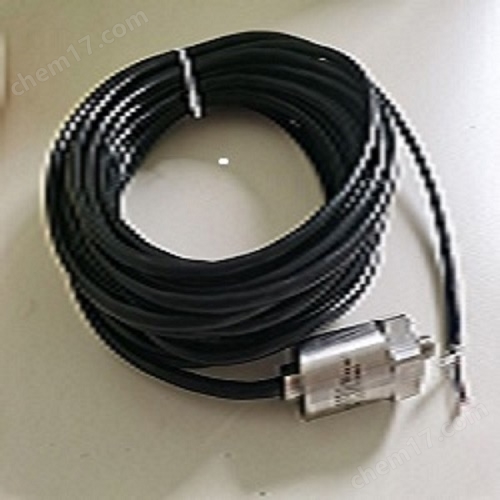
● Acceleration sensor and integrated elastic cable, approximately 2 meters long
● Sensor magnetic seat
● Battery charging cable and charger
● User Manual ● Warranty Card
● Instrument box
Vibration measurement and evaluation
The LD-T2 seismometer can measure the unimodal value of vibration acceleration (m/s2P), the effective velocity value (mm/sRMS), and the peak to peak displacement value (umP-P). When maintaining vibration speed measurement, the built-in ISO10816-3 machine vibration standard can automatically determine and indicate the machine alarm status.
Bearing condition detection and evaluation
The LD-T2 seismometer can measure two parameters that reflect the state of the bearing: peak factor (CF) and kurtosis index (KV). Peak factor is the peak value of the time-domain vibration signal
The ratio between RMS true values and kurtosis index mainly measure the degree to which the amplitude of the vibration signal deviates from the normal distribution. Vibration analysts can use peak factor (CF) and kurtosis index (KV) to diagnose bearing faults.
temperature measurement
In addition to vibration and bearing condition detection functions, the LD-T2 seismometer also has non-contact infrared temperature measurement function, mainly used for bearing temperature detection. Measurement range -10~℃ 250, indicated by a red laser point at the measurement location.
LD-T2 Bearing State Analysis and Infrared Temperature LD-T2 Technical Indicators of Vibration Meter
Display: Monochrome graphic LCD, 128x64 dot matrix, LED backlight
Battery: Lithium polymer rechargeable battery, 3.6V 1700mAh;
The charging time is about 3-5 hours, and it can be used continuously for more than 12 hours when fully charged;
Input: 50mV/gIEPE type accelerometer;
Vibration measurement: peak acceleration of 0.1-1000.0m/s2, frequency range of 10-5kHz;
Effective value of speed 0.1-1500.0mm/s, frequency range 10-11kHz;
Displacement range of 1-10000um peak to peak, frequency range of 10-11kHz;
Bearing status: Acceleration CF value KV value;
0.1-200.0m/s2 peak, frequency range 1K~15kHz, frequency range 1K~15kHz;
Frequency range of 1K to 15kHz;
Vibration accuracy: ± 5%;
Alarm: Built in ISO10816-3 machine vibration standard evaluation vibration speed alarm status.
Evaluate the bearing alarm status based on the experience value criterion of the built-in bearing status.
Infrared temperature measurement: Temperature measurement range: -10~250 ℃
Red laser dots indicate the target
Temperature accuracy: ± 2 ℃
Resolution 0.1 ℃
Distance measurement coefficient 8:1.
Environmental temperature: -10 to 60 ℃.
Dimensions: 116mm × 79mm × 26mm.
Weight: 225 grams, excluding sensors and cables.
LD-T2 multifunctional vibration and bearing condition detector for bearing condition evaluation
Peak factor (CF) and kurtosis index (KV), peak factor is the ratio between the peak value of the time-domain vibration signal and the RMS true value.
When the rolling element moves inside the bearing, it generates broadband noise and vibration. If the bearing is lubricated or overloaded due to misalignment or surface damage, it will produce even greater noise and vibration. Vibration itself contains multiple frequencies, and some frequency ranges can be selected to measure the bearing state. If the frequency bandwidth also includes low-frequency components, the bearing state value not only includes the bearing frequency but also low-frequency vibration components caused by imbalance and misalignment, making the bearing state value difficult to explain. If the selected frequency bandwidth only includes the bearing frequency, the bearing status value will be a good indicator.
High frequency components can also occur in the contact between gearboxes and steel structural components without bearing faults, and their frequencies are within the same range as the frequency range of bearing faults. Therefore, it is generally not possible to determine the replacement of bearings based solely on the bearing status values. High bearing status values require further analysis, involving spectrum analysis and identification of bearing fault frequencies.
The lubrication condition of the bearing also affects the state value of the bearing. If a high value is found, the bearing should be oiled. After oiling, the state value of the bearing will generally decrease, but if the bearing is damaged, the value will soon rise again.
This product LD-T2 is widely used in industrial and mining enterprises, power plants, cement, chemical, energy, building materials, metallurgy, steel, mechanical processing and other industries. It is also widely used in management equipment promoted by departments. As a recommended product for seismic instruments in disaster reduction and relief equipment, the LD-T2 multifunctional vibration and bearing condition detector is used for vibration detection, bearing condition analysis and infrared temperature measurement; The large screen displays measurement values and status intuitively, and can measure acceleration, velocity, and displacement; Automatic switching of vibration frequency characteristics, using high-sensitivity probes, accurate measurement speed ≥ 1.5m/s, storage temperature -10 ℃~60 ℃.
Similar Product Recommend