- Phone
-
Address
No. 118, Lane 133, Guangzhong Road, Minhang District, Shanghai
Product Categories
Shanghai Tengba Instrument Technology Co., Ltd


Microsphere strength tester
NegotiableUpdate on 05/06
- Model
- Nature of the Manufacturer
- Producers
- Product Category
- Place of Origin
Overview
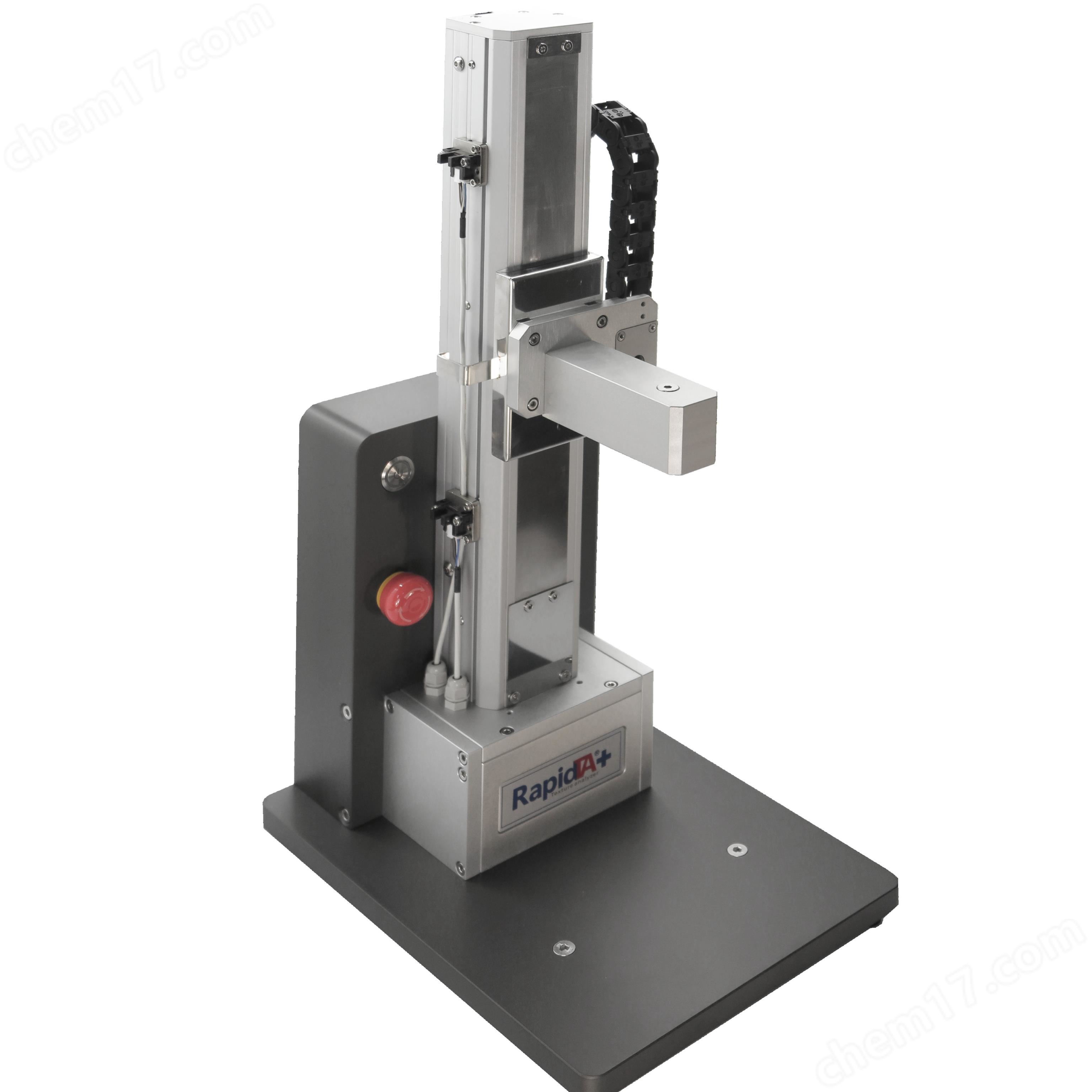
The Shanghai Tengba TBUTA-23 microsphere strength tester uses a fine screw, high-quality force sensing element, and high-performance motor. The instrument has high accuracy and can be used to measure various mechanical properties of microspheres, including mechanical strength, elasticity, adhesion, crushing strength, and other indicators
Product Details
Microsphere: Polymer materials with special shapes or composite microspheres mainly composed of polymers, classified according to their morphology into: non porous microspheres, single/porous microspheres, ultra large pore microspheres, hollow microspheres, multi-layer microspheres (onion shaped), irregular microspheres (hamburger shaped, rod-shaped, dumbbell shaped), etc. Microspheres are divided into four categories, namely: (1) inorganic microspheres represented by silica gel microspheres; (2) Non degradable polymer microspheres represented by polystyrene, polyacrylate, polymethyl methacrylate, polyacrylamide, and a small amount of degradable polymer microspheres; (3) Organic inorganic composite microspheres represented by polystyrene/silica magnetic microspheres; (4) Natural polymer microspheres such as agarose, chitosan, albumin, or polylactic acid prepared from polymer raw materials PLGA、 Polyester biodegradable polymer microspheres such as polycaprolactone.
The mechanical strength of microspheres is related to factors such as their size, shape, material, and preparation method. Generally speaking, the mechanical strength of microspheres increases with a decrease in microsphere size. The shape also affects the mechanical strength of microspheres, and microspheres of different shapes may have different mechanical strength values under various experimental conditions. In addition, the type of material, preparation method, and surface treatment of microspheres can also affect their mechanical strength.
1Microsphere strength testerIntroduction
Shanghai TengbaMicrosphere strength testerStable and reliable, using fine screw rods, high-quality force sensing elements, and high-performance motors, with high accuracy, can be used to determine various mechanical properties of microspheres, including mechanical strength, elasticity, adhesion, crushing strength, and other indicators. Detectable microsphere parameters:
(1) Mechanical strength: Evaluate the deformation resistance and rupture threshold of microspheres through compression testing, such as measuring the compressive strength of microspheres during storage or injection;
(2) Elasticity and rebound force: measure the recovery ability of microspheres after being subjected to force, and determine their suitability as sustained-release carriers;
(3) Adhesion: Analyze the interaction between microspheres and biological tissues or device surfaces to optimize targeted delivery efficiency;
(4) Squeezing resistance: Evaluate the relaxation degree and elastic modulus of microspheres through maintenance testing, reflecting their service life;
(5) Comprehensive physical characteristics: Use Total Texture Analysis (TPA) to obtain multidimensional parameters such as strength, resilience, and cohesion.

two、Microsphere strength testerPerformance characteristics
1 Test indicators:Mechanical strength, rupture strength, elasticity, adhesion, compressive strength, elastic modulus, cohesion, stress, strain and other indicators.
2 Instrument accuracy:0-500g, Resolution accuracy: 0.0001g (software synchronized real-time display); Using replaceable load sensing components, future options for 0.5kg, 1kg, 5kg, 10kg, 20kg, 30kg, 50kg, 100kg load sensing components can be selected according to customer needs.
3 Test moving distance:0-420mm, Distance accuracy: 0.0001mm (software synchronized real-time display); It can also be highly customized according to customer requirements.
4 Detection speed:0-60mm/s; Software configuration and control.
5 Measurement parametersIt can be used to measure multi-dimensional data such as load, time, displacement, strain, stress, load/width, load/thickness, elongation, etc.
6 Instrument protection functionOverload protection for force sensing elements and upper and lower limit protection for instruments.
7 External dedicated software:Switching between Chinese and English,Conduct texture analysis and physical property testing on various samples; Testing process: Equipped with a real-time display box, the detection process data and graph drawing are synchronously displayed in real time, and users can directly observe changes in the detection graph; Analysis process: No additional programming is required, testing is completed, users can directly select parameters, and the software automatically calculates and displays data results.
8 Test curve coordinatesThe horizontal and vertical coordinates of stress, strain, load, displacement, time, and elongation can be freely switched.
9 Types of Test MethodsCompression test, tensile test, peel test, tear test, fatigue test, creep test, relaxation test, custom test, etc. can be programmed according to the testing needs.
10 Results ProcessingEasy creation of custom reports and experimental graphs; The test data can be directly exported to Excel and other formats for operations such as drawing, saving, comparing, printing, and generating professional reports. Multiple texture curve graphs can be overlaid for comparative analysis, making it convenient and intuitive.