-
E-mail
499578158@qq.com
-
Phone
13931875196
-
Address
Building 5, Rongzhi Technology Park, No. 123 Yuyuan Road, Luquan District, Shijiazhuang City, Hebei Province
Product Categories
Hebei Ziyue Machinery Equipment Co., Ltd

Micro station for environmental air quality monitoring
NegotiableUpdate on 02/09
- Model
- Nature of the Manufacturer
- Producers
- Product Category
- Place of Origin
Overview
The micro station for environmental air quality monitoring realizes the interconnection and sharing of big data on motor vehicle emissions, which is conducive to timely and efficient screening of high pollution and high emission vehicles, curbing the excessive emission behavior of motor vehicles, and comprehensively improving the systematic, scientific, legal, refined, and information-based level of motor vehicle environmental management.
Product Details
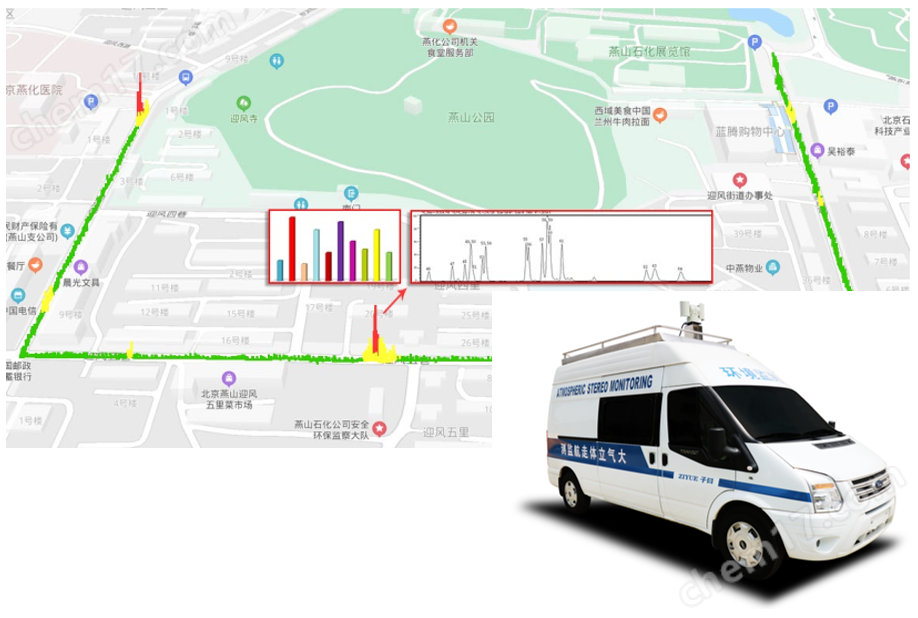
With the rapid growth of the number of motor vehicles, they have become an important source of air pollution, especially the problem of excessive emissions from diesel vehicles. According to the provisions of the Air Pollution Prevention and Control Law, remote sensing monitoring and other technical means are fully utilized to supervise and test the emissions of motor vehicles driving on the road. A national, provincial, and municipal level networked motor vehicle remote sensing monitoring platform is constructed, and the micro stations for environmental air quality monitoring realize the interconnection and sharing of big data on motor vehicle emissions. This is conducive to timely and efficient screening of high pollution and high emission vehicles, curbing the excessive emission behavior of motor vehicles, and comprehensively improving the systematic, scientific, legal, refined, and information-based level of motor vehicle environmental management.
1、 Main technical parameters
road trafficMicro station for environmental air quality monitoring
CO monitoring module
Using "non dispersive infrared" technology, measure the relationship between the absorption intensity of infrared light by CO and its concentration.
Zero point calibration and verification: built-in and standard configuration.
The built-in "CO Carbon Scrubber" (CO Catalytic Converter) is used to remove residual CO in the module, and users can choose manual or automatic methods to complete it.
Cross point calibration and verification: built-in and optional accessories.
Use CO steel cylinders (reusable) as the standard gas source for users to perform routine "cross point" inspections.
NOx monitoring module
Using the principle of "chemiluminescence" for measurement, the intensity of chemiluminescence produced when NO reacts with ozone is proportional to the concentration of NO. The number of photons released during the reaction is recorded using a photomultiplier tube.
A delayed loop system is designed in this module to measure the concentrations of NO and NO2 separately from the same sample.
Zero point calibration and verification: Built in "zero gas source", standard configuration. Users can choose manual or automatic methods to complete the "zero point" calibration through the built-in "zero gas source".
Cross point calibration and verification: built-in and optional accessories. Use a permeation furnace as a standard gas source for users to perform routine "cross point" inspections.
O3 monitoring module
Using the "UV photometry" analysis technique, the impact of changes in the UV light source on the measurement is corrected in real-time through a dual light path design.
Zero point calibration and verification: Built in "zero gas source", standard configuration. Users can choose manual or automatic methods to complete the "zero point" calibration through the built-in "zero gas source".
Cross point calibration and verification: built-in and optional accessories. Use an O3 generator as the standard gas source for users to perform routine "cross point" checks.
SO2 gas analysis module
SO2 analysis adopts the "ultraviolet fluorescence method".
Zero point verification: built-in, standard configuration. Users can choose between manual or automatic modes and complete it through the built-in 'zero gas source'.
Cross point calibration and verification: built-in and optional accessories. Use a permeation furnace as a standard gas source for users to perform routine "cross point" inspections.
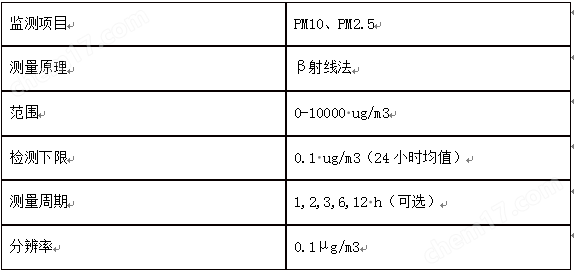
Particle analysis module
Particle analysis module

Similar Product Recommend