-
E-mail
499578158@qq.com
-
Phone
13931875196
-
Address
Building 5, Rongzhi Technology Park, No. 123 Yuyuan Road, Luquan District, Shijiazhuang City, Hebei Province
Product Categories
Hebei Ziyue Machinery Equipment Co., Ltd


Fixed remote sensing monitoring of motor vehicle exhaust emissions
NegotiableUpdate on 02/09
- Model
- Nature of the Manufacturer
- Producers
- Product Category
- Place of Origin
Overview
Fixed remote sensing monitoring of motor vehicle exhaust can perform statistical analysis on massive data, generate regional emission heat maps, vehicle emission rankings, and blacklists of vehicles exceeding standards, providing data support for environmental decision-making, traffic restriction management, and precise management of high emission vehicles.
Product Details
1、 Fixed remote sensing monitoring of motor vehicle exhaust emissionsCore components of the system:
A complete fixed remote sensing monitoring system for motor vehicle exhaust usually includes:
Remote sensing detection unit: including transmitter and receiver, responsible for optical detection of exhaust gas components.
High definition license plate recognition subsystem: high-resolution industrial camera, fill light, image recognition software, ensuring accurate recognition of license plates under various weather and lighting conditions.
Meteorological parameter monitoring device: Real time measurement of environmental temperature, humidity, wind speed, and direction, used for data correction.
Data acquisition and processing host: runs core algorithms to complete spectral analysis, data fusion, and over limit determination.
Network communication module: Real time monitoring data (including information and pictures of vehicles exceeding the standard) is uploaded to the municipal or provincial motor vehicle pollution monitoring platform through optical fiber or 4G/5G network.
Sound and light alarm device (optional): On site warning for suspected vehicles exceeding the standard.
Dust and rain cover and automatic cleaning system: ensure long-term stable operation of equipment in harsh weather conditions.
1. Topology diagram of horizontal fixed motor vehicle exhaust remote sensing monitoring



2、 Advantages of using a full laser remote sensing monitoring system:
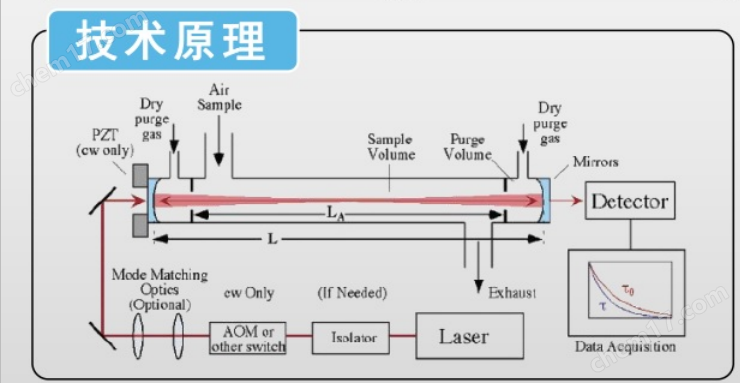
▲ Adopting TDLAS technology, unaffected by environmental and background gases
▲ Built in reference module, system drift free, avoiding the need for regular calibration
▲ Extremely fast detection speed, response time less than 0.7 seconds
▲ Full laser light source, long service life
▲ The fixed horizontal remote sensing monitoring system for motor vehicle exhaust adopts a regression reflection method, with simple and convenient optical path adjustment operation, and low installation and maintenance costs
√ Scalable multi lane measurement
The system has automatic calibration function and does not require any manual operation
√ The instrument has intelligent self checking and self recovery functions
√ The system is equipped with remote expert technical support
IIIFixed remote sensing monitoring of motor vehicle exhaust emissionsCore functions and technical features
High throughput monitoring: capable of monitoring over 1000 vehicles per hour, significantly improving regulatory efficiency.
Non contact and non disruptive: The vehicle can complete the inspection while driving normally, without affecting traffic.
Multi pollutant synchronous detection: It can simultaneously measure key indicators such as CO, CO ₂, HC, NO, NO ₂, and smoke opacity.
All day operation: equipped with automatic temperature control, dust and water resistance, and automatic lens cleaning functions, suitable for complex environments such as rain, snow, fog, and sand.
Intelligent recognition and traceability: Automatically associate license plate information to achieve precise traceability of vehicles exceeding the standard.
Big data analysis and warning: The platform can perform statistical analysis on massive data, generate regional emission heat maps, vehicle emission rankings, and blacklists of vehicles exceeding standards, providing data support for environmental decision-making, traffic restriction management, and precise governance of high emission vehicles.
4、 Application scenarios
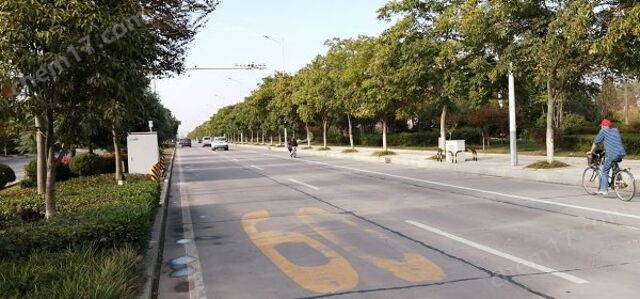
Main traffic arteries in the city: located on the main roads leading to the city, elevated bridges, and tunnel entrances and exits, to screen the emission status of vehicles entering the city from other places.
Surrounding key areas: deployed in industrial parks, logistics parks, wholesale markets, and transportation hubs to monitor areas with concentrated freight vehicles.
Environmental checkpoint assistance: As a pre screening tool for traditional checkpoints, it improves the pertinence and efficiency of on-site inspections.
Supervision of Low Emission Zones/Environmental Green Label Zones: Automatically identify high emission vehicles entering prohibited areas and support off-site law enforcement.
Similar Product Recommend