-
E-mail
email@jzpykj.com
-
Phone
18910378570
-
Address
3rd Floor, Building C, No. 6 Chaoqian Road, Changping District, Beijing
Product Categories
Beijing Jiuzhou Pengyue Technology Co., Ltd
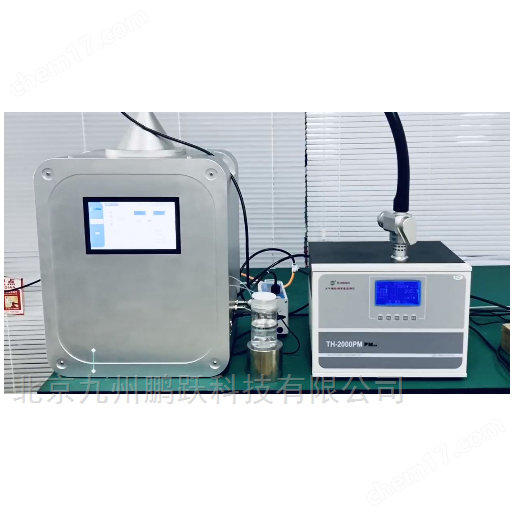
Intelligent multifunctional industrial ventilation platform
NegotiableUpdate on 02/01
- Model
- Nature of the Manufacturer
- Producers
- Product Category
- Place of Origin
Overview
The intelligent multifunctional industrial ventilation platform is a high-precision experimental equipment developed specifically for the field of industrial ventilation. It integrates core functional modules such as power system, dust removal and purification, intelligent control, multi-mode ventilation simulation, and precise monitoring. It can meet the needs of ventilation performance testing, airflow organization simulation, dust removal efficiency verification, and intelligent control strategy research in scientific research institutions, industrial enterprises, and other scenarios.
Product Details
The industrial ventilation experimental platform is a high-precision experimental equipment developed specifically for the field of industrial ventilation. It integrates core functional modules such as power system, dust removal and purification, intelligent control, multi-mode ventilation simulation, and precise monitoring. It can meet the needs of ventilation performance testing, airflow organization simulation, dust removal efficiency verification, and intelligent control strategy research in scenarios such as scientific research institutions and industrial enterprises. The equipment is designed based on industry standards and adopts a modular architecture. The performance parameters of each system component are optimized and matched. It can support independent operation of a single system or achieve multi system linkage experiments, providing users with a full process solution from basic principle verification to complex working condition simulation.
Intelligent multifunctional industrial ventilation platformApplication fields:
Applied to experimental research, teaching demonstrations, and performance testing in the field of industrial ventilation. It can meet the needs of ventilation performance testing, airflow organization simulation, dust removal efficiency verification, and intelligent control strategy research in scenarios such as scientific research institutions and industrial enterprises.
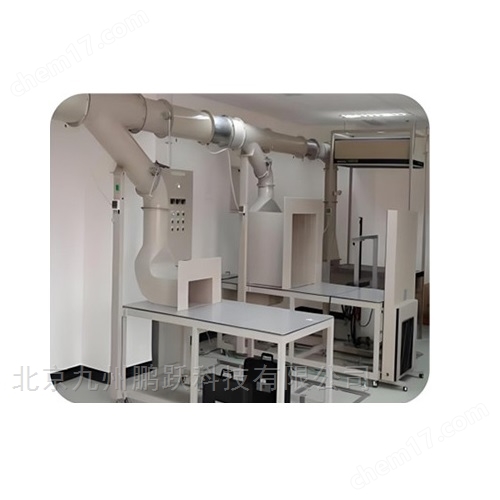
This experimental device can integrate: horizontal blowing suction ventilation experimental device, downward suction ventilation experimental device, side suction ventilation experimental device, purification and power device, which is more convenient for later maintenance and has the advantage of occupying less space.
1. Comprehensive functions: covering power, dust removal, air supply and exhaust, monitoring, intelligent control, and various experimental devices, capable of conducting diverse industrial ventilation experiments.
2. Good performance: Each component has accurate performance parameters, precise monitoring, flexible control, and can provide reliable data and a stable operating environment for experiments.
3. Convenient operation: The intelligent control system supports automatic/manual adjustment, with intuitive data display and traceable historical reports, reducing operational difficulty and improving experimental efficiency.
4. Flexible and reliable: The air duct layout is flexible, the air valve control mode is diverse, the experimental device parameters are adjustable to meet different experimental scenarios and needs, and the equipment meets relevant standards, ensuring reliable quality.
Intelligent multifunctional industrial ventilation platformBasic Parameters:
(1) Power plant
Exhaust fan: air volume ≥ 5000m3/h, static pressure ≥ 1500Pa, using OPC protocol, with 15-50Hz frequency conversion adjustment function, and equipped with shock absorption and noise prevention design to ensure stable operation and good noise control.
Supply fan: air volume ≥ 3000m3/h, static pressure ≥ 1000Pa, also supports OPC protocol and 15-50Hz frequency conversion adjustment, meeting the power requirements of different ventilation scenarios.
(2) Air supply and exhaust system
Duct: Galvanized steel sheet ducts with a thickness of ≥ 2mm are used, connected by multiple flanges, with flexible layout that complies with GB50243 standards to ensure the strength and tightness of the ducts.
Pipelines and dampers: There should be no less than 2 sets of supply/exhaust ducts, and multi-mode airflow control can be achieved through dampers, including up supply, down supply, local supply and exhaust modes, to meet diverse ventilation experimental needs.
(3) Intelligent control system
Electronic control system: supports automatic/manual adjustment of air valve and fan frequency, easy and flexible operation, and can quickly adjust system parameters according to experimental needs.
Data display and reporting: It has real-time data display function and can generate historical reports, making it convenient for users to analyze and trace experimental data.
Intelligent simulation decision-making system: using four in one (planar/stereoscopic/network/three-dimensional) display, 20 second solution and 10 second response, it can achieve intelligent simulation decision-making of energy consumption, improve experimental efficiency and scientificity.
(4) Monitoring system
Wind speed monitoring: The measurement range is 0.1-30m/s, with a resolution of 0.1m/s, accurately monitoring changes in wind speed.
Wind pressure monitoring: monitoring range 0-1000Pa, accuracy of 0.1Pa, real-time and accurate feedback of wind pressure data.
Dust monitoring: capable of monitoring dust concentrations ranging from 0-500mg/m3, with a resolution of 0.01mg/m3, supporting PM2.5/PM10 monitoring, and comprehensively grasping the air quality status.
(5) Dust removal and purification system
It can filter dust above 0.3 μ m with a filtration efficiency of ≥ 95%, effectively purifying the air and ensuring the cleanliness and safety of the experimental environment.
(6) Experimental setup
Horizontal flow device: The air supply/exhaust speed can be adjusted within the range of 0-1.5m/s, and the air supply/exhaust distance can be adjusted (100-1600mm) to meet the requirements of different horizontal flow ventilation experiments.
Vertical flow device: supply/exhaust wind speed 0-2m/s, uniform exhaust<0.2, ensuring the stability and uniformity of vertical flow ventilation.
Local exhaust device: The upper suction hood is adjustable, connected by flanges, and has automatic air volume control function, which can accurately control the local exhaust effect.
Similar Product Recommend