-
E-mail
1575097019@qq.com
-
Phone
19032291360
-
Address
306, Building 1, Ideal Science and Technology Park, No. 603 Hongfeng Road, Donghu Street, Linping District, Hangzhou City
Product Categories
Hangzhou Chuanyi Experimental Instrument Co., Ltd

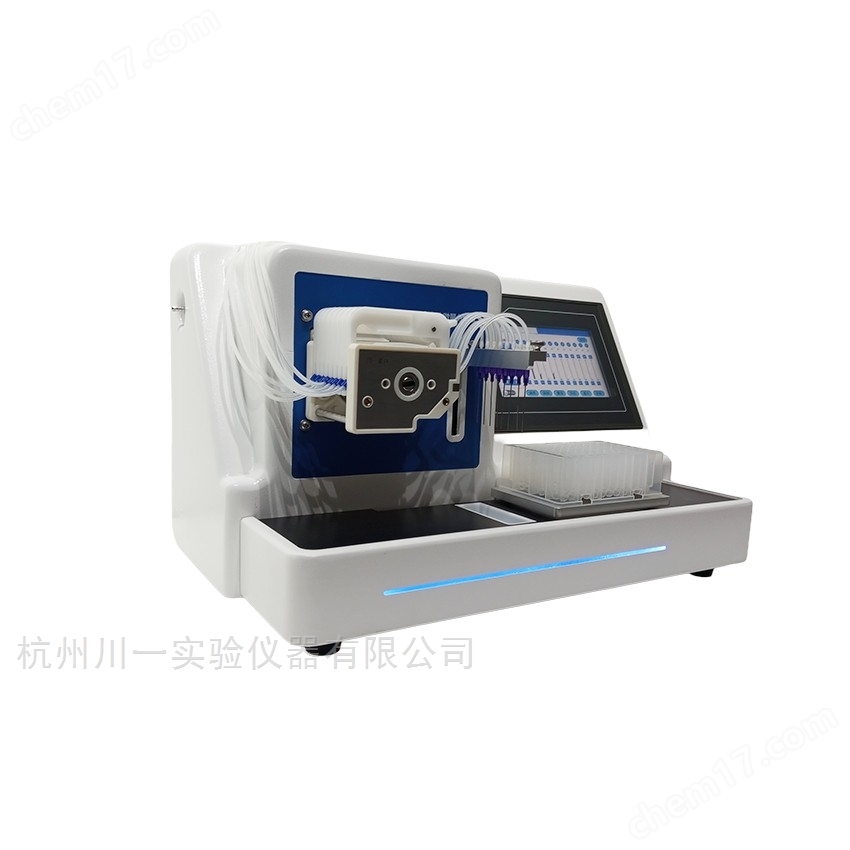


Fully automatic micro liquid analyzer CYFY-8 with multiple samples and 8 channels
NegotiableUpdate on 01/09
- Model
- Nature of the Manufacturer
- Producers
- Product Category
- Place of Origin
Overview
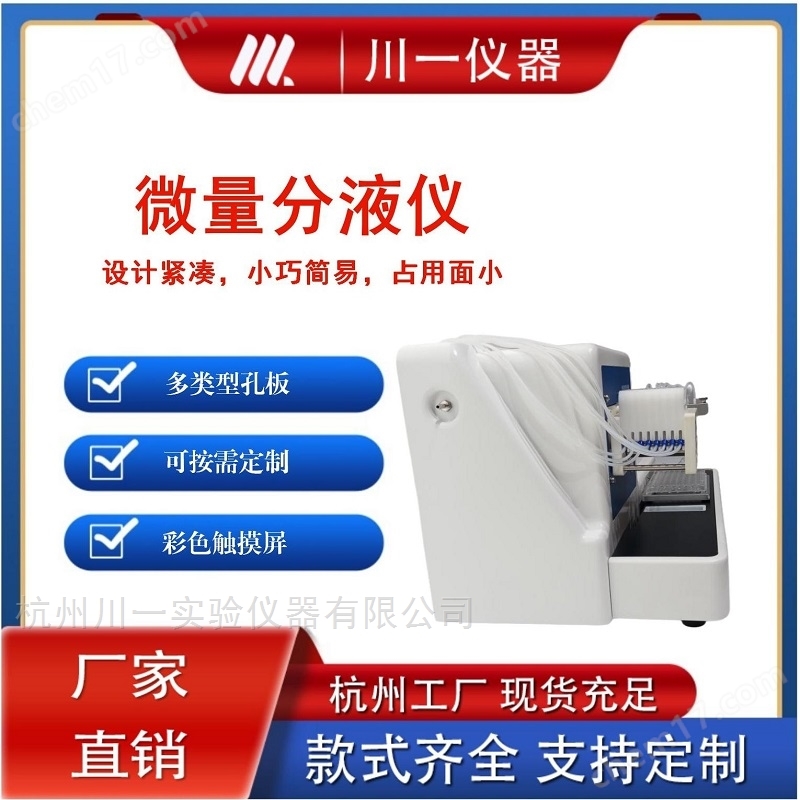
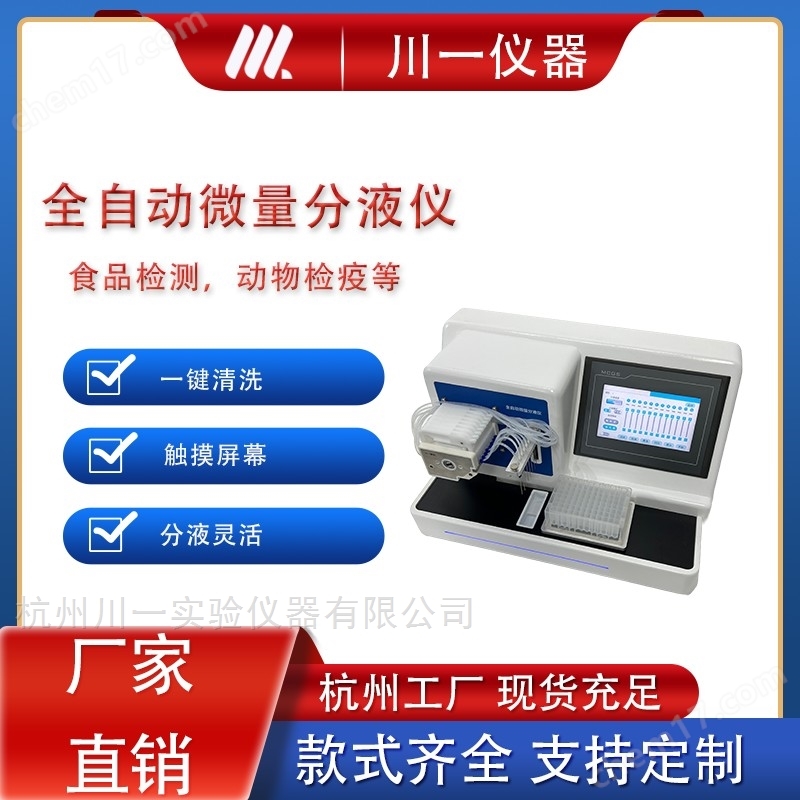
The CYFY-8 Multi Sample 8-Channel Fully Automatic Micro Liquid Analyzer (hereinafter referred to as the "Analyzer") is a liquid separation device equipped with a high-precision peristaltic pump and a robotic arm, which can quickly, accurately, and consistently complete automated liquid separation operations. It can be widely applied in fields such as disease control screening, food testing, animal quarantine, and life science research. Liberate the hands of experimenters to improve efficiency while avoiding errors
Product Details

Fully automatic micro liquid analyzer CYFY-8 with multiple samples and 8 channels Main features:
1. The equipment adopts a precision peristaltic pump for non-contact liquid separation, and the whole machine is exquisite and compact, which can be placed in a super clean table for use.
2. Adopting a 7-inch color LCD touch screen, the operation is simple, and the liquid separation methods include quantitative separation and non quantitative separation. You can choose to add liquid to the whole board or any column.
3. The separation accuracy is high, with an error of less than 1.5% for a 96 well plate of 100 μ L. The minimum separation volume is as low as 5 µ L, and the addition time for a 96 well plate of 100 µ L is 12 seconds.
4. The separation strength can be adjusted in two levels, high and low, suitable for different experimental needs.
5. The movable waste liquid tank facilitates the discharge of waste liquid, and the bottom of the waste liquid tank can be connected to a pipeline to automatically recover waste liquid into the waste liquid bottle.
6. After separation, it can perform functions such as oscillation, pullback, and rinsing.
7. Applicable plate types: 96 well plate, 48 well plate, 384 plate, eight tube PCR tube, 96 PCR plate, enzyme-linked immunosorbent assay plate, various test tubes, centrifuge tubes, EP tubes (compatible with corresponding adapter racks)
Fully automatic micro liquid analyzer CYFY-8 multi sample 8-channel technical parameters:
1Model: CYFY-8
2Applicable version: 96 hole plate (standard)
3Separation method: Whole board or any column, column separation volume can be set
4Liquid separation speed: adjustable in two levels of "high low"
5Liquid separation volume: 1-2000 µ l (can be customized according to customer requirements)
6Liquid distribution pipeline: 8 channels
7Display mode: 7-inch LCD touch screen
8Liquid separation accuracy: 100 µ l ≤ 1.5% (96 well plate)
9Cleaning function: automatic lubrication and suction function
10Auxiliary functions: oscillation, return function
11Compatible container: customizable according to needs
12Working temperature: -20 ℃ -40 ℃
13Relative humidity:<80%
14Liquid requirements:Can be packaged in barrels or bottles
15Suitable container:On-demand customization
The operation instructions for the fully automatic liquid separator are as follows:
1. Preheating: Ensure that the instrument is preheated for sufficient time before operation.
2. Connection: Connect all necessary components to the instrument according to the methods provided in the instrument operation manual. Ensure the connection is correct and tight.
3. Sample preparation: Prepare samples according to the requirements of the experiment. It may be necessary to dilute or filter the sample mixture.
4. Install reagents: Install appropriate reagents according to experimental requirements. Some reagents may need to be frozen before use.
5. Connect the separating funnel: Connect the separating funnel to the correct position on the instrument.
6. Setting and adjustment: According to the specifications of the experiment, set and adjust the parameters of the fully automatic liquid analyzer, such as liquid flow rate, injection volume, reagent volume, and cycle times.
7. Run the experiment: After everything is ready, start running the experiment. Observe and record all data and results during the experimental process.
8. Cleaning: After the experiment, clean the instrument and related components as needed.
9. Data analysis: Analyze experimental data to ensure correct recording and processing of all observed results.
10. Repeat experiment: If the experimental results meet expectations, the experiment can be repeated to verify the stability of the results.
The operation instructions for the fully automatic liquid separator are as follows:
1. Preheating: Ensure that the instrument is preheated for sufficient time before operation.
2. Connection: Connect all necessary components to the instrument according to the methods provided in the instrument operation manual. Ensure the connection is correct and tight.
3. Sample preparation: Prepare samples according to the requirements of the experiment. It may be necessary to dilute or filter the sample mixture.
4. Install reagents: Install appropriate reagents according to the experimental requirements. Some reagents may need to be frozen before use.
5. Connect the separating funnel: Connect the separating funnel to the correct position on the instrument.
6. Setting and adjustment: According to the specifications of the experiment, set and adjust the parameters of the fully automatic liquid analyzer, such as liquid flow rate, injection volume, reagent volume, and cycle times.
7. Run the experiment: After everything is ready, start running the experiment. Observe and record all data and results during the experimental process.
8. Cleaning: After the experiment, clean the instrument and related components as needed.
9. Data analysis: Analyze experimental data to ensure correct recording and processing of all observed results.
10. Repeat experiment: If the experimental results meet expectations, the experiment can be repeated to verify the stability of the results.


Similar Product Recommend