-
E-mail
market@aozuo.com.cn
-
Phone
15811022840
-
Address
Unit 1, 1st Floor, Building 6, Courtyard 3, Haidian District, Beijing
Product Categories
Beijing Aozuo Ecological Instrument Co., Ltd
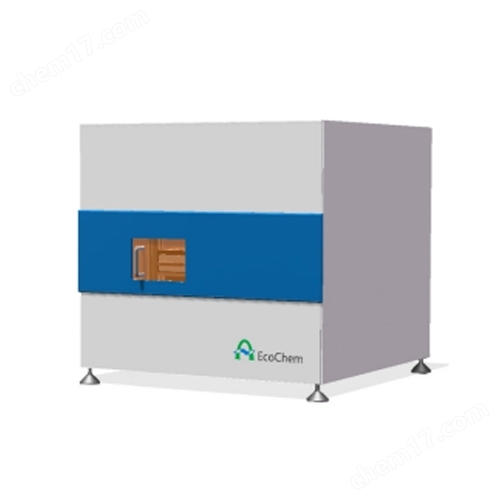
EcoChem Soil Quality Monitoring and Evaluation Observation System
NegotiableUpdate on 12/22
- Model
- Nature of the Manufacturer
- Producers
- Product Category
- Place of Origin
Overview
The EcoChem Soil Quality Monitoring and Evaluation Observation System mainly evaluates various indicators of soil quality, including carbon and nitrogen indicators, nutrient elements, heavy metal pollution elements, trace elements, soil pH, electrical conductivity (total salt content), redox, soil moisture content, field water holding capacity, soil water holding characteristics, and soil classification.
Product Details
EcoChemSoil Quality Monitoring and Evaluation Observation System

Soil provides essential nutrients and water for plant growth and development, and is the substrate for the life of terrestrial plants. Soil health is a necessary condition for organic agriculture, as only healthy soil can cultivate healthy plants and ensure the health of animals and humans. Soil quality refers to the total quality of soil fertility that provides plant nutrients and produces biomass, soil environmental quality that accommodates, absorbs, and purifies pollutants, and soil health quality that maintains and safeguards human, animal, and plant health.
Due to the accumulation of pesticide residues, heavy metal pollution, and biological pollution in soil, humans have begun to study and evaluate the changes in soil quality caused by human pollution. In addition, the soil characteristics of different grades and regions are also different. How to classify and identify these soils, and even establish a soil bank in China, is currently an important task. The evaluation of soil quality mainly focuses on soil physical indicators, chemical indicators, and biological indicators.
EcoChemThe soil quality monitoring and evaluation observation system can comprehensively evaluate the main physical and chemical indicators of soil, making soil evaluation work simple, accurate, and quantifiable.
Observation target
EcoChemThe soil quality monitoring and evaluation observation system mainly focuses on the carbon and nitrogen indicators, nutrient elements, heavy metal pollution elements, trace elements, and soil qualitypHEvaluate various indicators such as conductivity (total salt content), oxidation-reduction, soil moisture content, field water holding capacity, soil water holding characteristics, and soil classification.
EcoChem Soil Quality Monitoring and Evaluation Observation Systemcompose
1Real time monitoring of soil moisture content and conductivity
Soil water is one of the most important components of soil, which supplies crop growth, is a necessary condition for agricultural production, and is the source of survival for terrestrial plants. It is also an important component of soil fertility and a water source base for plant water cycling.

PICO-ProfileThe main sensors of the soil moisture content and conductivity monitoring unit areT3PN44Soil moisture sensor, usingTDRThe principle of time domain reflection can continuously and non destructively measure parameters such as soil moisture content and conductivity, designed specifically for long-term fixed measurements of different levels of soil. Multiple installation methods.
This unit can continuously, fixedly, and seamlessly measure parameters such as soil moisture content and electrokinetic rate at different levels; Different calibration curves can be set for each layer of soil; Sensors can be freely combined to achieve accurate soil layer measurement, and the measuring head can reach10One; Each measuring head can measure1dm3The soil.
Moisture content measurement range:0%~100%Measurement accuracy of moisture content:+/-2%Data repeatability:<0.1%Conductivity measurement range:0 ~ >20ds/mReal time data is uploaded to cloud servers for convenient data management and monitoring.
2, SoilpH&Monitoring of oxidation-reduction
soilpHValue is one of the fundamental properties of soil and an important factor affecting soil fertility. Various types of soils in our countrypHThe value variation is significant, with the majority being4.5 ~ 9It directly affects the form, transformation, and effectiveness of soil nutrients.
The oxidation-reduction of soil helps to understand the degree of soil aeration and reduction, and plays an important guiding role in planting crops. The indicator for measuring the redox reaction status of soil is the redox reaction potential(Eh)The oxidation-reduction potential of soil is generally in the range of200-700mVAt that time, nutrient supply was normal. The valence state changes, migration ability, and biological toxicity of certain volatile heavy metal pollutants in soil are closely related to the redox status of the soil.
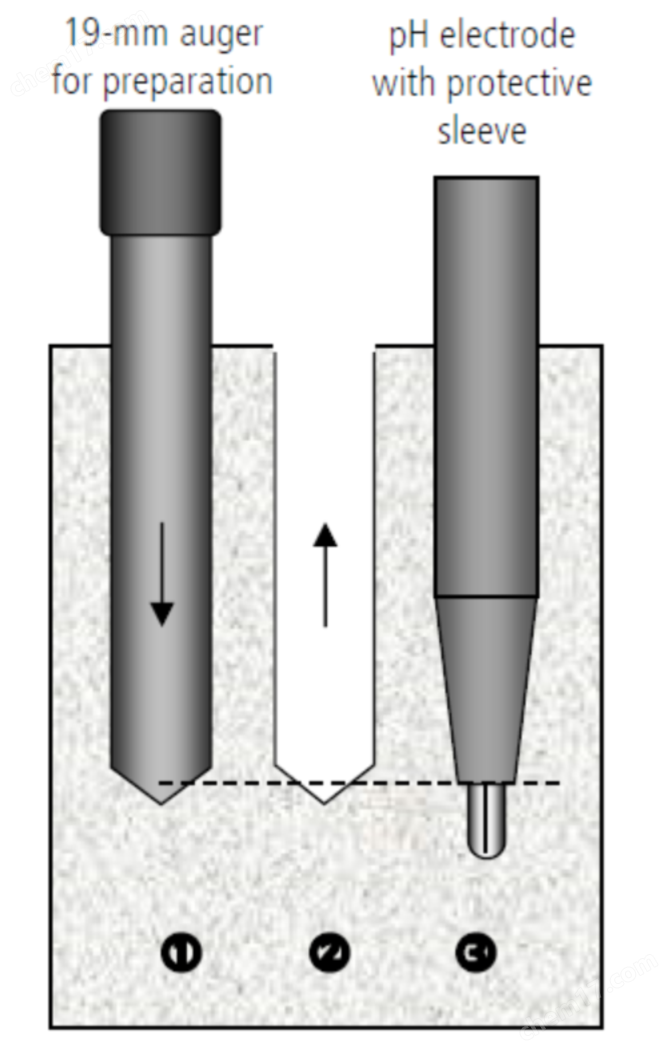
This monitoring unit can measure soil in situ for a long timepHAnd oxidation-reduction reaction potential(Eh)Waiting for parameters. The system is durable and requires minimal maintenance, and can be used in both laboratories and fields.

pHElectrode:
output:-175 … + 175 mVequal topH10 … pH 4 (pH 7≙0 mV)
Diameter:6mm
Manager:80 mm

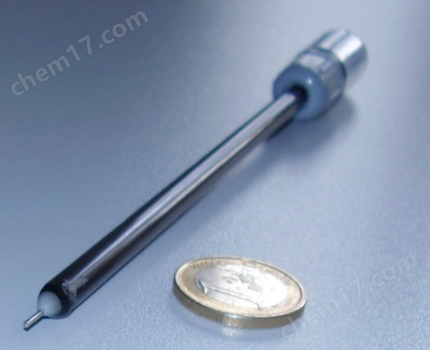
Redox electrode:
RedoxReference electrode diameter12mm, Chief Manager120mm
Scope:+/- 1250 mV
Resolution:0.1 mV
Accuracy:3mV

3Measurement and classification of soil elements
The measurement unit for soil elements adoptsEcoChemLaser spectroscopic elemental analysis system. Its solid-state laser produces laser that acts on the surface of the sample. When the laser energy is greater than the breakdown threshold energy of the sample, plasma is formed on the surface of the sample. The sample materials excited by laser energy in these plasmas reach high-energy states and rapidly migrate back to low-energy states, emitting emission spectra with information about the types and contents of sample elements. These emission spectral signals are collected by an intelligent signal collection system and transmitted to a spectrometer for spectral analysis, and then detected by a spectral signal detector to obtain elemental information.
This monitoring unit mainly measures and evaluates various indicators of soil quality, such as carbon and nitrogen indicators, nutrient elements, heavy metal pollution elements, trace elements, element migration, and soil classification.
The soil contains various elements necessary for plant growth and development, among which trace elements account for the total mass of organisms0.01%However, these trace elements are essential for plant growth. The following table shows the classification of effective trace element content in soil. Therefore, effective and rapid measurement of trace elements in soil is crucial.
level |
Boron B |
Molybdenum Mo |
Manganese Mn |
Zinc Zn |
Copper Cu |
Iron Fe |
1 (very lacking) |
<0.2 |
<0.1 |
<1.0 |
<0.3 |
<0.1 |
<2.5 |
2 (missing) |
0.20~0.5 |
0.10~0.15 |
1.0~5.0 |
0.30~0.5 |
0.10~0.2 |
2.5~4.5 |
3 (moderate) |
0.50~1.0 |
0.15~0.20 |
5.0~15.0 |
0.50~1.0 |
0.20~1.0 |
4.5~10.0 |
4 (Feng) |
1.0~2.0 |
0.20~0.3 |
15~30 |
1.0~3.0 |
1.0~1.8 |
10~20 |
5 (very abundant) |
>2.0 |
>0.3 |
>30 |
>3.0 |
>1.8 |
>20 |


Built in systemPLSVarious multi parameter linear regression chemical statistical analysis functions are used for quantitative calculation of multivariate variables. The multivariate standard curve is particularly suitable for analyzing samples with complex matrices, such as soil, plants, etc., to reduce the influence of other elements in the matrix on the target element and improve analysis accuracy.
Built in systemPCAThe principal component analysis model can measure and evaluate the grading and classification of soil.

Main technical indicators of the system:
Laser system:
Laser energy: 200mJ@1064nm The energy output is adjustable from 0 to 100%; ( 25mJ@266nm Laser optional)
Spot quality control system
Reproducibility: 20Hz, pulse width<6ns, DI water cooling system
Spot size: 50-300 μ m continuously adjustable
Laser shutter: automatic dual shutter, stable control of laser energy and LIBS signal
Laser safety: Level I, equipped with laser locking protection device
Detector: The spectral width can cover the measurement range of all elements, and can measure the information of all elements in the periodic table such as C, P, Mg, Si, Fe, Ca, Na, K, N, H, O, etc. The spectral wavelength accuracy is ± 0.08nm; Spectral resolution of 0.10nm @ 400nm; The door delay time is 0.5ns-1ms.
Equipped with automatic height adjustment function

workbench:
Fully automatic XYZ stroke, XY stroke 100mm × 100mm, Z stroke 50mm, speed 0-10mm/s
XY stroke resolution: 0.2 μ m, Z stroke resolution: 1 μ m
The sample chamber can be filled with helium or argon gas
operating software
Chinese software interface, including NIST and ElementLIBS element recognition databases. It is easy to detect and identify elements on the periodic table and label them with information. The software also has the following functions: the software can perform command operations on all hardware components (laser, spectrometer, 3D workbench, gas path, etc.), with a friendly interface, intuitive operation, and simple use; Built in multiple sampling methods, including single point, multi-point, straight line, matrix point, etc; Equipped with automatic focus control, it can quickly and conveniently identify samples; Can control the dual lenses (panoramic view and magnifying view) built into the system; Built in PLS, PCR and other calibration calculation models can quickly calculate element content; Built in PCA, HCA and other computational models for element classification analysis and traceability; Can perform element mapping analysis; Accurate control of the gas path; Built in conversion of various data formats such as txt, dat, etc; Built in multiple common soil and plant standard curve libraries in China, convenient for users to refer to and call.
Data Processing Center:
Dedicated quad core CPU, 16GB memory desktop computer, and 27 'monitor
Optional accessories:
Desktop tablet press, helium or argon gas
Similar Product Recommend