-
E-mail
hzjoule@163.com
-
Phone
19012707638
-
Address
No. 598 Hejing Road, Hezhuang Street, Qiantang District, Hangzhou City, Zhejiang Province
Product Categories
Hangzhou Joule Intelligent Technology Co., Ltd

Dust Cloud Minimum Ignition Energy Tester
NegotiableUpdate on 02/07
- Model
- Nature of the Manufacturer
- Producers
- Product Category
- Place of Origin
Overview
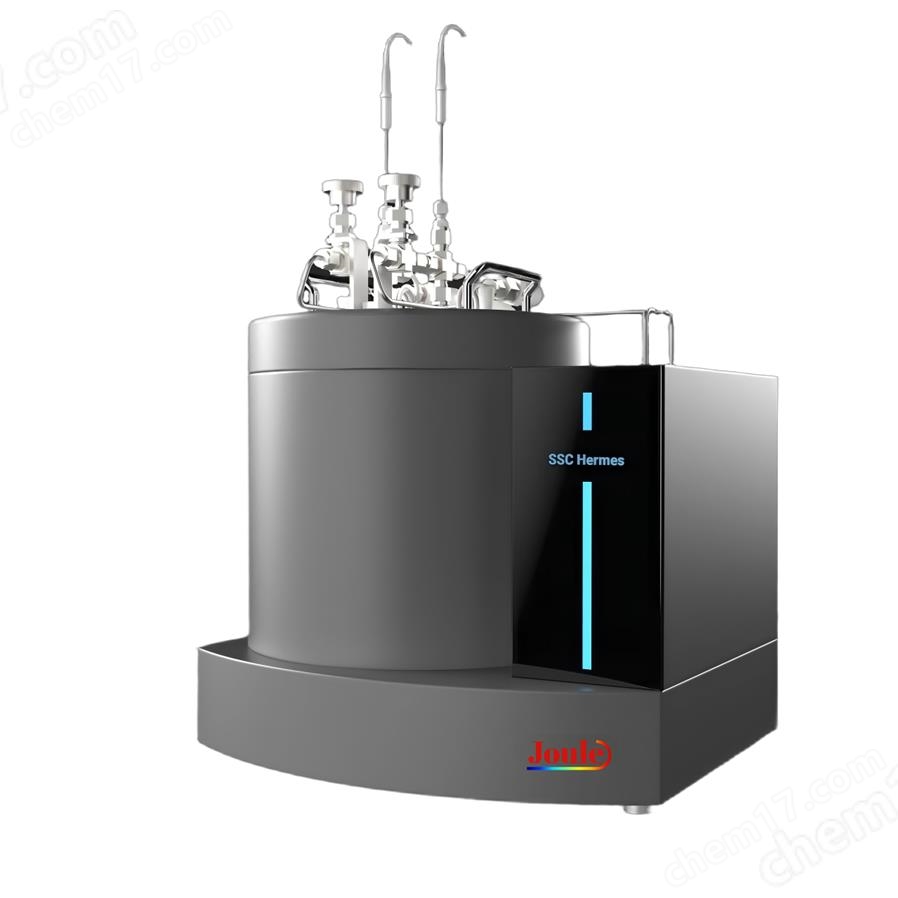
The Minimum Ignition Energy Tester, MIE 303, is a professional instrument used to evaluate the potential explosion hazard of dust clouds. It disperses dust into a Hartmann tube through compressed air to form a dust cloud, and uses an adjustable energy spark for ignition testing to determine the minimum discharge energy that can cause combustion of the dust cloud, namely the Minimum Ignition Energy (MIE). The minimum ignition energy reflects the sensitivity of dust ignition from an energy perspective and is an important parameter for characterizing the explosion hazard of combustible dust. By measuring the minimum ignition energy of dust clouds, it is beneficial to guide the implementation of dust explosion control measures and effectively prevent dust explosion accidents. This instrument MIE
Product Details
Dust Cloud Minimum Ignition Energy TesterIntroduction to MIE 303
1Product Introduction
Dust Cloud Minimum Ignition Energy TesterMIE 303 is a specialized instrument used to assess the potential explosion hazard of dust clouds, which disperses dust into Hartmann tubes through compressed airformationDust cloud and ignition test using adjustable energy electric spark to determine the minimum discharge energy that can cause combustion of dust cloud, i.e. minimum ignition energy (MIE). The minimum ignition energy reflects the sensitivity of dust ignition from an energy perspective and is an important parameter for characterizing the explosion hazard of combustible dust. By measuring the minimum ignition energy of dust clouds, it is beneficial to guide the implementation of dust explosion control measures and effectively prevent dust explosion accidents. This instrument MIE 303Equipped with different featuresHartmann tube made of material, equipped withremoteControl and explosion detectionwaitSafety measures can be used for minimum ignition energy testing of common dust such as flour, sugar powder, wood powder, metal powder, and pharmaceutical intermediates, as well as for minimum ignition energy testing of energetic materials such as fireworks and pyrotechnic agents.

IIFeatures
1) Built in commonly used testing standards (GB/T 16428, ISO/IEC 80079-20-2, ASTM E2019, EN 13821), which can be tested according to standard parameters or customized;
2) The instrument can customize experimental parameters such as ignition energy, ignition delay, and powder spraying pressure, and automatically execute processes such as powder spraying, charging, ignition, and discharge according to the set parameters;
3) Equipped with two methods of remote ignition and remote ignition, achieving human-machine isolation during the ignition testing process to ensure the safety of experimental personnel;
4) Equipped with external device synchronization triggering function, it can generate external triggering signals while spraying powder, and can be used to synchronize external devices such as oscilloscopes and high-speed cameras;
5) The experimental parameters and results are automatically saved in the local storage space, with USB and network interfaces for data export;
6) Equipped with automatic diagnostic function, it will give an alarm prompt and automatically stop the test when a fault occurs;
7) Optional current probe for automatic and accurate measurement of actual discharge energy;
8) Equipped with a 10 inch industrial grade high-definition capacitive touch screen, Win7 operating system, smooth operation, and user-friendly human-computer interaction.
IIITechnical Specifications
|
Spark discharge parameters | |
| Discharge energy | 0.3 mJ~3 J |
| charging voltage | 0~15 kV |
| Discharge electrode | Tungsten electrode |
| loop resistance | ≤5 Ω |
| Loop inductance | ≤ 25 μ H (no inductive load) or 1 mH (inductive load) |
| electrode spacing | 2~10 mm (continuously adjustable) |
| Trigger method | High voltage relay triggering, moving electrode triggering |
| Ignition delay | 10 ms~1000 ms |
| Synchronous control | Simultaneously generating an external trigger signal (TTL level signal) during discharge |
|
Gas path control parameters | |
| Powder spraying pressure | 0.1 MPa ~ 0.7 MPa |
| Measurement accuracy | 0.5% |
| Capacity of gas storage room | 50 mL |
| stressor | air compressor |
|
Test container parameters | |
| Test container | Hartmann tube made of quartz glass material |
| container volume | 1.2 L |
| Container wall thickness | 5 mm |
| Exhaust nozzle | Mushroom shaped nozzle |
|
system parameters | |
| working environment | 5℃~45℃,<85%RH |
| power supply | 90~260 VAC/47~63 Hz |
| power | 300 W |
| interface | RJ45/USB |
| size | 700 mm×445 mm×665 mm |
|
optional | |
| computer | Intel i5 processor, installation of control software and data acquisition software |
| current probe | current transformer |
| Test container | Hartmann tube made of stainless steel material |
Minimum ignition energy testerThe core of the operation is to follow the process of "power on preparation → parameter setting → sample preparation and placement → ignition testing → data recording → shutdown cleaning", and strictly control the environmental conditions and sample status throughout the process to ensure testing accuracy and safety.
1、 Preparation before startup
Check the appearance of the equipment for any damage, ensure that the power and signal lines are securely connected, and that the grounding device is reliable.
Confirm that there are no leaks in the ignition system (such as electrodes, ignition power supply) and gas supply system (if inert gas is required), and that the components are intact.
Clean up the debris inside the testing chamber to ensure that the sample tray and electrode spacing adjustment mechanism are flexible and usable.
Connect the main power supply, turn on the device control panel switch, and wait for the system self-test to complete.
2、 Test parameter setting
Enter the parameter settings interface, select the testing standard, and match the sample type (solid powder, liquid vapor, etc.).
Set the ignition energy range (gradually adjusted from low to high to accurately capture the minimum ignition energy) and ignition duration.
Adjust the electrode spacing (set according to standard requirements, usually 2-5mm) and sample quantity (to meet the rated load of the equipment and avoid excessive accumulation).
Set environmental parameters (such as temperature, humidity, gas atmosphere inside the testing chamber, and gas flow rate if inert gas protection is required).
After confirming that the parameters are correct, save them. Some devices can preset commonly used parameter schemes for easy repeated testing and calling.
3、 Sample preparation and placement
Prepare samples according to standard requirements: Solid powders need to be ground to a uniform particle size, and liquid samples need to be controlled for evaporation rate to avoid moisture or contamination of the samples.
Open the test chamber door and evenly spread the prepared sample on the sample tray, ensuring that the sample does not come into contact with the electrode or chamber wall.
Adjust the electrode position to align with the sample testing area, ensuring that the electrode spacing meets the set value and there is no offset or poor contact.
Close the chamber door and confirm good sealing (to prevent gas leakage or external environmental interference during testing).
4、 Ignition testing and process monitoring
Click the "Start Test" button on the control panel, and the device will automatically enter the testing process (some devices require vacuuming or filling with a set gas atmosphere).
Perform ignition tests gradually according to the set energy gradient, and observe whether the sample ignites after each test (if flames, sparks, or combustion marks appear).
Record the energy value of each ignition and the reaction state of the sample. If the sample is not ignited, gradually increase the energy until ignition occurs, and record the low energy value at this time.
Real time monitoring of equipment operation status during the testing process. If any abnormalities occur (such as electrode short circuit, gas leakage), immediately click "emergency stop", troubleshoot and retest.
5、 Data recording and analysis
After the test is completed, enter the data interface and export or manually record key data: minimum ignition energy value, test parameters, sample status, environmental conditions, etc.
Repeat the test 2-3 times and take the average of multiple valid data as the final test result (excluding abnormal data, such as deviations caused by uneven samples).
Organize the test report according to standard requirements, clearly indicate the testing conditions and the basis for determining the results.
6、 Shutdown and Cleaning
Click the 'Stop' button, wait for the device system to reset and the test chamber to cool down to room temperature, then close the chamber door.
Take out the sample tray, clean the residual samples, and wipe the testing chamber and electrodes with specialized tools to avoid sample residue affecting subsequent testing.
Turn off the gas supply system, disconnect the equipment power and main power, and tidy up the testing table.
7、 Safety precautions
Wear protective gloves and goggles during operation. Flammable and explosive materials are prohibited from being stored in the testing area, and firefighting equipment should be provided.
During the testing process, it is prohibited to open the chamber door arbitrarily to avoid splashing or gas leakage during ignition, which may cause danger.
Regularly inspect the ignition system and gas pipelines, replace aging components in a timely manner, and prevent safety hazards caused by malfunctions.
Similar Product Recommend