-
E-mail
1575097019@qq.com
-
Phone
19032291360
-
Address
306, Building 1, Ideal Science and Technology Park, No. 603 Hongfeng Road, Donghu Street, Linping District, Hangzhou City
Product Categories
Hangzhou Chuanyi Experimental Instrument Co., Ltd


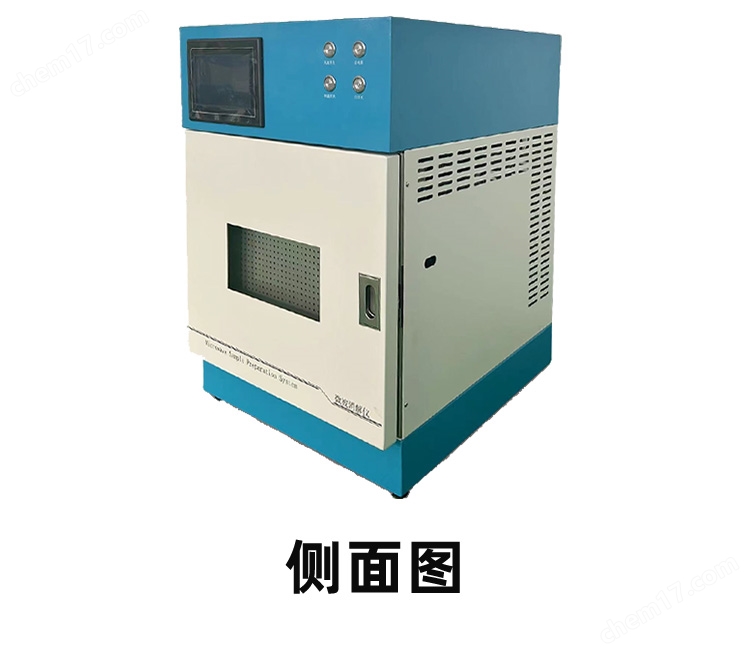
Double self-locking explosion-proof door, high-throughput microwave digestion device, LCD touch screen
NegotiableUpdate on 01/09
- Model
- Nature of the Manufacturer
- Producers
- Product Category
- Place of Origin
Overview
Double self-locking explosion-proof door high-throughput microwave digestion device with LCD touch screen. The high-throughput intelligent microwave digestion instrument refers to an instrument that uses microwave heating principle in a closed container to achieve sample pretreatment under high temperature and high pressure conditions. And it provides fast, safe, and automated solution instruments for samples, widely used in fields such as food, environmental protection, disease control, quality supervision, commodity inspection, and scientific research institutes.
Product Details
Double self-locking explosion-proof door, high-throughput microwave digestion device, LCD touch screenMain features
The CYWB series high-throughput intelligent microwave digestion instrument adopts microwave non pulse continuous automatic frequency conversion control, which extends the service life of the instrument and the uniformity of electromagnetic waves. The chamber adopts a large volume of 52L, specially made of stainless steel chamber material, and a self-locking buffer explosion-proof furnace door. When the reaction is abnormal, the buffer structure ensures the personal safety of the operator and the integrity of the furnace door structure. The furnace door and chamber are tightly combined, and microwave leakage meets national standards. The instrument adopts a temperature and pressure dual control system to control the pressure and temperature of the synthesis experiment, with real-time display, 360 ° continuous rotation, uniform microwave, ensuring the same microwave environment for each sample and improving the consistency of experimental results.
Technical parameters of dual self-locking explosion-proof door high-throughput microwave digester LCD touch screen
Host parameters:
1.1 Power supply: 220-240 VAC 50/60Hz 15A; Microwave frequency: professional microwave source/2450MHz; Installation power of the whole machine: 2600W;
1.2 Microwave output power: 0~1600W, automatically continuously adjustable;
1.3 Microwave output characteristics: Microwave non pulse continuous automatic frequency conversion control, 0-100% automatic output;
1.4 Microwave cavity: 52L, all stainless steel cavity, corrosion-resistant, high temperature resistant (optional PTFE coating);
1.5 Self locking buffer explosion-proof furnace door. When the reaction is abnormal, the buffer structure ensures the personal safety of the operator and the integrity of the furnace door structure;
1.6 Exhaust and cooling system: The furnace chamber is equipped with a high-power exhaust system, and various reactions can be carried out continuously for a long time in a ventilated, safe, and easily observable environment; The furnace chamber ventilation adopts acid resistant and high air volume centrifugal fans, with an exhaust air volume of not less than 5m3/min; The furnace chamber has air cooling function, which continuously cools the reaction tank and displays temperature and pressure in real-time.
Control system parameters:
2.1 Control mode: touch screen design, 7-inch large screen display, remote direct reading of reaction process, real-time display of closed reaction tank temperature and pressure, and real-time display of temperature pressure curve;
2.2 Temperature control range: Room temperature -~300 ℃; Temperature control accuracy: ± 0.5 ℃;
2.3 Temperature control system: adopting non-contact temperature control method, precise temperature control, using high-precision platinum resistance temperature sensors; Real time detection, control, and display of temperature and curve inside the microwave digestion reaction tank;
2.4 Pressure control system: adopting non-contact pressure control method, precise pressure control, real-time detection, control and display of pressure inside the microwave digestion reaction tank;
2.5 Rotary table design: 360 ° continuous rotation in the same direction, uniform microwave, ensuring the same microwave environment for each sample and consistency of experimental results.
Reaction tank parameters:
The outer tank is importedPEEK aerospace material, inner tank material: polytetrafluoroethylene material; Inner tank reaction volume: 55ml (standard) and 100ml (optional).
model |
CYWB-4 |
CYWB-6 |
CYWB-8 |
CYWB-10 |
CYWB-12 |
CYWB-16 |
CYWB-20 |
Processing Quantity |
4 people |
6 people |
8 digits |
10 people |
12 digits |
16 bits |
20 people |
Number of internal infusions |
4 of them |
6 of them |
8 of them |
10 of them |
12 of them |
16 of them |
20 of them |
Number of outer tanks |
4 of them |
6 of them |
8 of them |
10 of them |
12 of them |
16 of them |
20 of them |
volume |
55ml |
55ml |
55ml |
55ml |
55ml |
55ml |
55ml |
working method |
360-degree rotation |
360-degree rotation |
360-degree rotation |
360-degree rotation |
360-degree rotation |
360-degree rotation |
360-degree rotation |
Outer tank material |
PEEK |
PEEK |
PEEK |
PEEK |
PEEK |
PEEK |
PEEK |
Internal infusion material |
Polytetrafluoroethylene |
Polytetrafluoroethylene |
Polytetrafluoroethylene |
Polytetrafluoroethylene |
Polytetrafluoroethylene |
Polytetrafluoroethylene |
Polytetrafluoroethylene |
What are the main microwave characteristics of microwave digestion equipment
The microwave digestion instrument adopts microwave non pulse continuous automatic frequency conversion control, which extends the service life of the instrument and the uniformity of electromagnetic waves. The chamber is specially made of 52L large volume 316L stainless steel chamber material, with a self-locking buffer explosion-proof furnace door. When the reaction is abnormal, the buffer structure ensures the personal safety of the operator and the integrity of the furnace door structure. The furnace door and chamber are tightly combined, and microwave leakage meets national standards. The instrument adopts a temperature and pressure dual control system to control the pressure and temperature of the digestion experiment, and displays them in real time. 360 ° round-trip continuous rotation, uniform microwave, ensuring the same microwave environment for each sample and improving the accuracy of experimental results. When the pressure inside the tank exceeds the set protection value, the microwave will automatically stop heating. The safety explosion-proof membrane has a dual safety function. When the pressure inside the tank exceeds the pressure that the explosion-proof membrane can withstand, the explosion-proof membrane will rupture first, and gas will leak out, preventing damage to the tank body and harm to the human body.
Microwave digestion is very different: how to choose a high-throughput microwave digestion instrument?
Currently, high-throughput microwave digestion equipment is widely used in environmental safety testing and food safety testing. The so-called "high-throughput" refers to a batch processing capacity of ≥ 40, and the structure of the digestion tank used, the customer's sampling situation, and the requirements for equipment safety are all significantly different from those of the "ultra-high pressure microwave digestion instrument" with only a dozen or a few digestion tanks!
Simply put, there are at least the following points:
1. The batch processing capacity of the "high-throughput microwave digestion tank" is ≥ 40, with a distribution of at least 2 circles, or even 3 circles. This inevitably leads to a temperature difference in the tank caused by the difference in microwave energy and heat dissipation rate between the inner and outer circles. At this point, the representativeness of using one main control tank temperature to represent the temperature of the remaining 39 tanks is clearly a question.
2. Customers who purchase "high-throughput microwave digestion tanks" usually have a large amount of samples to be tested, require high sampling efficiency, and the samples may be diverse, making it impossible for the composition to be consistent. When different samples are digested in the same batch, the temperature and pressure changes in each reaction tank are different. Obviously, it is impossible to use the temperature and pressure of one main control tank to represent the temperature and pressure of the remaining 39 tanks!
3. At the same batch, when ≥ 40 sample tanks are dissolved simultaneously, the safety risks caused by overheating and overpressure are doubled compared to the "ultra-high pressure tank" mode for batch processing of 6-16 tanks. At this time, "full tank infrared temperature measurement" and "full tank pressure control" become particularly important to ensure safety!
4. A good "high-throughput microwave digestion tank" has a simpler structure, more convenient operation, and lower cost compared to an "ultra-high pressure microwave digestion tank". "High throughput microwave digestion tanks" have higher requirements for temperature control accuracy and operational safety.
Undoubtedly, whether to adopt the "full tank temperature control" and "full tank pressure control" methods is extremely important for ensuring the safety and digestion effect of high-throughput microwave digestion equipment. So, are all high-throughput microwave digestion instruments claiming to use "full tank temperature control" and "full tank pressure control" methods the same?
Full tank temperature control
The technical principle of "full tank temperature control" (full tank temperature control) is to use infrared temperature sensors to scan each digestion tank one by one, collect the surface temperature of its materials and convert it into the temperature of the solution inside the tank through a coefficient, or directly collect the temperature of the solution inside the tank through the material of the tank body (mid infrared technology), thereby obtaining temperature data of all digestion tanks and controlling them. Setting aside whether the conversion factor is applicable to all types of samples, in terms of infrared technology alone, there are differences among different brands of infrared technology (low sensitivity near-infrared technology, high sensitivity near-infrared technology, higher accuracy mid infrared technology). At the same time, there are also significant differences in the placement and quantity of infrared sensors (sidewall single point infrared non full tank temperature measurement, bottom single point infrared non full tank temperature measurement, bottom dual infrared full tank temperature measurement). The actual performance of equipment from different brands varies greatly, as follows:
1. Low sensitivity near-infrared technology+side wall single point infrared non full tank temperature measurement: (as shown in Figure 1) This initial temperature measurement method has low cost and simple design of the host and tank structure; But it is not a full tank temperature measurement, it can only detect the outer wall temperature of the outer sheath of the outer tank body; The temperature measurement point is not in the sample reaction zone, and the accuracy of temperature measurement is extremely low. The detection data cannot reflect the temperature inside the tank, and can only be used as an abnormal temperature alarm for the tank body.
2. High sensitivity near-infrared technology+bottom dual infrared full tank temperature measurement: This method is an early adopted full tank temperature measurement method with high cost, and because it detects the surface temperature of the reaction zone material at the bottom of the tank, rather than the internal solution temperature of the tank, it is greatly affected by the thickness and degree of use of the tank material.
3. High accuracy mid infrared technology+bottom dual infrared full tank temperature measurement:. This new bottom dual mid infrared temperature measurement technology can transmit through the tank material and directly detect the temperature of the solution inside the reaction zone at the bottom of the tank, but the corresponding cost is also higher.
Full tank pressure control
The technical principle of the "full tank pressure control system" (full tank pressure control) is based on the "quantitative" or "non quantitative" automatic pressure relief technology that can be repeatedly used for each digestion tank. Once the pressure inside the tank becomes too high during the reaction process, the tank can automatically release the excess pressure inside the tank, ensuring that each digestion tank does not experience an ultra-high explosion accident - of course, the pressure relief we are referring to is safe and non-destructive. If there is not even a pressure relief hole and the pressure exceeds the limit, the top wire or top pad will release pressure in a destructive manner. Even without considering the consumables caused by pressure relief, the safety hazards of this pressure relief method are more worthy of attention. At the same time, based on the built-in "sound abnormal alarm" and "acid gas concentration alarm" of the microwave digestion instrument host, when there is a large-scale overpressure relief in the chamber tank, the host will automatically shut down and sound an alarm.
1. Non quantitative tank automatic pressure relief technology+sound alarm: This initial full tank pressure control method has a simple tank structure and low manufacturing cost, mainly through deformation relief of sealing components. The pressure relief point of this method is greatly affected by the degree of material use and aging; However, there is pressure relief in the digestion tank from 10atm to 20atm, and the "boundary" of the pressure relief point is blurred, which directly leads to excessive total pressure relief. The pressure inside the tank is always low and cannot reach the reaction temperature above 190 ℃. Oil and fat samples cannot be digested and clarified, and the data recovery rate is low!
2. Quantitative tank automatic pressure relief technology: As an upgraded new full tank pressure control technology, each digestion tank cover is equipped with a reusable "quantitative pressure control module", and the pressure relief point "boundary" is fixed at 20atm. Only when the pressure inside the tank exceeds 20atm, the "quantitative pressure control module" will automatically start pressure relief. Once the pressure inside the tank is below 20atm, the "quantitative pressure control module" will automatically close again to ensure the tank is sealed. This structure can support digestion tank working temperatures above 210 ℃, which can significantly improve the sample digestion effect. It can digest and clarify oil samples, ensuring data recovery rate! Of course, due to the complex structure of the tank body, the manufacturing cost is also high.


Similar Product Recommend