-
E-mail
jisong0988@163.com
-
Phone
13534231905
-
Address
Meilin Duoli Industrial Zone, Futian District, Shenzhen City, Guangdong Province
Product Categories
Shenzhen Tianchuangmei Technology Co., Ltd


Detection instrument for harmful heavy metal element content in waste edible oil
NegotiableUpdate on 12/24
- Model
- Nature of the Manufacturer
- Producers
- Product Category
- Place of Origin
Overview
The ICP inductively coupled plasma emission spectrometer is an efficient and precise instrument for detecting harmful heavy metal elements in waste edible oil. It achieves multi-element synchronous detection by exciting elemental characteristic spectra through high-temperature plasma, with a detection limit as low as ppb, and can accurately determine harmful elements such as lead, cadmium, arsenic, etc. The equipment has a high degree of automation and strong stability, suitable for laboratory and on-site testing, providing reliable data support for the resource utilization of waste oil and food safety supervision.
Product Details
Detection instrument for harmful heavy metal element content in waste edible oil
Equipment Introduction of ICP Inductively Coupled Plasma Optical Emission Spectrometer (ICP-OES) for Detecting Harmful Heavy Metals in Waste Edible Oil
1、 Core principle of equipment
ICP-OES generates high-temperature plasma (up to 6000-10000K) through high-frequency inductive coupling, which atomizes and excites elements in the sample to high energy states. When excited state atoms return to the ground state, they emit characteristic spectra whose wavelength and intensity are directly related to the type and content of the element. Separate spectra and detect intensities through a spectroscopic system, and achieve quantitative analysis of elements by combining standard curves.
2、 Equipment technology advantages
Multi element synchronous detection
It can simultaneously determine more than 70 elements such as lead (Pb), cadmium (Cd), mercury (Hg), arsenic (As), chromium (Cr), copper (Cu), zinc (Zn), etc. in waste edible oil, with a single analysis cycle shortened to less than 3 minutes, significantly improving detection efficiency.Ultra trace detection capability
The detection limit is as low as 0.1 ppb (parts per billion), meeting the requirements for trace analysis of heavy metals such as cadmium and mercury, and even detecting sub ppb level pollutants to ensure detection sensitivity.Wide linear dynamic range
The linear range covers 6 orders of magnitude (such as 0.01-1000mg/L), and high and low content elements can be measured simultaneously without dilution, which is suitable for the complex composition of waste edible oil.Strong anti-interference ability
High temperature plasma effectively reduces chemical ionization interference, coupled with a two-dimensional spectroscopic system composed of a mid step grating and prism, which can accurately distinguish element spectral lines with close wavelengths.Automation and Stability
Equipped with an automatic sampling system and data processing software, supporting high-throughput detection of batch samples; The relative standard deviation (RSD) of 7 consecutive measurements is less than 4%, and the long-term stability RSD is less than 1.5%, ensuring the reliability of the results.
3、 The key application of equipment in the detection of waste edible oil
Raw material screening and quality control
Waste edible oils (such as gutter oil and hogwash oil) have complex sources and are susceptible to wear and tear from cooking utensils, contamination from unqualified additives or storage containers, resulting in excessive heavy metals. ICP-OES can quickly screen for harmful elements such as lead, cadmium, arsenic, etc., preventing unqualified raw materials from flowing into the biodiesel production chain and ensuring the purity of end products.Optimization of Resource Utilization Process
In the process of preparing biodiesel from waste oil, impurity elements such as iron and zinc can affect catalyst activity and increase purification costs. By using ICP-OES to detect pre treated samples, the effectiveness of processes such as deacidification and demetallation can be evaluated, providing real-time feedback for process optimization.Environmental supervision and compliance verification
According to the List of Non Edible Substances that may be Illegally Added to Food, the content of heavy metals in waste edible oil needs to be strictly monitored. The high-precision data provided by ICP-OES provides objective basis for regulatory authorities to block the illegal circulation of inferior oil products.
4、 Typical equipment models and performance parameters
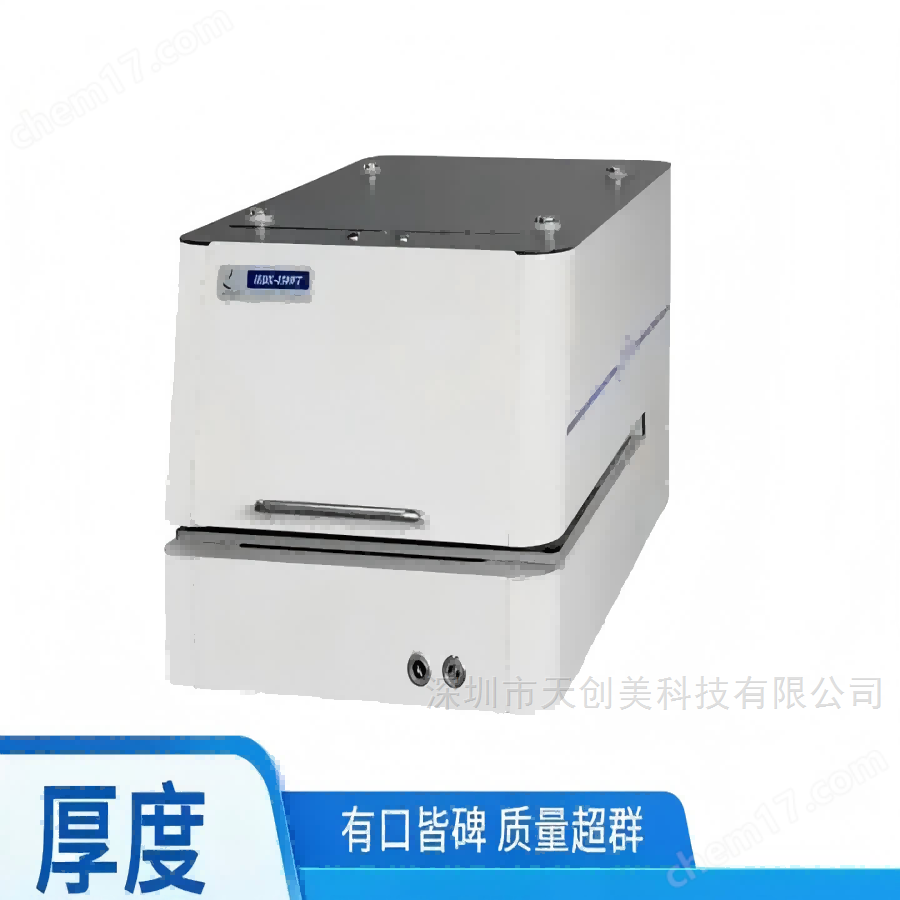
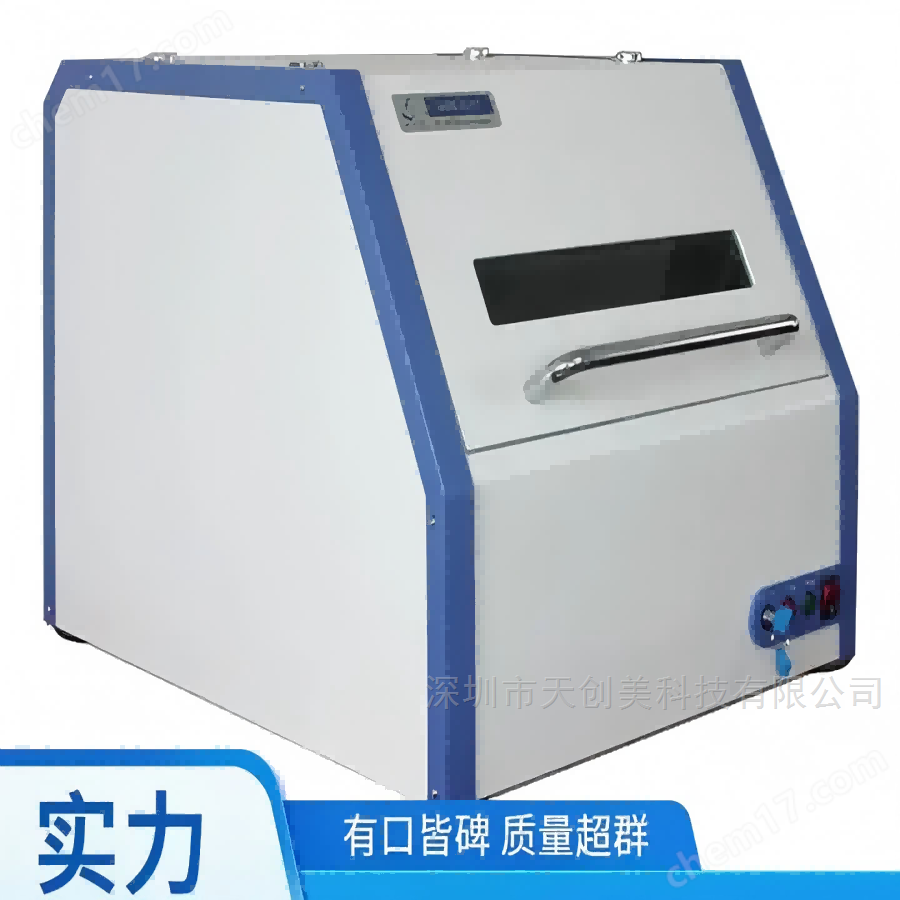
The 700T model sold by Tianchuangmei Technology Co., Ltd
Instrument technical parameters:
1. Input power supply: voltage AC 220V, current 20A.
2Adopting Czerny Turner type optical path with a focal length of 1000mm.
3. Ion etched holographic grating with a engraved area of (80 × 110) mm.
4Fully automatic one key ignition, automatic matching, stable and convenient ignition.
5. Using a concentric circle atomizer with a swirl chamber, the 1ppmMn intensity is greater than 1000000 CPS.
6. Resolution (Mn257, 610nm): ≤ 0, 005nm (4320 line grating); ≤ 0, 008nm (3600 line grating); ≤ 0, 015nm (2400 line grating).
7. Wavelength range: 190-460nm (4320 line grating); 190-500nm (3600 line grating); 190-800nm (2400 line grating)
8. Independently developed all solid state RF power supply, with output power of 800-1600W, continuously adjustable, power efficiency greater than 65%, operating frequency of 27,12MHz, frequency stability<0.05%, power output stability<0.05%.
5、 Equipment selection suggestions
Match detection requirements
For routine heavy metal screening, ICP-OES can meet the demand and has lower operating costs (such as a single bottle of argon gas can run continuously for 8 hours).
Sample adaptability
For high viscosity and high organic waste oils, priority should be given to equipment equipped with corrosion-resistant atomizers and organic sampling systems (such as ICP-7000T type) to avoid clogging of the sampling system.
Convenience of operation
Equipment with high degree of automation, such as models equipped with automatic alignment function and dual channel peristaltic pumps, can reduce manual intervention and improve detection efficiency.
Detection instrument for harmful heavy metal element content in waste edible oil
Similar Product Recommend