-
E-mail
499578158@qq.com
-
Phone
13931875196
-
Address
Building 5, Rongzhi Technology Park, No. 123 Yuyuan Road, Luquan District, Shijiazhuang City, Hebei Province
Product Categories
Hebei Ziyue Machinery Equipment Co., Ltd
Dangerous gas monitoring and warning system
NegotiableUpdate on 02/09
- Model
- Nature of the Manufacturer
- Producers
- Product Category
- Place of Origin
Overview
The hazardous gas monitoring and early warning system is a comprehensive safety protection system that integrates real-time monitoring, intelligent analysis, graded alarm, and linkage control. It is a key technical barrier to ensure personnel safety, stable equipment operation, and environmental safety.
Product Details
In many industrial fields such as chemical, oil and gas, metallurgy, mining, sewage treatment, underground pipe galleries, energy storage power stations, etc., high or low concentrations of flammable gases, toxic gases, and oxygen can all cause serious safety accidents such as fires, explosions, poisoning, or suffocation. The hazardous gas monitoring and early warning system is a comprehensive safety protection system designed to address these potential risks, integrating real-time monitoring, intelligent analysis, graded alarm, and linkage control. It is a key technical barrier to ensure personnel safety, stable equipment operation, and environmental safety.
1Dangerous gas monitoring and warning systemComposition and Working Principle
A complete hazardous gas monitoring and early warning system usually consists of the following core components, forming a closed loop of "perception transmission analysis response":
Gas sensor array (sensing layer):
Core components: deployed at key locations such as potential leakage points, personnel activity areas, and entrances to enclosed spaces, used for real-time collection of concentration data of various gases in the environment.
Sensor type:
Catalytic combustion type: mainly used for detecting combustible gases (LEL), with low cost and good stability.
Electrochemical formula: high-precision detection of toxic gases (such as CO, H ₂ S, O ₂, NO ₂, etc.), high sensitivity and fast response.
Infrared (NDIR): Non contact measurement, suitable for specific gases such as CO ₂ and CH ₄, resistant to poisoning and has a long lifespan.
Semiconductor type: Low cost, but easily affected by temperature and humidity, often used for civilian or auxiliary testing.
Photoionization (PID): It can detect various volatile organic compounds (VOCs) with high sensitivity.
Sensors typically have explosion-proof, waterproof, and corrosion-resistant designs to adapt to harsh industrial environments.
Data Collection and Transmission Network (Transport Layer):
Acquisition unit: Collect, filter, and preliminarily process the analog or digital signals output by sensors.
2、 Communication method
Wired transmission: such as 4-20mA, RS485, Modbus, etc., with high stability, suitable for fixed locations.
Wireless transmission: such as LoRa, NB IoT, Wi Fi, Zigbee, etc., with flexible deployment, especially suitable for areas where wiring is difficult or for mobile monitoring.
The data is transmitted in real-time to the central monitoring platform through the network.
Central Monitoring and Management Platform (Analysis Layer):
Core brain: usually composed of industrial computers, servers, or cloud platforms, equipped with dedicated monitoring software.
3、 Core functions
Real time data display: visually display the gas concentration at each monitoring point in the form of numbers, curves, plans, or 3D models.
Intelligent alarm: Based on preset alarm thresholds (such as low alarm, high alarm, and over limit), graded alarms are triggered, and the system can set response strategies for different alarm levels.
Data analysis and storage: Record historical data, generate trend charts and reports, support data traceability and accident analysis.
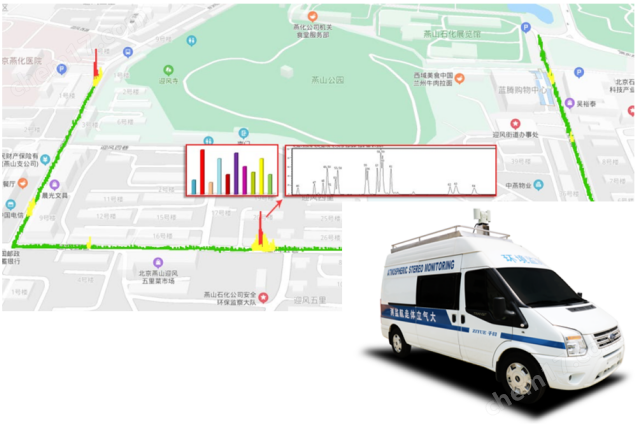
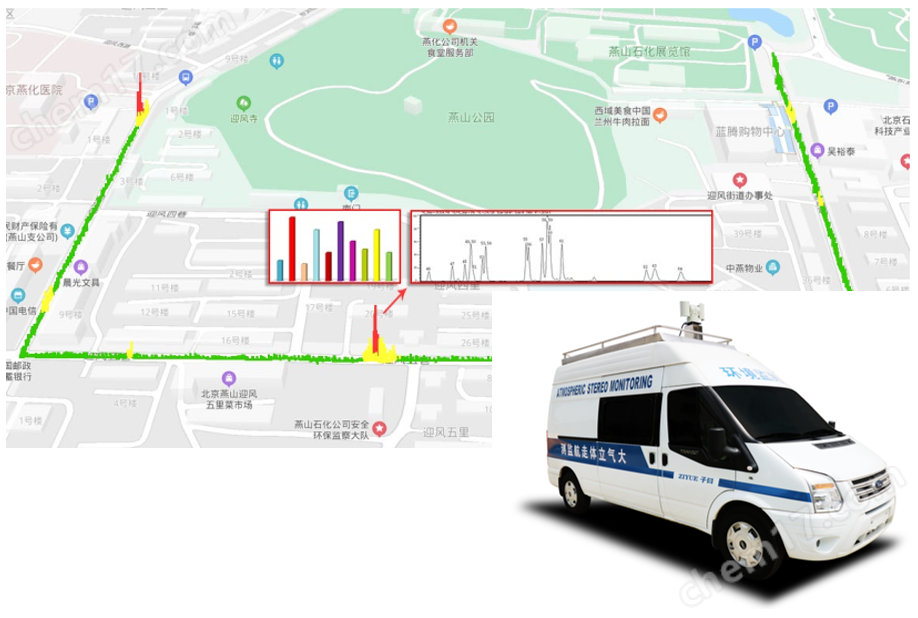
GIS/Digital Twin Integration: Integrating monitoring points with factory maps or 3D models to achieve visual positioning and management.
Alarm and linkage control device (response layer):
Alarm device: on-site sound and light alarm, broadcasting system, to alert on-site personnel in a timely manner.
Linkage control: The system can be linked with ventilation equipment (fans), shut-off valves (gas/power sources), fire protection systems, access control systems, etc. For example, when combustible gas exceeds the standard, the exhaust system will be automatically activated and relevant valves will be closed to cut off potential sources of fire.
Emergency response: Support one click activation of emergency plans, notify relevant personnel to evacuate or handle.
4、 Core advantages of the system
Real time: 24-hour uninterrupted monitoring, detecting gas anomalies in the first place.
Accuracy: Using high-precision sensors and intelligent algorithms to reduce false positives and false negatives.
Intelligence: supports multi-level alarm, trend prediction, and fault self diagnosis.
Visualization: A graphical interface that facilitates monitoring and management.
Scalability: Supports multi-point, multi gas, and large-scale networking.
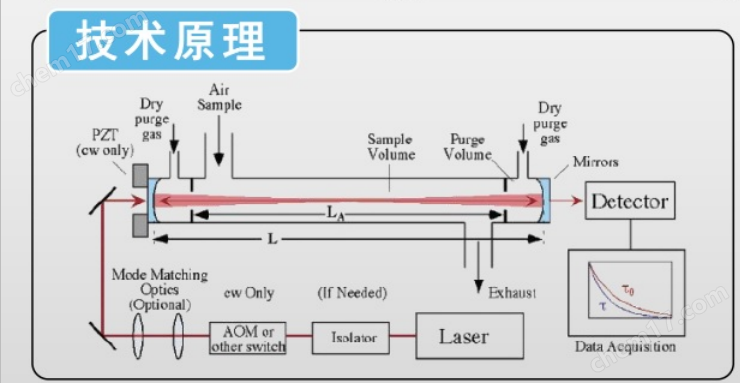
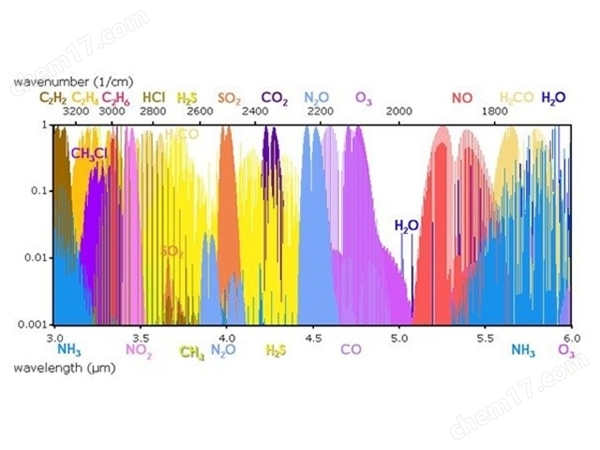
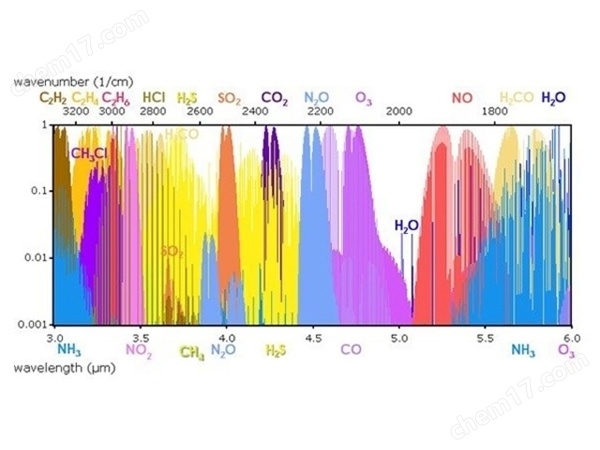
Support customized TDLAS technology or ultraviolet differential method for detecting (monitoring) various gases, such as H2O (water), O2 (oxygen), HCI (hydrogen chloride), NO (nitric oxide), CO2 (carbon dioxide), NH3 (ammonia), CO (carbon monoxide), C2H2 (acetylene), N2O (nitrous oxide), O3 (ozone), SO2 (sulfur dioxide), CH3CI (chloromethane), NO2 (nitrogen dioxide), etc.
Similar Product Recommend