-
E-mail
499578158@qq.com
-
Phone
13931875196
-
Address
Building 5, Rongzhi Technology Park, No. 123 Yuyuan Road, Luquan District, Shijiazhuang City, Hebei Province
Product Categories
Hebei Ziyue Machinery Equipment Co., Ltd

Confucius said that remote sensing monitoring of motor vehicle exhaust
NegotiableUpdate on 02/09
- Model
- Nature of the Manufacturer
- Producers
- Product Category
- Place of Origin
Overview
The operation and maintenance work of the remote sensing monitoring system for motor vehicle exhaust mainly includes daily operation and maintenance, quality control management, data analysis services, etc. According to the latest national monitoring system technical requirements and specifications, regular inspections of the station environment, instruments and meters, data transmission, condition support and other operating status are carried out to promptly handle faults and carry out preventive maintenance work; At the same time, regular monitoring and quality control management should be carried out to ensure the traceability and reliability of data. Analyze the data during the operation of remote sensing monitoring equipment and generate a report.
Product Details
In response to the rapid increase in the number of motor vehicles on urban roads, the increasingly prominent exhaust pollution, and the increasing pressure on control, combined with the requirements of screening and rectifying high emission vehicles in cities, eliminating yellow label vehicles, and integrating various technical means such as exhaust remote sensing detection, electronic capture of black smoke vehicles, real-time monitoring of road environmental air quality, and interconnection with regular environmental inspection systems, practical and efficient monitoring technology support and sufficient and effective monitoring data support are provided for the establishment and improvement of the urban mobile source pollution supervision system.
According to the different installation methods of telemetry systems,Remote sensing monitoring system for motor vehicle exhaust emissionsIt can be divided into fixed vertical, fixed horizontal, and mobile telemetry systems.
Fixed vertical installation and usage diagram

Fixed horizontal installation and usage diagram

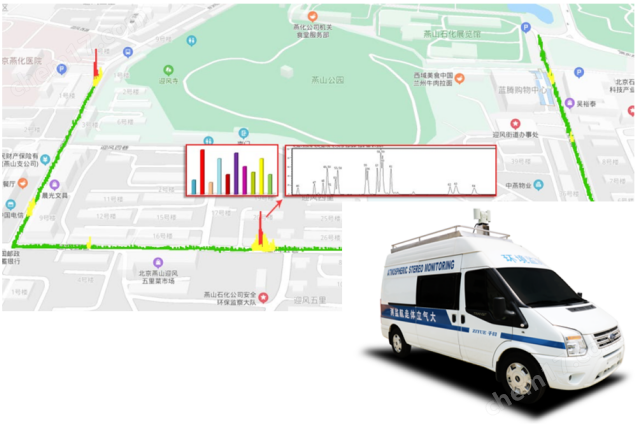
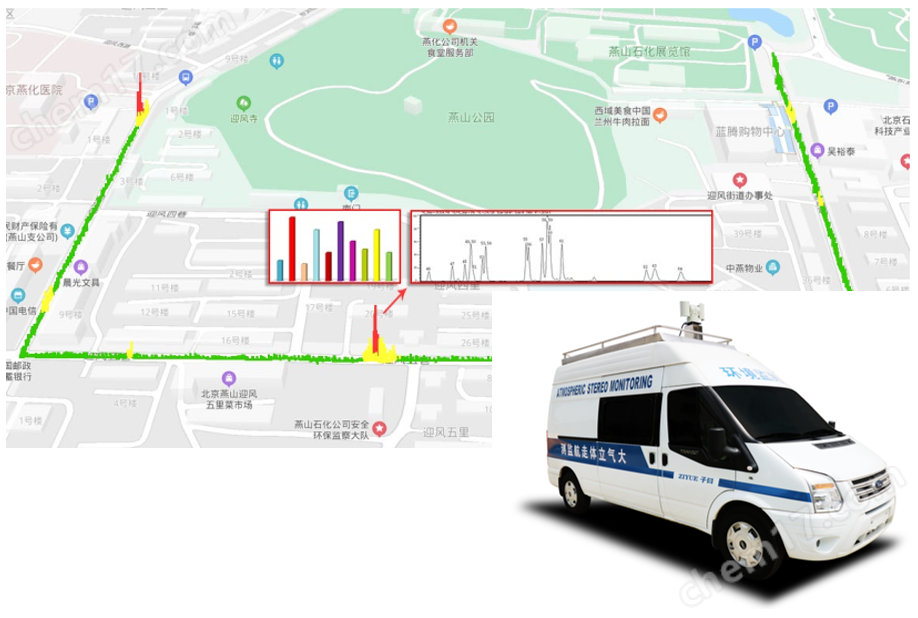
Schematic diagram of mobile remote sensing monitoring vehicle

Comparison of installation methods

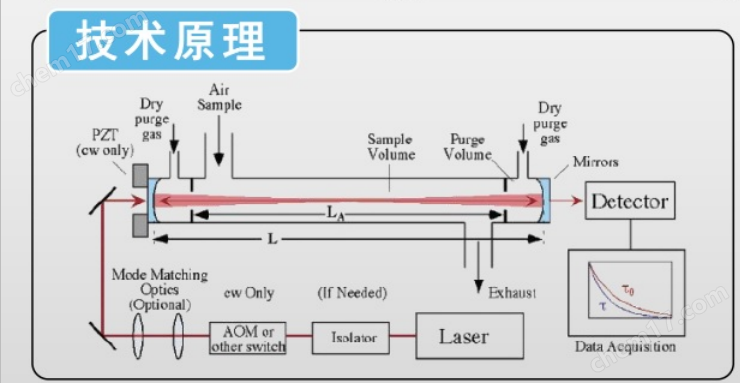
Measuring principle
(1) Using mid infrared tunable semiconductor laser absorption spectroscopy (TDLAS) technology to measure carbon monoxide (CO), carbon dioxide (CO2), hydrocarbons (HC), and nitric oxide (NO) is more accurate and the light source is more stable compared to other measurement methods;
(2) Using green laser or other equivalent light source with a wavelength of 550-570nm to detect the opacity of motor vehicles;
(3) Lingman Blackness can be captured using video camera equipment;
(4) The principle of opaque smoke measurement should comply with the relevant technical requirements of HJ845-2017 "Measurement Methods and Technical Requirements for Exhaust Pollutants of In Use Diesel Vehicles" (Remote Sensing Detection Method).
Comparison of different monitoring principles

Operation work content
The operation and maintenance work of the motor vehicle remote sensing monitoring platform mainly includes daily operation and maintenance, quality control management, data analysis services, etc. According to the latest national monitoring system technology requirements and specifications, regular inspections of the station environment, instruments and meters, data transmission, condition support and other operating status are carried out to promptly handle faults and do a good job in preventive maintenance; At the same time, regular monitoring and quality control management should be carried out to ensure the traceability and reliability of data. Analyze the data during the operation of remote sensing monitoring equipment and generate a report.
Implementation Plan
Point selection plan
(1) Located at important traffic intersections with high urban traffic flow, mainly consisting of national highways, provincial highways, national highways, provincial highways, and urban expressways;
(2) Located in the main passage for high pollution vehicles such as diesel trucks, it belongs to the logistics main passage of various cities, important port collection and distribution channels, or important transportation arteries;
(3) The starting area for vehicles located on a long uphill road with a certain slope or at a traffic light intersection, etc., and the traffic flow on this road section should be moderate. The vehicle speed should not exceed 80 kilometers per hour, and the time interval for each vehicle to pass should generally not be less than 1 second. The traffic flow on a single lane should not exceed 1000 vehicles per hour, and it should not be a road section that frequently experiences congestion;
(4) The testing location should have as little rain and fog as possible, with wind speeds mostly less than 5 meters per second, ambient temperatures between -20 and 45 ℃, relative humidity ≤ 85%, and atmospheric pressure between 70 and 106 kPa. According to the above environmental conditions, the testing point should generally not be located on roads such as the seaside, high mountain vents, or mountainous areas with severe rain and fog.
(5) The power supply and network installation, use, and maintenance conditions at the testing site are convenient, requiring a stable 220V power supply system and a public fiber optic or broadband network with a bandwidth of over 20M. It is best to locate the testing site around the road network information monitoring system (such as traffic flow monitoring points) led by the transportation department or the vehicle violation monitoring system (such as speeding capture points) led by the public security traffic management department, in order to facilitate the use of existing power supply and network conditions;
(6) When there are multiple sections of the same road (like a highway) within the same district (county) that meet the requirements, and the composition of the traffic flow in each section does not change significantly, one of them should be selected as the construction site.
Similar Product Recommend