-
E-mail
info@excipolar.com
-
Phone
15395560171
-
Address
Building 5, Chuangyan Port, Changzhou Science and Education City, No. 18-50 Changwu Middle Road, Wujin District, Changzhou City, Jiangsu Province, China
Product Categories
- Modular Microscopic Fluorescence Spectrometer
- Transient absorption spectrometer
- Second harmonic testing system
- Spatiotemporal Multidimensional Microscopic Angle Resolution Spectrometer
- In situ electrochemical interference scattering imaging system
- Confocal microscopy Raman/fluorescence spectrometer
- Confocal microscopy multidimensional spectrometer
- Confocal microscopy steady-state transient fluorescence spectroscopy system
Changzhou Puguang Huilian Technology Co., Ltd

Confocal microscopy steady-state transient fluorescence spectroscopy system
NegotiableUpdate on 02/06
- Model
- Nature of the Manufacturer
- Producers
- Product Category
- Place of Origin
Overview
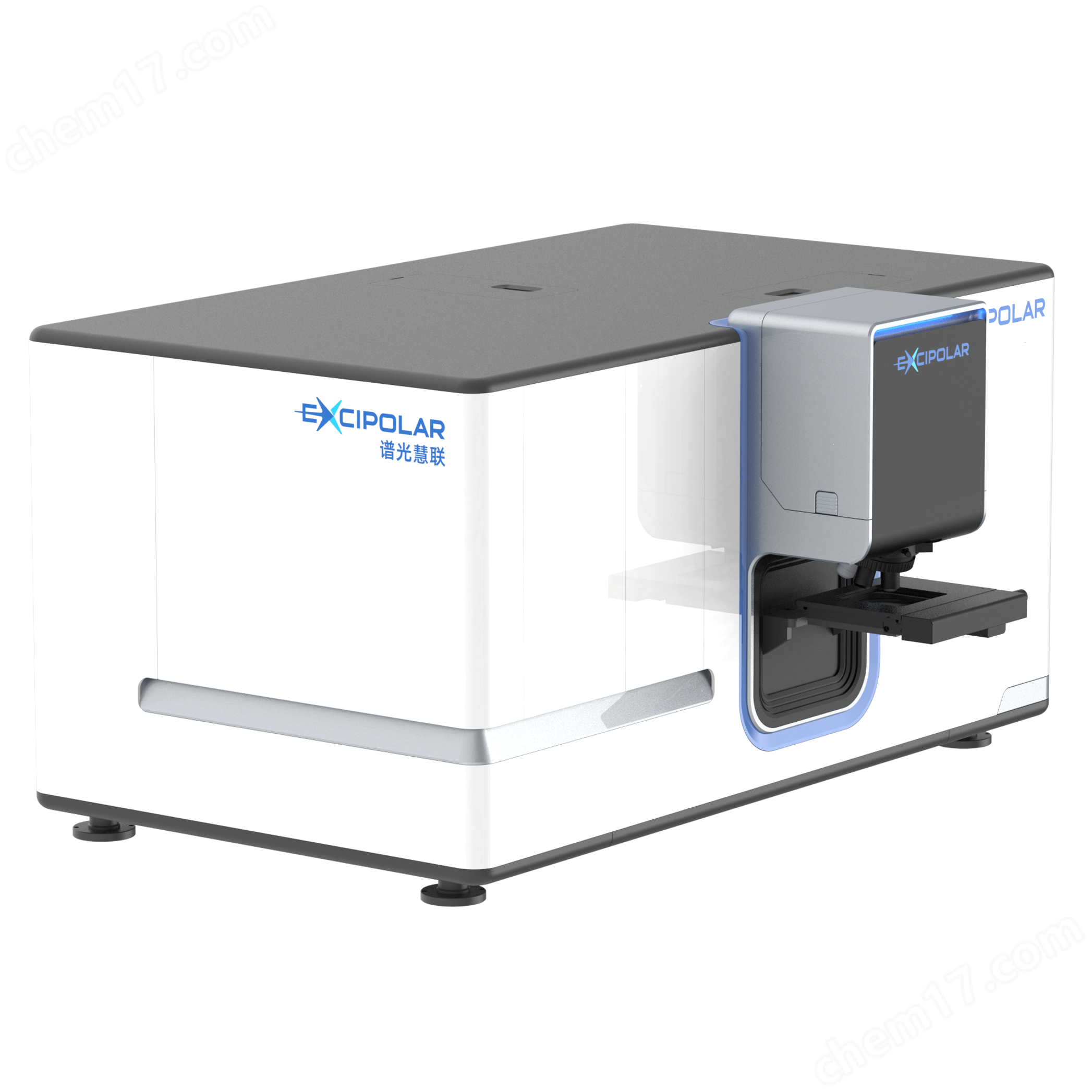
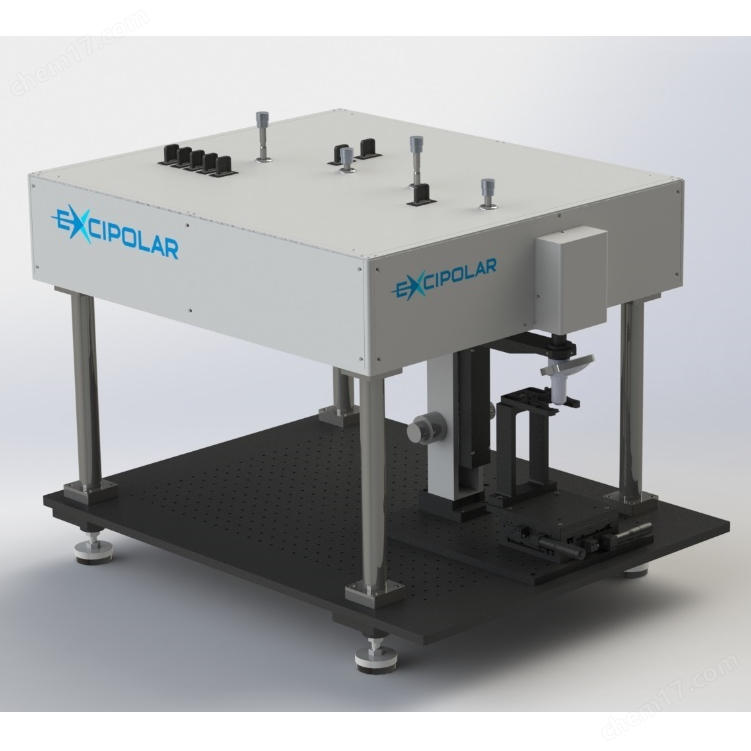
Excipolar Trion TRPL (FLIM) confocal microscopy steady-state transient fluorescence spectroscopy system $n • High performance transient fluorescence system covering a wide spectral range and multiple modes $n • Scalable multi physics field in-situ testing and AI intelligent operation and data analysis
Product Details
Excipolar Trion TRPL (FLIM) confocal microscopy transient fluorescence spectroscopy/fluorescence lifetime imaging system
High resolution, multi-dimensional, and more flexible
A self-developed integrated confocal microscopy transient fluorescence spectroscopy/fluorescence lifetime imaging system. The high-efficiency and high-throughput confocal optical path design, combined with a high-sensitivity single photon detector, can achieve high signal-to-noise ratio measurement of weak optical signals. Its pinhole confocal design enables spatial resolution to reach sub micron level. According to different application requirements, TCSPC or stripe camera systems can be configured to greatly suppress stray light while meeting high spectral resolution, ensuring the accuracy and repeatability of spectral data. The independent research and development of AI intelligent automatic focusing and adaptive light path greatly improves the stability of the system, as well as the simplicity and repeatability of operation. It can be extended to open testing environments such as Raman spectroscopy, angle resolved spectroscopy, polarization spectroscopy CPL, transient absorption, spatial conduction spectroscopy, laser scanning confocal imaging, etc., and combined with various in-situ environments such as high/low temperature, electric/magnetic field, stretching/compression, etc., to construct a multidimensional in-situ spectroscopy testing platform. Professional imaging and spectral acquisition software, realizing spectrometer and detector control, imaging and spectral data acquisition functions.
Confocal microscopy steady-state transient fluorescence spectroscopy systemMain Features
This system has undergoneProfessional design, integrated design of true confocal optical path, with high integration and stability
Equipped with a long focal length high-resolution image correction spectrometer, compatible with both spectral/imaging detectors and time-resolved detectors
• Scalable dual spectrometer configuration to meet more detection needs from PS - μ s time range, UV - NIR, etc.
• Extremely open, designed for application-oriented systems, compatible with mainstream expansion platforms in the market such as force, heat, electricity, and magnetism, meeting the needs of multi physics field testing.
Expand FLIM function, automate life fitting function, achieve exponential automatic curve fitting, high-precision sample stage scanning, and automatically achieve high-resolution FLIM imaging.
A professional multidimensional optical testing platform design that can expand functions such as confocal Raman spectroscopy, steady-state/transient absorption spectroscopy, and micro angle resolved spectroscopy, and achieve in-situ one click switching testing.
The company's R&D team has achieved various intelligent operations, including automatic calibration of the entire optical path, full process intelligent spectrum collection, automatic sample positioning and tracking, and database based characterization result calibration, through software and hardware collaborative intelligence to address various challenges encountered during the use of spectral equipment.
The intelligent detection equipment of Spectral Light Intelligent Connection has taken spectral instruments from "specialized" to "universal", solving the experimental constraints of researchers in interdisciplinary and non professional fields. From parameter settings, data acquisition to instrument calibration, the assistance of AI greatly reduces the threshold for instrument use, allowing researchers in more fields to focus on their own experimental exploration.
Confocal microscopy steady-state transient fluorescence spectroscopy systemApplication fields:
•Biomedical engineering, optoelectronic semiconductor materials, solar cells and other fields.


FLIM and Lifetime Statistics of Perovskite Solar Cells


FLIM of Chlorophyll in Cyanobacteria and Its Lifespan Statistical Chart


TRPL of CdSe quantum dots and ZnO nanowires


Microscopic fluorescence spectra of InGaAs quantum dots in a magnetic field and Microcystis aeruginosa on a filter membrane