-
E-mail
info@2ceco.com.cn
-
Phone
13691369094
-
Address
20H, Block A, Chengming Building, No. 2 Xizhimen South Street, Xicheng District, Beijing
Product Categories
Beijing Xiawei Shengtai Technology Co., Ltd
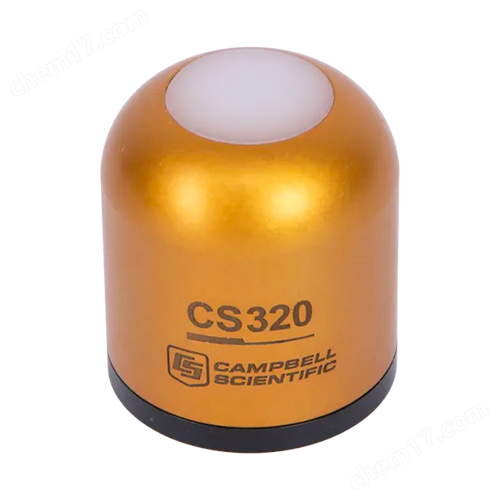
CS320 Solar Total Radiation Sensor
NegotiableUpdate on 02/04
- Model
- Nature of the Manufacturer
- Producers
- Product Category
- Place of Origin
Overview
The CS320 solar total radiation sensor is a digital thermopile radiation sensor that can measure wideband shortwave radiation and communicate with data acquisition through the SDI-12 protocol. The design of this product eliminates measurement and programming errors and improves data quality.
Product Details

Accurate measurement
digital output
cost-effective
CS320 Solar Total Radiation SensorIt is a digital thermopile radiation sensor that can measure wideband shortwave radiation SDI-12Protocol communicates with data acquisition. The design of this product eliminates measurement and programming errors and improves data quality.
This radiation sensor is designed for global solar radiation measurement (even under cloudy conditions) without significantly increasing costs. From environmental research to agriculture, and then to large-scale mesoscale meteorological networks,CS320All are applicable.
CS320The production uses high-grade anodized aluminum as the main body, andIP68Grade stainless steelM8Joint (maritime grade).CS320The heating can be turned on and off by the user and can operate continuously under changing environmental conditions. The calibration data of the total radiation meter is stored inside the sensor.
Advantages and Characteristics
u Thermopile sensors can eliminate spectral response errors related to the total radiation meter of silicon optical components
u More cost-effective than other thermopile sensors
u Integrated sensors can automatically detectCS320Whether the installation is level, conduct diagnosis and remote troubleshooting
u Long term stability and deployment design
u The dome shaped head design facilitates the flow of dew and rainwater
u Built in heater can reduce measurement errors caused by dew, fog, rainfall, and snowfall
u SDI-12digital output
u The waterproof joint connected to the sensor head can be disassembled for quick and easy maintenance
u Calibration data is stored inside the sensor
Details
CS320By combining a blackbody thermopile sensor with an acrylic diffuser, there is a significant improvement in spectral response compared to a radiation meter with silicon optoelectronic components, but at a similar price. The total radiation meter of a thermopile uses a series of thermoelectric connections (connecting two different metals at multiple points according to the principle of thermocouples), providing the equivalent of several based on the temperature difference between the black absorption surface and the standard sourceµV/W/m2Unit's signal. The black surface of the thermoelectric radiation meter uniformly absorbs solar radiation in the solar spectrum.
The power is0.2 WThe heater prevents water (liquid or frozen state) from adhering to the sensor surface, greatly reducing the impact of factors such as dew, fog, rainfall, and snowfall on the measurement. The sliding of dew and rainfall is achieved by the dome shaped sensor head (diffuser and body). This can keep the sensor clean and minimize errors caused by dust blocking the radiation path. The sensor is encapsulated in a sturdy anodized aluminum body, which seals the electronic components and maximizes the protection of internal components.
Through a customized calibration process,CS320Each sensor in the total radiation meter has a calibration coefficient. At the factory, the calibration coefficient has been written into the microprocessor inside the sensor.CS320supportSDI-12Output(SDI-12version1.4)Short wave radiation(W/m2)It will be returned in numerical format.CS320The measurement of total radiation meter needs to be supportedSDI-12Measurement equipment for the protocol, includingMorCCommand.
Technical Specifications
sensor |
Thermopile sensors, acrylic diffusers, heaters, and signal processing circuits are packaged in an aluminum casing |
|
Measurement description |
Measure spectral shortwave radiation |
|
ISO classification |
Class C (Level 2) |
|
Calibration uncertainty |
± 2.6% |
|
Measurement interval |
0 to 2000 W/m2(Net shortwave radiation) |
|
Measurement repeatability |
< 1% |
|
Long term drift |
<2% (per year) |
|
nonlinear |
< 1% |
|
sensitivity |
0.057 mV/W/m2 |
|
sensor type |
Blackbody thermoelectric stack |
|
SDI-12 response time |
2 s |
|
Perspective(FOV) |
180° |
|
spectral range |
385 to 2105 nm |
|
Directional (cosine) correspondence |
< ±20 W/m2(At the 80 ° solar zenith) |
|
temperature response |
< 5% (-15~+45 ℃) |
|
output |
SDI-12 (v 1.4) 1200 bps |
|
Zero point compensationA |
8 W/m2 |
|
Zero point compensationB |
< 5 W/m2 |
|
Operating temperature range |
-50 to+60 ℃ |
|
Operating environment |
0-100% relative humidity |
|
heater |
0.2 W (on circuit board) |
|
Heater power requirements |
25 mA current consumption @ 12 VDC |
|
Input voltage requirements |
6 - 24 VDC |
|
Current consumption |
3 mA (standby), 5 mA (measurement) |
|
Daily total uncertainty |
< 5% |
|
Cloud layer generation error |
±2 % |
|
Mechanical grade |
IP66/68 |
|
Factory calibration |
Based on the second level standard blackbody thermoelectric total radiation meter, traced back to the World Radiation Standard in Davos, Switzerland |
|
warranty |
4 years, targeting material and process defects |
|
diameter |
3.43 cm (1.35 in.) |
|
height |
3.96 cm (1.56 in.) |
|
weight |
~65 g (2.3oz) packaging shell may cause weight changes |
|