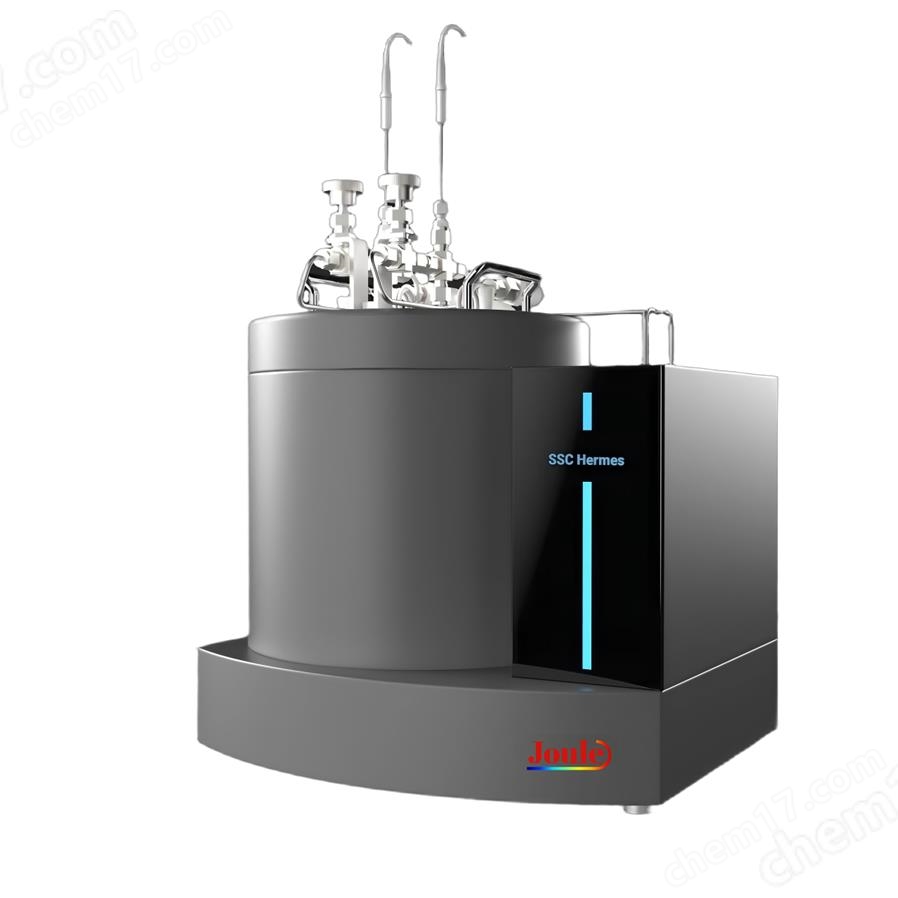
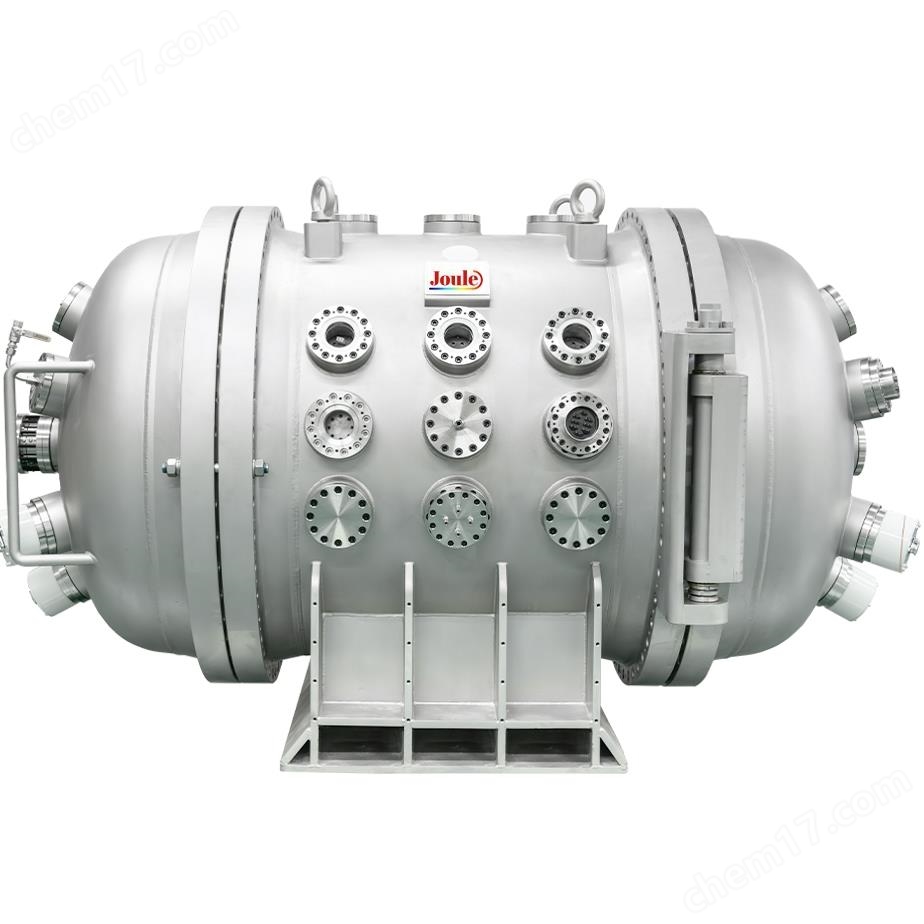
-
E-mail
hzjoule@163.com
-
Phone
19012707638
-
Address
No. 598 Hejing Road, Hezhuang Street, Qiantang District, Hangzhou City, Zhejiang Province
Product Categories
Hangzhou Joule Intelligent Technology Co., Ltd

Battery adiabatic temperature rise test
NegotiableUpdate on 02/07
- Model
- Nature of the Manufacturer
- Producers
- Product Category
- Place of Origin
Overview
The battery adiabatic temperature rise test has the characteristics of simple operation, smooth experimental start-up and operation, accurate experimental data collection, and reliable data analysis. Integrated with thermal and electrical abuse functions, it synchronously collects data on battery voltage, current, charge, temperature, pressure, and time under various abuse conditions.
Product Details
Battery adiabatic temperature rise testIntroduction
The lithium battery adiabatic temperature rise tester is an instrument specially developed for the GB/T36276-2023 standard "Lithium ion batteries for electric energy storage". This instrument provides accurate data for lithium battery enterprises to optimize battery design, guide thermal management system design, and establish battery thermal models.
Battery adiabatic temperature rise testTest Standard
GB/T36276-2023
Product specifications and technical parameters
|
Product Model |
ARC Titans-Eco |
|
Container diameter |
450 |
|
Container depth |
550 |
|
Temperature control range |
40℃~150℃ |
|
Temperature Control Mode |
Adiabatic temperature rise mode |
|
Temperature rise rate detection threshold |
/ |
|
Temperature tracking rate |
/ |
|
Temperature display resolution |
0.001℃ |
|
Temperature stability of calorimeter chamber |
±0.002℃/min |
|
temperature fluctuation |
≤±0.05℃ |
|
Furnace cover opening method |
manual |
Optional features
|
Module Name |
function |
|
Charging and discharging module |
Excessive use of electricity leads to thermal runaway, as well as testing for heat generation during charging and discharging |
|
Explosion proof module |
3.5mm stainless steel explosion-proof box |
Product Features
Thermal insulation environment simulation: isolate external heat exchange and accurately measure battery temperature changes.
High precision temperature control: Fast response to temperature changes, high temperature control accuracy, ensuring reliable data.
In situ calibration of sensors: The consistency between the sample and the furnace thermocouple is tested in situ calibration, without the need for frequent temperature baseline.
Installation requirements
|
Electrical requirements |
380V |
|
Venue requirements |
Flat ground, recommended on the first floor |
|
Environmental Requirements |
The equipment should be placed horizontally in a well ventilated laboratory, with sufficient space around for operation and maintenance.
Temperature: 25 ± 5 ° C, Humidity: 50 ± 25% RH |
|
environmental requirements |
During the experiment, smoke will be generated. It is recommended to install a smoke collection hood and exhaust duct above the equipment to solve the problem of smoke emissions |
Battery adiabatic temperature rise testIt is the core means of evaluating the thermal stability and safety performance of batteries in adiabatic environments, and the process must strictly follow national standards and international regulations. The specific process and key elements are as follows:
1. Test purpose and standard basis
Core objective: Quantify the self heat release characteristics of batteries under no external heat exchange conditions, identify critical points of thermal runaway, and verify the effectiveness of battery safety design (such as explosion-proof valves and insulation materials).
Standard requirements:
GB/T36276-2023: It is stipulated that the battery cell should be gradually heated from 40 ℃ to 130 ℃ in an adiabatic environment, and the temperature rise rate should be recorded every 5 ℃ step; When the surface temperature is required to be ≤ the first level high temperature alarm temperature, the temperature rise rate should be < 0.02 ℃/min, and there should be no fire, explosion, or rupture outside the explosion-proof valve.
UL1973: Require batteries to have no self ignition, no excessive expansion, and no deformation of the casing and connecting components in an environment of 55 ℃.
2. Testing equipment and environment
Core equipment: adiabatic calorimeter, large battery adiabatic calorimeter, temperature sensor (thermocouple), data acquisition system.
Environmental requirements:
Temperature control accuracy: ± 0.05 ℃ (e.g. temperature stability of adiabatic calorimeter ≤ ± 0.002 ℃/min).
Site safety: equipped with explosion-proof ventilation system, fire extinguishing equipment, isolation barriers, and operators need to wear protective equipment.
Sample pretreatment: The battery needs to be initialized and charged to the specified SOC (such as 95%), and left to stand in an environment of 22 ℃± 5 ℃ for 24 hours.
3. Detailed explanation of testing steps
Sample preparation:
Select battery samples that meet standard specifications (such as iron lithium batteries, sodium ion batteries), label and register them.
Install temperature sensors at key locations such as the battery surface and positive and negative electrodes, ensuring a tight fit with the sample surface (such as fixing with high-temperature resistant tape).
Construction of adiabatic environment:
Place the sample inside the adiabatic calorimeter chamber, close the furnace cover and seal it, and activate the adiabatic mode (isolating external heat exchange).
Set the starting temperature (such as 40 ℃), temperature rise step size (5 ℃), ending temperature (130 ℃), and data acquisition interval (such as 0.01min).
Heating and monitoring:
Heating stage: Gradually heat in steps of 5 ℃, and let it stand for 1-5 hours at each step (the new standard extends the standing time to improve data stability). Record parameters such as temperature, temperature rise rate, and voltage.
Key monitoring point: Trigger warning when temperature rise rate ≥ 0.02 ℃/min; Determine the starting point of self heat release when the temperature reaches 130 ℃.
Abnormal observation: Real time recording of physical phenomena such as expansion, leakage, smoking, fire, explosion, etc.
Termination and post-processing:
After reaching the termination conditions (such as exceeding the temperature rise rate or sample rupture) or completing the full temperature rise cycle, stop heating and cool to room temperature.
Remove the sensor, take out the sample and inspect its appearance (such as the location of rupture and leakage), generate a temperature temperature rise rate curve and test report.
4. Safety measures and emergency management
Equipment safety: Use explosion-proof heating devices, activated carbon adsorption exhaust gas, and n-hexane automatic recovery systems to avoid toxic reagent leakage.
Personnel protection: Operators need to monitor outside the isolation barrier, equipped with emergency power-off devices, fire extinguishers, and emergency escape routes.
BMS linkage: The battery management system monitors real-time parameters such as temperature, voltage, and air pressure. When an alarm is triggered, it automatically shuts down and uploads data to the remote platform to ensure personnel evacuation within 15 minutes.
Data traceability: All test data must meet GLP standards, support traceable analysis, and be used to optimize battery thermal management design (such as heat dissipation structure and insulation materials).
5. Data analysis and judgment
Core indicators: temperature rise rate, maximum temperature, critical point of thermal runaway (such as 130 ℃), physical integrity (no rupture/explosion).
Similar Product Recommend