-
E-mail
wuzq1970@126.com
-
Phone
13601525919
-
Address
206 Qingyang North Road, Changzhou
Product Categories
Jiangsu Peide Water Treatment Equipment Co., Ltd

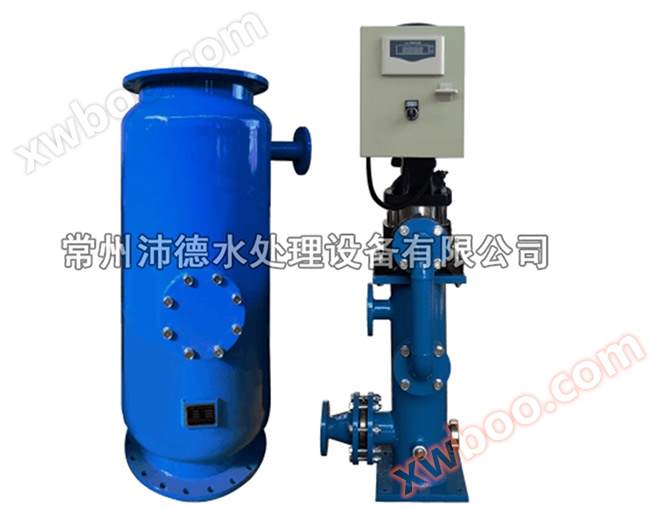
Automatic cleaning device for condenser rubber balls
NegotiableUpdate on 03/19
- Model
- Nature of the Manufacturer
- Producers
- Product Category
- Place of Origin
Overview
The automatic cleaning device for condenser rubber balls (hereinafter referred to as the cleaning device) is a device that uses physical methods to clean the inner walls of the heat exchange tubes of central air conditioning condensers. During the cooling process of central air conditioning, the temperature of the refrigerant increases and must be cooled. The cooling water system is a piping system used to cool the refrigerant. The condenser is a heat exchange device for cooling the refrigerant, and the cooling water enters the condenser and flows through the inner wall of the heat exchange tube before exiting. The cooling refrigerant flows through the outer wall of the heat exchange tube, and the condenser exchanges heat through the heat exchange tube, thereby cooling the refrigerant. The cooling water enters the condenser at low temperature to absorb heat and flows out at high temperature. After long-term operation, scale and stains will deposit on the inner wall of the heat exchange tube, affecting the heat exchange efficiency. If the refrigerant cooling is small, it will affect the refrigeration effect, increase the load on the central air conditioning unit, and reduce the service life of the central air conditioning unit. Therefore, it is necessary to regularly clean the inner wall of the condenser heat exchange tube to extend the service life of the central air conditioning unit.
Product Details
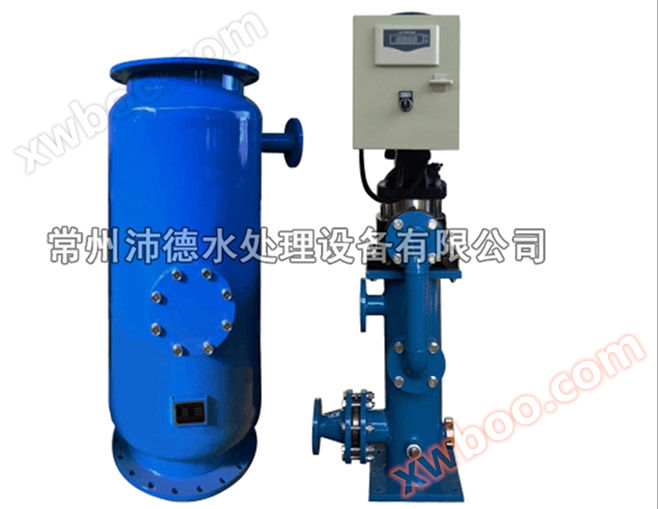
Automatic cleaning device for condenser rubber balls
Product model: PCE-PD-N
Overview of automatic cleaning device for condenser rubber balls
The automatic cleaning device for condenser rubber balls (hereinafter referred to as the cleaning device) is a device that uses physical methods to clean the inner walls of the heat exchange tubes of central air conditioning condensers. During the cooling process of central air conditioning, the temperature of the refrigerant increases and must be cooled. The cooling water system is a piping system used to cool the refrigerant. The condenser is a heat exchange device for cooling the refrigerant, and the cooling water enters the condenser and flows through the inner wall of the heat exchange tube before exiting. The cooling refrigerant flows through the outer wall of the heat exchange tube, and the condenser exchanges heat through the heat exchange tube, thereby cooling the refrigerant. The cooling water enters the condenser at low temperature to absorb heat and flows out at high temperature. After long-term operation, scale and stains will deposit on the inner wall of the heat exchange tube, affecting the heat exchange efficiency. If the refrigerant cooling is small, it will affect the refrigeration effect, increase the load on the central air conditioning unit, and reduce the service life of the central air conditioning unit. Therefore, it is necessary to regularly clean the inner wall of the condenser heat exchange tube to extend the service life of the central air conditioning unit.
Scale not only reduces heat transfer efficiency, but also increases water resistance. Easy to cause corrosion, reduce product lifespan, and increase costs. The impact on the refrigeration system may vary depending on different usage scenarios. But for every system, it exists and is in a dynamic equilibrium. There are many water treatment agents that can dissolve or peel off the crystalline scale of Ca/Mg salt (or alkali). But biological sludge and scale generally continue to grow, which is why even if water treatment is done well, it still needs to be cleaned every year.
The condenser online cleaning system is a device that automatically cleans the inner wall of the condenser heat exchange tube through physical means during the operation of the refrigeration unit. By spraying and recycling rubber spheres, periodic cleaning of heat exchange pipelines can be achieved. Once the system is installed, it can reduce the use of water treatment agents, improve the refrigeration efficiency of the unit, and save electricity.
For actual operation of chilled water systems, there are usually several situations where the inner wall of the condenser is contaminated:
1. Scale: A relatively hard layer of scale that is prone to occur when the condenser temperature is high and the water hardness is high. Conventional water treatment agents are capable of addressing this issue.
2. Organic matter: Microorganisms, fungi, or algae film attached to the inner wall of the pipeline, which is a loose viscous body with high thermal resistance, causing harm to heat transfer.
3. Impurities and particles: Due to the presence of a certain thickness of laminar flow layer on the inner wall of the pipeline, the flow velocity is very low, especially when particles and organic mixtures adhere, they will form relatively stable sludge.
4. Corrosion: Acid dissolved in water is the main cause of machine corrosion. If corrosive ions such as carbonate ions coexist with other sources of pollution, their corrosiveness will increase, thereby shortening the service life of system equipment and water pipes.
Function of automatic cleaning device for condenser rubber balls
<p #2c6094"="" size="1" style="margin: 0px; padding: 0px; word-spacing: 10px; font-size: 14px; color: rgb(102, 102, 102); Font family: Song typeface; ">
Working principle of automatic cleaning device for condenser rubber balls
Insert sponge balls from the hand hole of the ball loading chamber into the chamber, with a quantity of 7% to 13% of the cooling pipes in the condenser inlet chamber. Then start the rubber ball pump and open the control valve in the system. Under the action of the rubber ball pump, the rubber ball is driven by a water flow slightly higher than the inlet pressure of the circulating water and sent into the circulating water inlet pipe. With the flow of circulating water, the rubber ball enters the condenser water chamber. As the rubber ball is a multidimensional microporous soft elastic body, it is squeezed through the cooling tube under the pressure difference between the inlet and outlet of the circulating water. The inner diameter of the cooling tube is cleaned once, causing the dirt on the inner wall of the tube to be carried out with the water flow. After passing through the condenser tube, the rubber ball enters the ball collection net together with the circulating water. Under the obstruction of the ball collection net plate, the rubber ball is separated and then pumped out by the ball collection pump before entering the ball loading chamber. In this cycle, the rubber ball continuously and automatically cleans the inner wall of the condenser cooling pipe to keep it clean.
1. Delivery: The rubber ball is loaded into the delivery device, electric valves 3 and 4 are closed, and electric valves 1 and 2 are opened. When the valve is opened to the maximum position, pump 1 (delivery pump) is started. The water flow switch sends a signal, and pump 1 continues to operate. The rubber ball in the delivery device enters the condenser inlet together with the water flow. Under the pressure of the cooling water, the rubber ball is squeezed into the heat exchange tube to clean the inner wall. After leaving the heat exchange tube, it enters the receiver and is blocked by the net. The cooling water enters the cooling water system pipeline through the mesh and continues to circulate. At this point, the first delivery cleaning is completed.
2. Ball collection: Close electric valves 1 and 2, stop pump 1 (serving pump), open electric valves 3 and 4, wait for the valves to open to the maximum position, start pump 2 (ball collection pump), the water flow switch sends a signal, pump 2 continues to operate, and the rubber balls in the ball collector enter the ball launcher together with the water flow. The rubber balls are blocked by the net, and the water returns to the cooling water system pipeline. After all the rubber balls are collected, close electric valves 3 and 4, and stop pump 2 (ball collection pump). At this point, the ball collection is complete.
The above two parts of serving and receiving the ball together constitute one rubber ball cleaning process, which can be cleaned multiple times by setting the total time.
Control mode of automatic cleaning device for condenser rubber ball
The controller can set the cleaning frequency or time, as well as the automatic operation function with the opening of the air conditioning unit, to achieve fully automatic online cleaning.
Comparison between our company's automatic cleaning device for condenser rubber balls and peers
| Pei De | of the same trade or occupation |
|
1. Dual pump design, the rubber ball does not pass through the water pump. No water pump, no water The cutting of pump impeller has a long service life, with a single pump type lasting 50-90%. 2. The inlet and outlet of the ball serve are located at the inlet of the condenser, and the inlet and outlet of the ball receive are located at the inlet and outlet of the condenser At the outlet of the condenser. No impact on the temperature of chilled water, ensuring cooling effect Power saving of 1.5-2.5%. 3. The rubber ball passes through the pipeline using a valve that does not clamp the ball. |
1. Due to the cutting of the blades when the rubber ball passes through the water pump impeller Friction, compression, high damage rate, and a lifespan of only 3-4 months. 2. The cooling water and chilled water in the cleaning device pipeline account for 1.5-2.5% Mixed. To ensure cooling effect, power consumption is increased by 1.5-2.5%. 3. Ordinary butterfly valves are prone to scratching and pinching the rubber ball. |
Composition of the automatic cleaning device system for condenser rubber balls
Server: a container for storing rubber balls, used for launching and retrieving rubber balls. The installation position of the server and the connecting pipes at the inlet and outlet should ensure even ball feeding and prevent blockage.
Sponge ball: Clean the inner wall of the condenser heat exchange tube. The rubber ball should have uniform density and good recovery performance. When operating at a water temperature of 5-36 ℃, the diameter of the wet rubber ball should not exceed the diameter of the dry rubber ball by 0.5 millimeters. During operation, the diameter of the rubber ball should be 1-2mm larger than the inner diameter of the heat exchange tube. It should remain stable during operation to prevent the rubber ball from blocking the cooling water tube.
Ball collector: When the ball leaves the condenser, it is captured by the ball collector. The overall material is carbon steel or stainless steel, with a pressure of 10-16 bar, an effective flow area greater than three times that of the connecting pipeline, and a fluid resistance loss of less than 5 Kpa. The design of the ball collecting net should have good hydraulic characteristics to prevent the net plate from vibrating under water flow impact. The design of the ball collecting net should ensure that there is no ball blockage or ball running.
Microcomputer controller: automatic control, setting cleaning frequency and time.
Dimensions of the automatic cleaning device for condenser rubber balls
|
Height (mm) |
Length (mm) |
Width (mm) |
|
1300 |
950 |
800 |
Specification parameters of automatic cleaning device for condenser rubber ball
1. Performance indicator: ball collection rate ≥ 99%
2. Input voltage: 380V/50HZ
3. Power: ≤ 5KW
4. Work environment requirements: temperature ≤ 55 ℃, relative humidity ≤ 95 ℃
5. Pressure loss: 0.003MPa-0.05MPa
6. Applicable water temperature: ≤ 50 ℃
7. Work pressure: ≤ 1.6MPa
|
Serial Number |
model |
Selection reference, based on the actual diameter of the cooling water pipe |
|
1 |
PCE-PD-150-N |
Conventional engines with a cold ton capacity of less than 200 |
|
2 |
PCE-PD-200-N |
200-500 cold ton conventional host |
|
3 |
PCE-PD-250-N |
300-500 cold ton conventional host |
|
4 |
PCE-PD-300-N |
500-800 cold ton conventional host |
|
5 |
PCE-PD-350-N |
600-1000 cold ton conventional host |
|
6 |
PCE-PD-400-N |
1000-1500 cold ton conventional host |
|
7 |
PCE-PD-450-N |
Conventional engines with a cold ton capacity of over 1500 |
Precautions for selection of automatic cleaning device for condenser rubber ball
The water quality treatment design of the circulating cooling water system of the chiller unit shall comply with the requirements of the national standard "Design Specification for Industrial Circulating Cooling Water Treatment" GB50050-2007.
The design and selection of the online rubber ball cleaning device for the condenser are determined based on the cooling capacity of the chiller and the diameter of the cooling water outlet pipe. The size of the rubber ball is determined by the inner diameter of the heat exchange pipe of the condenser of the chiller. The condenser online rubber ball cleaning device has an input power supply of AC 3 × 380v/50HZ for the ball machine, with a power range of 1.5KW-5.5KW and a daily power consumption of<1kWh. Working environment temperature: 0 ℃~+60 ℃ Humidity: 20-95%
The online rubber ball cleaning device for the condenser should leave a maintenance space of no less than 600mm around the launching machine.
The online rubber ball cleaning device for the condenser should be arranged as close as possible to the inlet of the condenser.
3. Usage conditions for online rubber ball cleaning device of condenser: There should be no impurities or foreign objects in the heat exchange tube to prevent the passage of rubber balls. The water should not contain impurities with a particle size greater than 1.5mm, which can cause blockage of the heat exchange tubes and ball collectors.
In order to prevent welding slag, welding rods, metal debris, sand and gravel, organic fabrics during installation, as well as foreign objects such as cooling tower fillers and rust in cooling pipes generated during operation from entering the condenser and evaporator, a filter with a filter aperture of no more than 1.5mm should be installed before the inlet of the chiller condenser (evaporator) during design, and the effective filtering area of the filter should be greater than three times the cross-sectional area of the connecting pipeline to ensure that the water resistance of the filter is reasonable.
4. Regarding the suggestion to design and install a P-type filter at the inlet of the condenser (evaporator): Due to the layout of many chiller rooms, the distance from the outlet of the circulating water pump to the inlet of the chiller is relatively long, and there are many bends, parallel pipes, and branch pipes. There are also many hidden dangers of welding slag and welding slag during installation. In addition, the rust on the inner wall of the pipeline falls off after the system is drained during the non cooling season; So even though a qualified filter is installed at the inlet of the water pump, there are often large-sized foreign objects present in the heat exchange tubes of the condenser (evaporator) of the chiller unit. So in order to avoid the above situation, considering the economy and the convenience of regularly cleaning foreign objects in the filter, it is strongly recommended to design and install the filter.
Characteristics of automatic cleaning device for condenser rubber ball
1. Fully automated: The programmable controller controlled by a microprocessor is responsible for all operations of the condenser online cleaning system without the need for human intervention.
2. Reliability: The injection valve and drain valve are the only movable components, thus enhancing the reliability of the condenser online cleaning system.
3. Maintenance free: Because only two valves are movable, there is almost no need for maintenance to keep the condenser online cleaning system running. This reduces operating costs and frees up insufficient maintenance personnel for other critical maintenance work.
4. Low operating cost: Sponge balls are the only consumables and must be replaced every five months. The standard annual cost of using sponge balls for a 500 ton central air conditioner is $80.
Advantages of automatic cleaning device for condenser rubber balls
1. A simple and reliable online cleaning device that does not require shutdown and can provide long-term thorough and effective cleaning.
2. Fully automatic control, can set the cleaning frequency and time by oneself.
3. Keeping the condenser in the optimal heat exchange state effectively improves the overall efficiency of the unit and reduces operating costs.
4. Reduce the maintenance cost of central air conditioning, minimize the use of chemical agents, and reduce the corrosion of condenser heat exchange tubes.
5. Prevent the central air conditioning compressor from overloading and extend the service life of the unit.
6. Saving the downtime and maintenance time of central air conditioning is very beneficial for production units.
7. The rubber ball has a long service life and only circulates in the pipeline to avoid damage to the rubber ball by the water pump.
8. Small size, easy operation, and convenient installation.
Design Analysis
1. Through optimized design, the rubber ball does not pass through the water pump impeller, preventing damage to the rubber ball caused by the rotation of the water pump impeller.
A dedicated ball collection pump is set up for ball collection, which achieves a ball collection rate of 100% compared to other similar equipment. Other methods cannot guarantee a ball collection rate of 100%.
2. The inlet and outlet of the ball launcher are both located at the inlet end of the condenser, and the inlet and outlet of the ball receiver are located at the outlet end of the condenser, which has no effect on the temperature of the cooling water and ensures the cooling effect. Compared with similar products, it saves 5-8% energy.
3. Using a water flow switch to control the start and stop of the water pump, preventing it from running without water and protecting it.
4. The rubber ball passes through the pipeline using PVC electric ball valves and PVC pipes, with smooth inner walls to reduce obstacles to the movement of the rubber ball, and will not scratch or pinch the rubber ball.
5. Fully automatic circuit control, capable of setting the cleaning time and frequency for each cleaning session.
investment analysis
1. The investment payback period is short, and increasing the heat exchange rate can save 8-15%. The entire investment in PD technology equipment can be recovered within 5000 hours of using the air conditioner, and the annual electricity savings thereafter are all net benefits.
2. Save the cost of chemical cleaning of the condenser every year and reduce the management and maintenance costs of the central air conditioning system.
3. Avoiding corrosion of the condenser tube wall by chemical agents and microbial films prolongs the service life of the air conditioning system.
4. Financial rewards or subsidies for energy-saving renovation can be obtained from relevant government departments.
5. For local government departments, the promotion and use of PD technology can help achieve energy-saving and emission reduction targets, protect the environment, reduce waste, build a conservation oriented society, and benefit future generations' social interests.
Benefit analysis
1. Improve operational efficiency: Because the online cleaning system of the condenser can permanently remove scaling from the condenser tubes, the operation of the compressor never exceeds the design limit, so the central air conditioning will operate at its optimal efficiency.
2. Extend the lifespan of central air conditioning and reduce maintenance: Because the compressor never operates beyond its design limit, the lifespan of the equipment is extended, thereby improving the efficiency and return on investment of central air conditioning. Less maintenance is still necessary.
3. Energy saving: After installing the condenser ball automatic cleaning device on the central air conditioning unit, the condenser operates in a clean state without dirt. Taking the example of a 300 ton cold ton unit (input power of 200KW) running for 5000 hours per year:
Power consumption=200KW × 80% host load × 5000 hours of startup=800000 kWh, calculated at a rate of 1.0 yuan/kWh, the corresponding cost is:
800000 degrees x 1.0 yuan/degree=800000 yuan
If PD equipment is not installed, as the host usage time increases, the scaling inside the condenser tube becomes thicker, the heat transfer efficiency decreases, and the cooling load remains unchanged, resulting in an increase in compressor operating power and corresponding energy consumption. The detailed parameters are shown in the table below:
|
Scale thickness |
0.3 |
0.6 |
1.0 |
|
Increase energy consumption percentage |
10% |
20% |
30% |
|
increased cost |
80000 |
160000 |
248000 |
4. Reduce water treatment costs: Because the condenser online cleaning system can permanently remove scaling from the condenser tubes, water treatment only needs to be used to prevent scaling of some auxiliary equipment, such as cooling towers and valves. An independent audit by the manufacturing plant found that the installation of an online condenser cleaning system reduced the cost of chemicals used to treat water by 51%. In an audit of another commercial building with two 300 ton central air conditioners, the total hardness and total dissolved solids were reduced by 51% and 53%, respectively.
5. Preventing corrosion of condenser tubes: Microbial corrosion and concentrated cell corrosion are caused by scaling on the tube wall. Because the condenser online cleaning system can prevent pipeline scaling, these corrosion mechanisms are eliminated, thereby extending the lifespan of the pipeline.
Scope of application of automatic cleaning device for condenser rubber ball
Applicable to the following high-energy consumption systems
Non cooling refrigeration equipment
Constant temperature and humidity control system
Power plant condenser (for fresh water and seawater)
Water cooling system for ships
● Supporting facilities
Buildings, hotels, shopping malls, banks, hospitals, and other public facilities
● Freezing facilities
Chain supermarkets, refrigerated warehouses
Chemical factories
Cooling system on the production line
Manufacturers of electronic components, semiconductor integrated circuits, LCD displays, and other related products
Constant temperature and humidity control system
● Power plant
Prevent contamination of condenser pipelines and maximize power generation efficiency
Rubber ball
As one of the important means to improve the operational efficiency of power plants, the online condenser ball cleaning system has become a standard configuration for power plants, and the quality of the ball is one of the key elements of this system.
(1) Types of rubber balls
·Standard peeling rubber ball
Standard stripped rubber balls are particularly suitable for various condenser copper tubes, and are also the most commonly used type of rubber ball in power plants. Rubber balls are made from natural rubber with foam and special additives. Standard peeling rubber balls can be used for various rubber ball cleaning equipment and water quality. Peel rubber balls effectively remove biofouling and highly viscous biofouling. Suitable for stainless steel and titanium alloy tube heat exchangers.
·Ordinary rubber ball
Ordinary rubber balls have a smooth surface and are mainly used to make standard peeled rubber balls after re peeling and grinding. Some power plants order smooth rubber balls because there is no hard deposition in the pipeline, and they are generally used for stainless steel pipes. But the effect on the use of copper pipes is not good. Mainly used to remove soft dirt, suitable for cooling water applications such as sludge, sticky mud, and sand Suitable for copper tube heat exchangers.
·Diamond sand ball
Diamond sand balls are divided into two types: full diamond sand balls and semi diamond sand balls. Diamond sand ball is suitable for removing various types of scaling and deposits from pipelines, but it can cause damage to the pipes. It is generally not used for a long time, especially for copper pipes, which should be used with caution. Effectively remove hard scale, such as calcium carbonate. Suitable for steel and stainless steel tube heat exchangers.
(2) Technical parameters and quality standards for cleaning the sponge rubber balls of the condenser
Rubber ball specifications and suitable cleaning copper tube inner diameter
|
Inner diameter of copper tube (mm) |
16 | 17 | 18 | 19 | 20 | 21 | 22 | 23 | 24 | 25 | |
|
Rubber ball diameter (mm) |
17 | 18 | 19 | 20 | 21 |
22 |
23 | 24 | 25 | 26 | |
·Appearance quality standards for rubber balls
1. Uniform hair pores, with pore sizes that are generally similar;
2. Holes with missing glue, depth not exceeding 3mm, no more than 3 per ball, and the total area of missing glue not exceeding 10% of the outer surface area;
3. Rubber ball diameter tolerance ± 0.5mm;
4. Ordinary ball with a diameter of 16- Φ 28, peeled ball with a diameter of 16- Φ 27, and diamond sand rubber ball with a diameter of 16- Φ 26.
·Physical performance
After soaking in water at 40 ± 1 ℃ for 48 hours, the wet density changes by 0.90-1.20g/cm3, and the diameter change rate does not exceed 10% of the ball diameter. Hard eccentric ball
When the water temperature is above 15 degrees, it will automatically suspend.
(3) Usage method
·Normal pitching volume
The number of single-sided single process cooling pipes for the condenser is 7% -13%. Depending on the length of time required for the rubber ball to cycle once, the lower or upper limit or its approximate value is taken. The time for the rubber ball to cycle once is generally limited to 30 seconds.
·Rubber ball replenishment cycle or replacement cycle
The replenishment cycle for rubber balls is 7 cumulative runs of the rubber ball cleaning system, which can also be adjusted according to the specific situation of our unit. According to the statistics of domestic ball usage, the replacement cycle for rubber balls is 60 cumulative runs of the rubber ball cleaning system. In addition, after soaking in water for a period of time, some rubber balls may swell too much, causing the diameter to exceed the standard. When supplementing and replacing rubber balls, they should be replaced in a timely manner to prevent the cooling pipe from being blocked.
(4) Conventional models
| name | Rubber ball diameter (mm) | |
| Ordinary rubber ball |
16. 17, 18, 19, 20, 21, 22, 23, 24, 25, 26, 28 |
|
| Diamond sand ball |
12. 14, 16, 17, 18, 19, 20, 21, 22, 23, 24, 25, 26, 28 |
|
| Standard peeling ball |
12. 14, 16, 17, 18, 19, 20, 21, 22, 23, 24, 25, 26, 28 |
|
(5) The use of rubber balls
1. The selection of the best rubber ball texture requires consideration of multiple factors, which should be beneficial for the recovery, circulation, and extension of the rubber ball's service life on the receiving net. The most commonly used rubber ball hardness is "M" medium hardness.
Generally speaking, the basic number of pitches per tube is usually about 10% of the total number of pitches per return trip of the condenser. For a multipole flash evaporation seawater desalination device, the basic number of balls thrown is 30-50% of the total number of tubes in each evaporator. The basic number of pitches for each system is determined by the number of pipes for each return of the condenser and the time for the rubber ball to cycle once. It is recommended that the cleaning time for each pipe be 5 minutes.
3. The service life of rubber balls is greatly affected by the frequency of rubber ball circulation and the condition of the metal surface of the heat exchange tube. According to practical experience, the service life of rubber balls is generally around 4-6 weeks, but depending on the site conditions and the frequency of rubber ball circulation, the service life of rubber balls can be greatly extended. The scaling and corrosion on the inner wall of the heat exchanger will significantly affect the service life of the rubber balls. When the rubber ball is severely worn, it should be considered to use diamond sand balls to smooth the rough metal surface.
4. Rubber balls should be stored in a cool and dry place, away from direct sunlight and heavy pressure.
(6) Scope of application of rubber balls
Applicable water temperature: up to 140 ℃
Applicable pipe materials: copper pipe, stainless steel pipe, titanium pipe
Characteristics of rubber balls: soft, medium soft, medium hard, hard
(7) Appearance quality standards
1. Uniform hair pores, with pore sizes that are generally similar;
2. Holes with missing glue, depth not exceeding 3mm, no more than 3 per ball, and the total area of missing glue not exceeding 10% of the outer surface area;
3. Rubber ball diameter tolerance ± 0.5mm;
4. Quality can be divided into three types: hard, medium hard, and medium soft;
5. Ordinary ball Φ 16- Φ 61, peeled ball Φ 16- Φ 61, diamond sand rubber ball Φ 16- Φ 61 (unique in the country).
Installation diagram of automatic cleaning device for condenser rubber ball