- Phone
-
Address
Room 4032, Building 1, No. 10 Hongfu Courtyard, Beiqijia Town, Changping District, Beijing
Product Categories
Beijing Gredeman Instrument Equipment Co., Ltd


Vibration ball mill GT300
NegotiableUpdate on 05/07
- Model
- Nature of the Manufacturer
- Producers
- Product Category
- Place of Origin
Overview
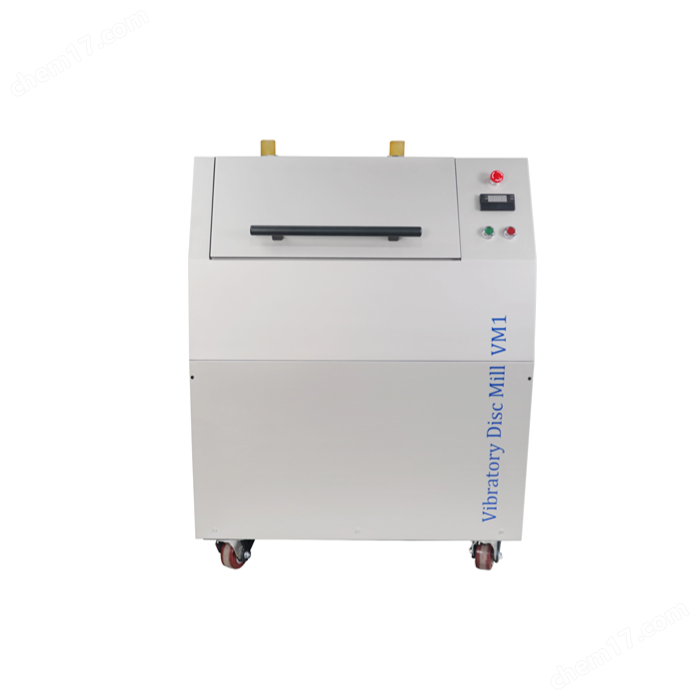
GT300 is a vibration ball mill designed and produced for modern laboratory applications, which can quickly dry grind, wet grind, or freeze grind small batches of samples, such as plant and animal tissue cells.
Product Details
Typical samples: animal and plant tissues, plant leaves, minerals, soil, glass, ceramics, rubber, plastic products, solid waste, electronic waste, paper, textiles, chemicals, tablets, traditional Chinese medicine, food, etc.
Vibration ball millAdopting a vertical high-speed oscillation mode, it can quickly promote rapid cell breakage, cell lysis, and tissue uniformity, making sample grinding more uniform; The repeatability of sample grinding is better, there is no cross contamination between samples, saving time and labor costs, making it a highly efficient sample pretreatment equipment. It also has a freezing component that can meet the needs of users for grinding and storing temperature sensitive samples.
1、 Working principle
Vibration ball millIt is achieved through vibration to crush and grind the sample. There are two rocker arms installed in its working area that can vibrate at high frequencies (up to 1500 times per minute). The rocker arms resemble mechanical arms and can be used to place ball mills or grinding adapters.
When the equipment is working, the two rocker arms make an '∞' - shaped motion, that is, horizontal swing, which drives the grinding ball inside the ball milling tank, endowing it with kinetic energy. The grinding ball undergoes high-frequency, irregular motion inside the container, achieving impact and compression of the sample, completing crushing and grinding.
IIVibration ball millThe detailed operation steps are as follows:
1. Add samples, grinding balls, and lysis solution (optional) to the centrifuge tube and cover it with a lid;
2. Place the centrifuge tube containing the sample into the adapter;
3. Immerse the adapter and centrifuge tube containing the sample in liquid nitrogen for pre freezing;
4. Install the adapter onto the host and lock the fixing device;
5. Observe the protective cover, set the parameters according to the requirements, and start grinding;
6. After the instrument stops vibrating, turn off the machine, open the safety door, and take out the sample;
7. Instrument reset.
3、 Process technology:
1. Flatness:
The flatness of the workpiece depends on the flatness of the grinding disc. With the continuous deepening of the processing field and the increasing requirements for precision and efficiency, "WEIANDA" has developed from cast iron disks, synthetic disks, copper disks, pure tin disks, resin disks to diamond disks, and has used various methods to repair the flat surface of the disks to a maximum of 2um.
2. Roughness:
The surface roughness depends on the size and shape of the abrasive particles, the material of the grinding disc, as well as the material and hardness of the workpiece.
3. Rough grinding:
Using coarse abrasive particles to grind on the grinding disc and workpiece surface, with a large feed rate and high efficiency; But the grinding surface is thicker, suitable for jobs with more grinding allowance.
4. Medium grinding:
Using moderately sized abrasive to grind on the grinding disc and workpiece surface, with fast feed rate, high efficiency, and moderate surface roughness, suitable for workpieces with average grinding volume.
5. Fine grinding:
Using finer grained abrasives to grind on the workpiece surface in the grinding disc results in smaller feed rates, better surface smoothness, and uniform and fine grinding marks.
6. Soft polishing:
By installing a special material polishing pad or polishing cloth on the grinding disc, the polishing material moves between the polishing pad or polishing cloth, making the workpiece have a mirror like high smoothness compared to hard polishing.
7. Hard polishing:
By adding micron sized diamond abrasives to highly precise substrates such as synthetic disks, copper disks, tin disks, resin disks, etc., the surface of the workpiece is made to have both high-precision flatness and mirror like high smoothness.
4、 Instructions for using the organizational grinder:
1. Place the instrument in a dry and ventilated environment, plug in the power, and observe whether the instrument control display lights up normally. Turn on the instrument and test whether the control buttons can be used normally, and whether there is any abnormal noise when the instrument runs without load.
2. Place an appropriate amount of samples and grinding balls into the ball mill jar, leaving a certain amount of grinding space. For the initial grinding, it is recommended to keep the sample and grinding ball each occupying one-third of the volume of the ball milling jar.
3. If pre freezing is required, the ball mill jar containing the sample can be placed in a liquid nitrogen environment and cooled for more than 3 minutes before being loaded into the instrument for grinding. When using liquid nitrogen for pre freezing, protective measures should be taken to prevent freezing Injury.
4. Place the ball mill jar inVibrating ballSlowly rotate the wheel inside the fixture of the ball mill, fix the ball mill jar with the automatic positioning fastening device, and cover it.
5. Set the running time and oscillation frequency of the grinder on the control display and start grinding. After grinding, rotate the wheel to remove the ball mill jar.
Vibration ball millIt can finely crush and grind hard, medium hard, and brittle samples, and is also suitable for pre-treatment of soft, elastic, and fibrous materials before grinding. It can be dry ground, wet ground, or frozen low-temperature ground, and is widely used in laboratories in various industries such as agriculture, biomedicine, food, geology and chemical engineering, environment, quality inspection, and university research.
5、 Experimental reagents:
CTAB extraction solution:
2%(w/v)CTAB
100 mmol/L Tris-HCl(pH8.0)
20 mmol/L EDTA(pH8.0)
1.4 mol/L NaCl
When extracting plant materials with high polyphenol content (such as woody plants), an additional 2% PVP (polyvinylpyrrolidone) can be added to the above extraction solution.
The extract can be stored at room temperature and remain stable for several years. Before use, add approximately 2% -3% (v/v) of β - mercaptoethanol to the test tube containing the above extraction solution.
2. TE solution
3. Other:
Anhydrous ethanol, isopropanol, 75% ethanol, phenol: chloroform: isoamyl alcohol (25:24:1), chloroform: isoamyl alcohol (24:1), β - mercaptoethanol, distilled water.
6、 Experimental steps
1. Sample grinding
1) Take 1g of the sample and place it in a 2ml EP tube
2) Add 1-2 5mm grinding beads
3) Add 1ml of CTAB extraction solution
4) Place the EP tube containing the sample into the adapter of the high-throughput tissue grinder and cover it
5) Adjust the grinding speed to 1800 and set the grinding time to 90 seconds (adjustable according to the difficulty of grinding the sample, this data is obtained from Ginkgo biloba leaves as a sample)
6) Start the grinder to grind the sample (according to the different properties of the sample, it is necessary to adjust the grinding frequency and time appropriately)
2. Crude extraction of DNA
1) Take the ground sample out of a 65 ℃ water bath for 45 minutes, and gently shake it three times in between to mix well
2) After cooling, add an equal volume of chloroform: isoamyl alcohol (24:1), gently invert and mix well to emulsify for 10 minutes
3) Centrifuge at 7000g-8000g for 10 minutes (18-20 ℃)
4) Suck the supernatant into another clean centrifuge tube
5) (Chloroform: Isopentanol can be used as needed to repeat the extraction process as described above and extract the supernatant.)
6) Add an equal volume of isopropanol (pre cooled at -20 ℃) to the supernatant, mix it upside down, and after about 1 to 2 minutes, white flocculent precipitate should appear (if not, add 1/5 to 1/10 volume of 3M NaAc with pH 4.8-5.2 to the supernatant, mix well, and precipitate in a -20 ℃ refrigerator for 30 minutes)
7) Centrifugal precipitation of DNA
8) Rinse DNA in 75% ethanol for several minutes or more, and use a Tip tip to absorb the ethanol
9) Rinse again with 1ml of 75% ethanol
10) Dry the precipitate in a constant temperature oven at room temperature or below 64 ℃ for a moment until it becomes semi transparent, and do not over dry it
11) Dissolve the precipitate in 50 μ l TE and use a 65 ℃ water bath for solubilization. The crude DNA extract can be used for rough PCR, etc.
3. Purification of DNA
1) Add 4-10 μ l of RNaseA (approximately 40-100 μ g) to the crude DNA extract dissolved in TE
2) Enzymatic hydrolysis of RNA at 37 ℃ for 1 hour or 65 ℃ for 30 minutes or more
3) Add 50 μ l of phenol: chloroform: isoamyl alcohol (25:24:1), gently invert and mix for 10 minutes
4) Centrifuge at room temperature for 10 minutes at 10000g or above, and extract the supernatant
5) Add 50 μ l of simulated chlorine: isoamyl alcohol (24:1) and gently invert for 10 minutes
6) Centrifuge at room temperature for 10 minutes at 10000g or above, and extract the supernatant (if necessary, repeat the extraction with chloroform: isoamyl alcohol as described above 1-2 times to fully remove proteins and phenols)
7) Add 1/5-1/10 volume of 3M NaAc with pH 4.8-5.2 to the supernatant, and add 2.5 times the volume of anhydrous ethanol to precipitate at -20 ℃ for more than 30 minutes
8) 12000g、 Centrifuge at 4 ℃ for 10 minutes and absorb the liquid
9) Rinse the precipitate twice with 75% ethanol
10) Dry the precipitate at room temperature or below 64 ℃ in a constant temperature oven for a moment until it begins to appear semi transparent. Do not over dry. Add 50 μ l of distilled water to dissolve the DNA, which can be dissolved in a 65 ℃ water bath
11) Take 5 μ l of DNA electrophoresis to check the quality of DNA
12) Dilute 100-500 times and measure OD260 and OD280 on a spectrophotometer to analyze the concentration and mass of DNA
13) Save DNA at -20 ℃
Addendum: If there is a large amount of sample to be extracted (such as 1g), the ground sample needs to be transferred to a large EPP tube for subsequent extraction. During grinding, a small amount of extraction solution can be added. After grinding, 10ml of extraction solution for 1g of sample should be added to supplement the extraction solution for subsequent operations.
applicationTissue GrinderResearch Instruments from Biology to Materials Science
Vibrating ballGrinding machineEfficient, uniform, and controllable sample crushing method
Sample processing is a crucial step in scientific research and industrial production. The tissue grinder is a device that can efficiently, uniformly, and controllably crush samples, and is widely used in fields such as biology, medicine, and materials science.
1、 Working principle
Vibrating ballThe grinder is mainly based on high-speed rotating grinding balls to crush samples. During the grinding process, the sample is placed between the grinding ball and the grinding chamber. The high-speed rotating grinding ball impacts and rubs the sample, causing it to break into smaller particles. This grinding method can effectively protect the original structure and composition of the sample, and improve the accuracy and reliability of the experiment.
2、 Technical features
Efficiency: It can quickly crush the sample into uniform small particles, improving experimental efficiency.
Uniformity: The grinding ball rotates at high speed on the surface of the sample, generating high-energy collisions and friction, which breaks the sample into smaller particles and ensures the uniformity of the sample.
Controllability: The grinding process can be controlled by adjusting the number, size, and rotation speed of the grinding balls to achieve fine crushing of the sample.
Protective: It can effectively protect the original structure and composition of the sample, improve the accuracy and reliability of the experiment.
Convenience: Simple to operate, easy to control, and able to ensure the reproducibility and comparability of experimental results.
3、 Application scenarios
Biological applications: In the field of biology, tissue grinders are widely used for the fragmentation and preparation of tissue samples, such as animal tissues, plant tissues, etc. By crushing and grinding tissue samples, uniform and stable samples are provided for subsequent biochemical analysis, genomics, and proteomics research.
Materials Science Applications: In the field of materials science, tissue grinders are used to crush and grind various materials to obtain powders or particles with specific physical and chemical properties. For example, crushing and grinding ceramics, metals, polymer materials, etc. to prepare composite materials or nanomaterials with specific particle sizes and compositions.
Medical applications: In the field of medicine, tissue grinders are used to crush and prepare biomedical samples, such as pathological tissues, biological cells, etc. By crushing and grinding the samples, accurate data support is provided for subsequent medical research and diagnosis.
Other applications: In addition to the above-mentioned application fields, tissue grinders are also widely used in the food industry, pharmaceutical industry, environmental monitoring and other fields. For example, in the food industry, tissue grinders can be used to crush and grind food ingredients to improve their taste and nutritional value; In the pharmaceutical industry, tissue grinders can be used to crush and grind pharmaceutical raw materials to prepare drug particles with specific pharmacological effects.
Vibrating ballGrinding machine is an efficient, uniform, and controllable method for sample crushing, widely used in various fields. By controlling the fragmentation and uniform processing of samples, stable data support can be provided for subsequent analysis and testing, improving the efficiency and quality of experiments and production.

applicationTissue GrinderResearch Instruments from Biology to Materials Science
The tissue grinder is an important experimental equipment widely used in various fields such as biology, medicine, and materials science. It grinds tissue samples into uniform fine powder through high-speed rotation or vibration for subsequent analysis and experimentation. This article will explore the application and importance of tissue grinders in the fields of biology and materials science.
1、 Biological research
In biological research, tissue grinders are widely used for sample preparation and pretreatment. For example, in genomics and proteomics research, it is necessary to grind and crush animal and plant tissues, microbial samples, etc. to release biological molecules such as DNA, RNA, and proteins. By organizing the grinding action of the grinder, the sample can be quickly and effectively crushed into fine powder, improving the extraction efficiency of the sample and the accuracy of the experiment.
In addition, tissue grinders are widely used in research fields such as immunology and pathology. For example, in immunological research, it is necessary to isolate and purify immune cells, and tissue grinders can be used to crush immune organs and cells, improving the efficiency and purity of cell separation. In pathological research, tissue grinders can be used to make pathological sections for diagnosis and treatment of diseases.
2、 Materials Science Research
In materials science research, tissue grinders also have a wide range of applications. For example, in the field of material synthesis and preparation, it is necessary to crush and mix raw materials to prepare materials with specific structures and properties. The organizational grinder can control the particle size and distribution of materials, improve the preparation efficiency and performance of materials by adjusting parameters such as grinding time and grinding force.
In addition, tissue grinders are widely used for material characterization and analysis. For example, by organizing the grinding action of the grinder, the surface roughness of the material can be reduced, and the surface flatness and smoothness of the material can be improved. Meanwhile, by crushing and mixing the materials, material samples with specific structures and compositions can be prepared for analysis and testing such as X-ray diffraction and electron microscopy.
In short, the application of tissue grinder is one of the important experimental equipment in multiple fields such as biology, medicine, and materials science. By high-speed rotation or vibration, it can grind tissue samples into uniform fine powder, improving sample extraction efficiency and experimental accuracy. At the same time, the application of tissue grinder can also control the particle size and distribution of materials, improving the preparation efficiency and performance of materials.
6、 Technical parameters
Injection size<10 milliliters
Discharge size<5 microns (depending on sample properties)
Normal speed range is 180-1800 revolutions per minute, with a maximum of 2100 revolutions per minute
Sample processing capacity 0.2-20 milliliters
Time setting 00:01~9:59 (minutes/second)