- Phone
-
Address
7th Floor, No. 710 Siping Road, Hongkou District, Shanghai
Product Categories
Shanghai Fuxiang Biotechnology Co., Ltd

Mouse glioma cell line GL261
NegotiableUpdate on 05/06
- Model
- Nature of the Manufacturer
- Producers
- Product Category
- Place of Origin
Overview
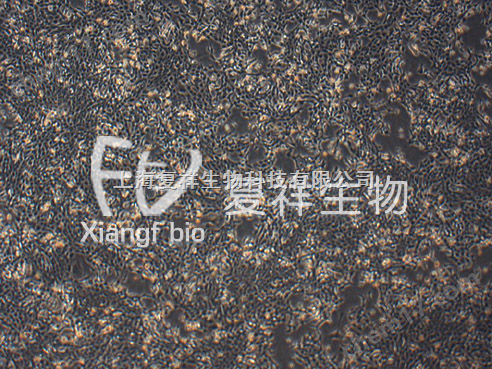
GL261 is a mouse glioma cell line commonly used to construct glioblastoma animal models. The cell has been confirmed to have reliable origin through species identification and is suitable for research on tumor mechanisms, immune therapy responses, and anti-cancer drug screening. It has typical morphological characteristics and tumorigenicity of glioma cells.
Product Details
| Product Name | Mouse glioma cells; GL261(STR) |
|---|---|
| brand | FuXiang |
| English name | GL261 |
| Item Number | XF1097 |
| specification | 1 × 10 ⁶ cells/T25 flask |
| cultivate | DMEM/F12 + 10% FBS + 1% P/S |
| alias | GL261; Glioma 261; GLIOMA 261; Glioma-261; GL-261 |
| Morphological characteristics | epithelioid |
| Growth characteristics | Wall attached growth |
| culture medium | GL261 complete _ Full culture medium |
| culture conditions | Gas phase: 95% air, 5% CO ₂; Temperature: 37 ℃ |
| Passage method | 1: 2 passages |
| source of organization | brain tissue |
| Special Statement | Fuxiang Cell Bank promises to make every effort to timely update information related to experimental cell resources. However, due to the technological limitations at the time, the accuracy of the cell bank data cannot be guaranteed. |
GL261 complete _ Full culture medium
GL261 complete culture medium, including basic culture medium suitable for GL261 growth, fetal bovine serum, and double antibody additives required for cell growth. After careful optimization by the technical team, it can meet the nutritional requirements for GL261 growth and maintain its good growth status for a long time.
| Product Name | GL261 complete _ Full culture medium |
|---|---|
| English name | GL261 CM |
| specification | 500 mL/bottle |
| product form | liquid |
| Composition of culture medium | DMEM/F12 + 10% FBS + 1% P/S |
| Mycoplasma testing | negative |
| cell growth | Cells grow well and have normal morphology |
| Storage conditions | 2-8 ℃, stored away from light |
| transport conditions | Ice pack transportation |
| Validity period | 3 months |
Mouse glioma cells carrying luciferase; GL261/Luc(STR)
GL261/Luc is a glioma cell line derived from mice, and its origin has been confirmed through species identification. This cell line carries luciferase markers and is suitable for bioluminescence imaging experiments, commonly used in the study of tumor growth and metastasis mechanisms.
| Product Name | Mouse glioma cells carrying luciferase; GL261/Luc(STR) |
|---|---|
| English name | GL261/Luc |
| specification | 1 × 10 ⁶ cells/T25 flask |
| cultivate | DMEM/F12 + 10% FBS + 1% P/S |
| alias | GL261/Luc |
| Morphological characteristics | epithelioid |
| Growth characteristics | Wall attached growth |
| culture medium | GL261/Luc complete _ Full medium |
| culture conditions | Gas phase: 95% air, 5% CO ₂; Temperature: 37 ℃ |
| Passage method | 1: 2 passages |
| source of organization | brain tissue |
Mouse glioma cells exhibit green fluorescence; GL261/GFP(STR)
GL261/GFP is a glioma cell line derived from mice, labeled with green fluorescent protein (GFP), suitable for research on tumor microenvironment, cell migration, and drug delivery. The cell has undergone species identification to ensure experimental accuracy and is commonly used for in vivo imaging and in vitro co culture experiments.
| Product Name | Mouse glioma cells exhibit green fluorescence; GL261/GFP(STR) |
|---|---|
| English name | GL261/GFP |
| specification | 1 × 10 ⁶ cells/T25 flask |
| cultivate | DMEM/F12 + 10% FBS + 1% P/S |
| alias | GL261/GFP |
| Morphological characteristics | epithelioid |
| Growth characteristics | Wall attached growth |
| culture medium | GL261/GFP complete culture medium |
| culture conditions | Gas phase: 95% air, 5% CO ₂; Temperature: 37 ℃ |
| Passage method | 1: 2 passages |
| source of organization | brain tissue |
Double transfection of OVA with luciferase in mouse glioma cells; GL261/OVA/Luc(STR)
The GL261/OVA/Luc cell line integrates antigen labeling and in vivo tracking functions through genetic modification, becoming an efficient model for studying glioma immunotherapy, tumor immune interactions, and in vivo drug efficacy, especially suitable for mechanistic studies that require the combination of antigen-specific immune response and real-time tumor monitoring.
| Product Name | Double transfection of OVA with luciferase in mouse glioma cells; GL261/OVA/Luc(STR) |
|---|---|
| English name | GL261/OVA/Luc |
| specification | 1 × 10 ⁶ cells/T25 flask |
| cultivate | DMEM/F12 + 10% FBS + 1% P/S |
| Morphological characteristics | epithelioid |
| Growth characteristics | Wall attached growth |
| culture medium | GL261/OVA/Luc complete _ Full medium |
| culture conditions | Gas phase: 95% air, 5% CO ₂; Temperature: 37 ℃ |
| Passage method | 1: 2 passages |
| source of organization | Brain glioblastoma tissue of C57BL/6 mice |
_
| Mouse colon cancer cell line; MC-38 | MC-38 |
| Mouse retrovirus packaging strain; PT-67 | PT-67 |
| Mouse colon cancer cells; CT-26 | CT-26 |
| Mouse lung cancer cell line; 3LL | 3LL |
| Mouse lung cancer cells; LLC | LLC |
| Mouse macrophages; Ana-1 | Ana-1 |
| Mouse mononuclear macrophage leukemia cells; RAW264.7 | RAW264.7 |
| Mouse mononuclear macrophages; J774A.1 | J774A.1 |
| Mouse myeloma cells; Sp2/0-Ag14 | Sp2/0-Ag14 |
| Mouse myeloma cells; NS-1 | NS-1 |
| Mouse myeloma B lymphocytes; SP2/MIL-6 | SP2/MIL-6 |
| Mouse testicular teratoma cells; P19 | P19 |
| Mouse normal liver cells; NCTC1469 | NCTC1469 |
| Mouse testicular cells; TM4 | TM4 |
| Mouse testicular interstitial cells; TM3 | TM3 |
| Mouse liver cells; AML12 | AML12 |
| Mouse leukemia cells; P388 | P388 |
| Mouse myoblasts; C2C12 | C2C12 |
| Mouse lymphoma cells; L5178YTK+/-clone(3.7.2C) | L5178YTK+/-clone(3.7.2C) |
| Mouse lymphoma cells (NK target cells); YAC-1 | YAC-1 |
| EL4 mouse lymphoma cells | EL4 |
| E. G7-OVA mouse T lymphoma cells (chicken OVA gene modification) | E.G7-OVA |
| Mouse lymphocytic leukemia; L1210 | L1210 |
| Mouse T lymphocytes; CTLL-2 | Ctll- 2 |
| Mouse glioblastoma cell line; G422 | G422 |
| Mouse pituitary tumor cells; GT1-1 | GT1-1 |
| Mouse pituitary tumor cells; GT1.1 /GT1-1 | GT1.1 /GT1-1 |
| Mouse microglia; Bv-2 | Bv-2 |
| Mouse brain microvascular endothelial cell line; bend.3 | bend.3 |
| Mouse preadipolar embryonic fibroblasts; 3T3-L1 | 3T3-L1 |
| Mouse melanoma cells; B16-F10 | B16-F10 |
| Mouse melanoma cells; B16-F1 | B16-F1 |
| Mouse melanoma cells; B16 | B16 |
| Mouse breast cancer cells; 4T1 | 4T1 |
| Mouse retinal ganglion cell line; RGC-5 | RGC-5 |
| Mouse glomerular mesangial cells; SV40-MES-13 | SV40-MES-13 |
| Mouse embryonal tumor cells; ATDC5 | ATDC5 |
| Mouse embryonic fibroblasts; STO | STO |
| Mouse embryonic fibroblasts; NIH/3T3 | NIH/3T3 |
| Mouse embryonic fibroblasts; MEF | MEF |
| Mouse embryonic fibroblasts; C3H/10T1/2 | C3H/10T1/2 |
| Mouse embryonic osteoblast precursor cells; MC3T3-E1 | MC3T3-E1 |
| Mouse vascular endothelial tumor cells; EOMA | EOMA |
| Mouse pancreatic cancer cells; LTPA | LTPA |
| Mouse insulinoma pancreatic beta cells; Beta-TC-6 | Beta-TC-6 |
| Mouse islet endothelial cells; MS1 | MS1 |
| Mouse pancreatic beta cell line; Min6 | Min6 |
| Mouse cervical cancer cells; U14 | U14 |
| Mouse neuroma cells; Neuro-2a | Neuro-2a |
| Mouse colon cancer cell CT26.WT | CT26.WT |
| Cloning of mouse connective tissue L cell line 929 L-929 | L-929 |
| Mouse embryonic fibroblast 3T3 Swiss albino | 3T3-Swiss albino |
| Mouse original B cell line BA/F3 | BA/F3 |
| Mouse embryonic fibroblast Balb/3T3 | Balb/3T3 |
| Mouse cerebellar cells C8-D1A | C8-D1A |
| Mouse liver cancer cells Hepa 1-6 | Hepa 1-6 |
| Subcutaneous connective tissue cells in mice, L-tell | L- cell |
| Mouse subcutaneous connective tissue cells L Wnt 3A | L Wnt 3A |
| Fusion cell NG108-15 of mouse neuroblastoma and rat glioma [108CC15] | NG108-15 [108CC15] |
| Mouse embryonic liver cells BNL CL.2 | BNL CL.2 |
| Mouse glomerular podocyte MPC-5 | mpc-5 |
| Mouse lung epithelial cell TC-1 | TC-1 |
| DC2.4 mouse dendritic tumor cells | DC2.4 |
| HT22 mouse hippocampal neuron cell line | HT22 mouse hippocampal neuron cell line |
| Mouse liver cancer 22 (H22) | Mouse liver cancer 22 (H22) |
| ID8 mouse ovarian cancer cells | ID8 |
| Mouse embryonic myoblasts | C2C12 mouse embryonic myomother |
| Mouse pancreatic cancer cells (class B); Pan02 | Mouse pancreatic cancer cells (class B); Pan02 |
| Mouse dendritic cell sarcoma cells; DCS | DCS |
| Mouse gastric cancer cell MFC | MFC |
| Mouse lung cancer cells - fluorescent Lewis/Luc | lewis/luc |
| Mouse prostate cancer cell line RM-1 | RM-1 |
| E0771 mouse breast cancer cell | E0771 |
| GL261 mouse glioma cells | GL261 |
| Mouse pancreatic cancer cells | PANC02 |
| Mouse alveolar epithelial cell MLE-12 | MLE-12 |
| S-180 mouse ascites tumor cells | S-180 |
| SP2/0 mouse myeloma cells | SP2/0 |
| Mouse lung cancer cells with luciferase LLC/LUC | LLC/LUC |
| Mouse breast cancer cells with luciferase 4T1/LUC | 4T1/LUC |
| Mouse mast cell tumor cells; P815 | P815 |
| Mouse colon cancer cells with luciferase CT26.WT/LUC | CT26.WT/LUC |
| OP9 mouse bone marrow stromal cells | OP9 mouse bone marrow stromal cells |
| MB49 mouse bladder cancer cells | MB49 mouse bladder cancer cells |
| MH-S mouse alveolar macrophage cell line | MH-S mouse alveolar macrophage cell line |
| AtT-20 mouse pituitary tumor cells | AtT-20 mouse pituitary tumor cells |
| Mouse melanoma with luciferase; B16luc | B16/luc |
| Mouse colon cancer with luciferase: MC-38/luc | MC-38/LUC |
| GC-1 spg; Mouse spermatogonial cell line | GC-1 spg |
| STC-1 mouse intestinal endocrine cell line | STC-1 mouse intestinal endocrine cell line |
| C17.2 Mouse neural stem cells | C17.2 Mouse neural stem cells |
| ASMC mouse airway smooth muscle cells | ASMC mouse airway smooth muscle cells |
| MAEC mouse aortic endothelial cells | MAEC mouse aortic endothelial cells |
| MLO-Y4 mouse osteoid cells | MLO-Y4 mouse osteoid cells |
| MA-891 mouse breast cancer highly metastatic cells | MA-891 mouse breast cancer highly metastatic cells |
| SVEC4-10 mouse lymph node epithelial cells | SVEC4-10 mouse lymph node epithelial cells |
| OKT 11 mouse hybridoma (anti-CD2) cells | OKT 11 mouse hybridoma (anti-CD2) cells |
| SDOW-17 mouse hybridoma cells | SDOW-17 mouse hybridoma cells |
| HC11 mouse mammary epithelial cells | HC11 mouse mammary epithelial cells |
| SW-10 mouse neuronal cells | SW-10 mouse neuronal cells |
| Mouse embryonic osteoblast precursor cells; MC3T3-E1 | MC3T3-E1 |
| 266-6 mouse pancreatic acinar carcinoma cells | 266-6 mouse pancreatic acinar carcinoma cells |
| Mouse embryonic fibroblasts; SYF | Mouse embryonic fibroblasts; SYF |
| Mouse melanoma with luciferase; B16-F10/luc | B16-F10/luc |
| HL-1 (Mouse Cardiomyocyte) | HL-1 (Mouse Cardiomyocyte) |
| SCC7 mouse squamous cell carcinoma cells | SCC7 mouse squamous cell carcinoma cells |
| Renca Mouse renal cancer cells | Renca |
_